
A recent outbreak of violence in the predominantly Christian town of al-Suqaylabiyah has stirred national concern in Syria, exposing a widening gap between official accounts of the incident and what residents recorded and circulated online. Analysts say the discrepancy reflects deeper anxieties about social cohesion, state authority, and the country’s fragile postwar landscape.
Official Narrative Downplays the Incident
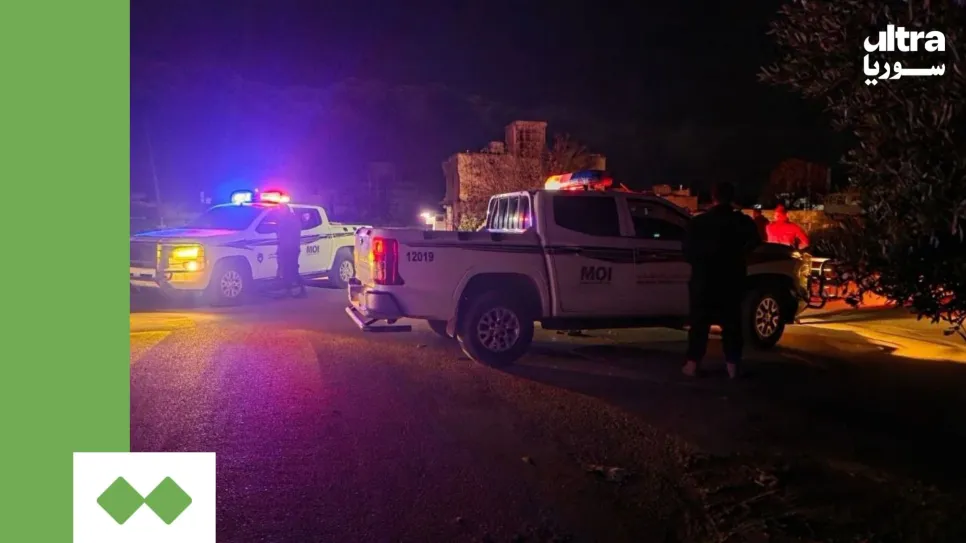
Hama’s media directorate described the unrest as a brief quarrel among a small group of young men that escalated before security forces restored order. The statement insisted that the videos circulating online captured only isolated moments of tension, emphasized that arrests had been made on all sides, and rejected any suggestion of sectarian motives.
Videos Tell a Different Story
Footage shared by residents paints a more troubling picture. Dozens of young men can be seen attacking shops and cafés, vandalizing property, firing into the air, and, in at least one case, looting a commercial establishment while an internal security vehicle stood nearby without intervening. The contrast between the official version and the videos has fueled public skepticism and raised questions about the scale and organization of the assault.
A Town Long Seen as Stable
Al-Suqaylabiyah, located in western Hama countryside, has long maintained workable relations with neighboring Sunni villages, even through the upheavals of the war. That history makes the recent escalation more alarming. Local residents say tensions had been rising for days, following allegations of harassment involving young women and anger over reports that the General Women’s Union building had been seized for conversion into a religious school without community consultation.
According to accounts cited by economist Samir Seifan, the immediate trigger came when two young men from nearby Qal‘at al-Madiq allegedly harassed girls in the town. Local youth confronted them, and one reportedly pulled a grenade. Two hours later, dozens of young men arrived on motorcycles and began smashing property and threatening residents. Analysts say the sequence suggests a retaliatory mobilization rather than a spontaneous flare-up.
Concerns Over Collective Incitement
The possibility of organized or semi-organized incitement has become a central concern. Seifan and other observers note that the attackers appeared to come from a nearby town with which al-Suqaylabiyah has historically maintained decent relations. Whether the initial harassers intended to provoke a wider clash remains unclear, but analysts warn that the charged political climate has made escalation far easier.
National Context Heightens Sensitivity
The violence comes amid growing controversy in Damascus over restrictions on alcohol sales, including a decision to limit purchases to sealed containers in three predominantly Christian neighborhoods. Critics say the debate has contributed to a climate of cultural and religious polarization, allowing administrative decisions to spill into the street and acquire communal overtones.
That tension was visible in Damascus itself. A solidarity protest in Bab Sharqi, organized in support of al-Suqaylabiyah’s residents, nearly descended into sectarian confrontation before being calmed by Bishop Romanos al-Hannat, who urged demonstrators to remember that Syria belongs to all its citizens.
Questions About State Authority
Beyond the narrative dispute, the incident has renewed scrutiny of the state’s ability to enforce order. Several commentators argue that Syria’s greatest vulnerability lies in the combination of weak institutions, uneven enforcement, and the tolerated presence of armed groups operating outside clear legal oversight.
Legal expert al-Mu‘tasim al-Kilani and activist Michel Shammas both warn that instability grows when weapons remain dispersed and power is exercised without accountability. Shammas argues that the danger stems not only from a weakened state but from an excess of force in the hands of groups that operate with little restraint.
Impact on Christian Communities
The repercussions have already reached beyond al-Suqaylabiyah. Palm Sunday celebrations were scaled back in several regions, with churches limiting observances to indoor prayers and cancelling public festivities. Clergy cited security concerns and pastoral responsibility, underscoring how a local security incident can reshape religious life across the country.
A Warning Signal
For many Syrians, the violence in al-Suqaylabiyah has become a warning sign. It shows how quickly small incidents can widen in a climate of mutual suspicion, how dangerous it is for authorities to minimize events that residents can plainly see were more serious, and how selective enforcement and tolerated incitement can turn local friction into a national crisis of confidence.
Analysts say the episode reflects a broader political condition: a Syria where the social fabric remains thin, public trust in official accounts is weak, and the state’s legitimacy depends on its ability to enforce the law impartially and prevent communal tensions from spiraling into wider conflict.