
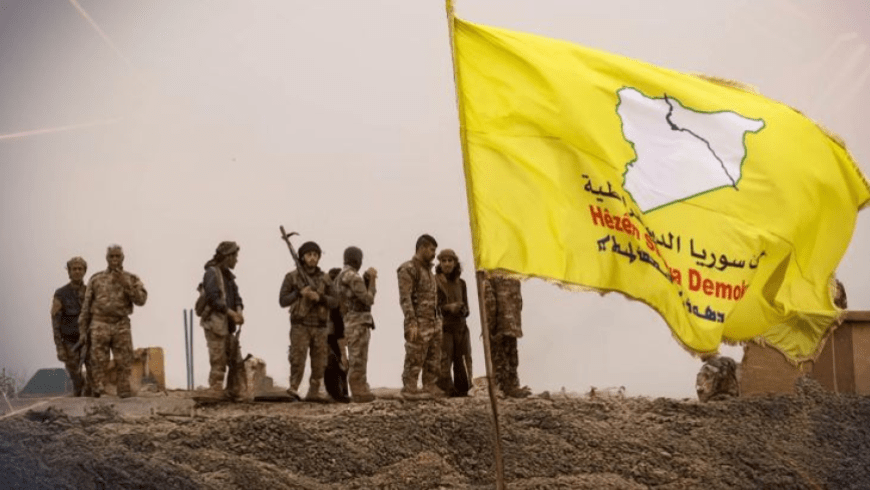
Violence in Aleppo escalated sharply on Thursday, January 8, 2026, as Syrian government forces launched a major offensive targeting the Sheikh Maqsoud and Ashrafiyeh neighborhoods—following the apparent collapse of last-minute efforts to de-escalate tensions with the Syrian Democratic Forces (SDF). The surge in fighting has led to rising civilian deaths, mass displacement, and urgent warnings from humanitarian organizations about the rapidly worsening crisis in the city.
Ground Offensive Follows Collapse of Last-Minute Ceasefire Talks
According to a military source who spoke with Ultra Syria, the Syrian army began advancing into Sheikh Maqsoud and Ashrafiyeh from multiple directions shortly after talks with the SDF aimed at reducing hostilities broke down just hours earlier. The source said the ground push came after heavy preparatory artillery and rocket fire struck SDF positions within both neighborhoods.
Earlier that day, Syria’s state-run news agency SANA quoted an unnamed military official stating that the army had initiated a “violent and concentrated” bombardment of SDF sites in Sheikh Maqsoud and Ashrafiyeh. The Ministry of Defense, via state media, released detailed maps identifying specific zones slated for strikes and urged residents to evacuate immediately, claiming these areas had been used by the SDF as launching points for attacks on civilian districts in Aleppo.
The Defense Ministry’s military media director also warned civilians to avoid SDF deployment zones, describing the marked areas on official maps as active combat zones. He added that regions highlighted in green were not designated military targets but should still be temporarily vacated “for the safety of citizens.” Two emergency contact numbers for internal security forces were provided to assist with evacuations.
For its part, the SDF accused pro-government factions of launching a sweeping assault and warned of dire consequences for civilians caught in the crossfire. The SDF Media Center reported that its forces had repelled what it described as a large-scale attack by Damascus-aligned groups on Sheikh Maqsoud and Ashrafiyeh, inflicting heavy losses on the attackers. The statement claimed the offensive involved more than 60 tanks and armored vehicles, dozens of other military vehicles, thousands of fighters, drone support, and intense covering fire. According to the SDF, its fighters destroyed one tank, five military vehicles, and shot down seven “kamikaze” drones.
In a separate update, the SDF reported “intense clashes” with pro-Damascus forces near the al-Suryan neighborhood in Aleppo, again asserting significant enemy casualties. Later, the group denied media reports suggesting it had requested safe corridors to withdraw from Sheikh Maqsoud and Ashrafiyeh, accusing certain outlets of spreading deliberate disinformation. The SDF insisted it had neither sought nor would seek safe passage, emphasizing it was “not the aggressor,” and called on attacking forces to pull back their tanks, artillery, and troops from residential areas.
Humanitarian Crisis Deepens Amid Mass Displacement and Infrastructure Collapse
As the battle widened, civilian casualties climbed. Aleppo’s Health Directorate reported that nine civilians had been killed and 55 wounded due to shelling it attributed to the SDF—a sharp increase from earlier figures of five dead and 33 injured, also blamed on SDF fire hitting populated areas.
The violence also triggered massive displacement. The United Nations Office for the Coordination of Humanitarian Affairs (OCHA) said approximately 140,000 people had fled Sheikh Maqsoud and Ashrafiyeh. It noted that several health facilities in Aleppo had ceased operations after sustaining damage, forcing the transfer of patients to other locations. OCHA added that all commercial flights to and from Aleppo International Airport had been suspended since January 6 and rerouted to Damascus indefinitely. Humanitarian partners linked to the European Commission’s Civil Protection and Humanitarian Aid Operations (ECHO) had halted non-essential movements within the city while maintaining emergency readiness as assessments continued.
Meanwhile, the Associated Press cited Hassan Nader, a representative of Syria’s Ministry of Social Affairs and Labor in Aleppo, saying around 4,000 displaced individuals were sheltering in official centers inside the city, while tens of thousands had moved to other parts of Aleppo province. Nader stated the ministry was coordinating with NGOs to deliver food, medicine, and other essential supplies.
The escalation drew swift regional and international responses. Ilham Ahmed, co-chair of the Autonomous Administration’s Foreign Relations Body, said consultations were underway with officials in Washington, Paris, and Ankara to prevent further escalation and protect civilians—particularly in Sheikh Maqsoud and Ashrafiyeh.
From the Kurdistan Region of Iraq, Prime Minister Masrour Barzani expressed “deep concern” over the assault on Kurdish neighborhoods in Aleppo, warning against attempts at demographic change and stressing that “war and violence are not solutions.” He urged restraint and dialogue, cautioning that no justification could legitimize ethnic cleansing.
The renewed fighting in Aleppo highlights the fragility of existing arrangements in SDF-held territories and how quickly localized clashes can spiral into full-blown humanitarian and military crises. With both sides trading blame and conditions for civilians deteriorating by the hour, the trajectory of the conflict will likely depend as much on external diplomatic efforts as on developments on the battlefield.
Note by the Observer:
A ceasefire agreement was reached on friday at dawn.
This article was translated and edited by The Syrian Observer. The Syrian Observer has not verified the content of this story. Responsibility for the information and views set out in this article lies entirely with the author.