
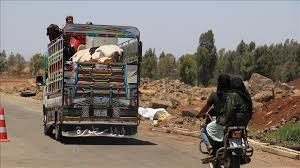
Nearly two months after clashes erupted in southern Syria’s Suweida province on 12 July 2025, the region remains mired in a severe economic downturn, worsened by an ongoing blockade enforced by forces from the Syrian ministries of interior and defence, alongside allied tribal militias. The Druze-majority province—long dependent on agriculture, public services, remittances from expatriates, and cross-border trade—has seen these economic lifelines all but severed, plunging the population into hardship and raising fears of an escalating humanitarian crisis. With the reported death toll nearing 2,000 by late August and more than 10,000 children out of school, the consequences of the violence—initially sparked by attempts to reassert government control—continue to reverberate, despite a fragile ceasefire brokered in late July.
Agricultural Sector Ravaged by Conflict and Drought
The fighting, which intensified after 14 July, has devastated Suweida’s agricultural heartland, particularly in the western and northern rural districts. Wells, irrigation systems and solar energy installations have been deliberately destroyed, with orchards set ablaze and crops looted, according to local reports. This wave of destruction has struck at a particularly vulnerable time, following a nationwide drought that had already forced farmers to rely heavily on artificial irrigation.
Even in areas spared direct conflict, the blockade has triggered secondary crises. Acute fuel shortages have left many farmers unable to reach their fields or power water pumps, jeopardising harvests during a season already defined by water scarcity. With major routes to Damascus and Daraa cut off, producers are restricted to local markets, where oversupply has driven prices to unsustainable lows. High-quality tomatoes, for instance, have fetched as little as 1,000 Syrian pounds—around $0.07 at current exchange rates—per kilogram, compounding losses for growers amid weakened consumer purchasing power.
The United Nations has highlighted the broader humanitarian toll, citing mass displacement and severely limited access to aid. Hostilities have uprooted thousands and intensified food insecurity across the province. Local efforts to repair damaged infrastructure have stalled in the absence of external support, raising concerns that Suweida’s role as a significant contributor to Syria’s fruit and grain production could be permanently compromised.
Public Services Paralysed as Salaries Go Unpaid
Suweida’s public sector—one of the primary sources of income for local families—is in disarray. While official figures for the number of civil servants are unavailable, household reliance on state salaries is widespread. In the wake of the violence, the transitional government in Damascus suspended salary payments for August and September, citing security concerns.
In late July, the Ministry of Finance claimed that armed groups had robbed the Commercial Bank branch in Shahba, prompting the relocation of salary funds to branches in Izra’, within Daraa province. The decision drew fierce criticism, as travel to Izra’ has become extremely hazardous under the blockade, with multiple reports of kidnappings and shootings targeting those attempting to enter or leave Suweida. On 2 September, official provincial channels announced that Governor Mustafa al-Bakour had authorised disbursements for government entities that had formally contacted his office, while urging others to follow proper procedures.
A visit to the Real Estate Bank branch in Suweida city revealed a notice apologising for the suspension of operations due to a lack of funds stemming from the blockade. These service interruptions are straining household finances and eroding public confidence in government institutions, compounding discontent in a region with a long-standing tradition of anti-regime protest.
Trade Stalls, Deepening Isolation
Commercial activity in Suweida has nearly ground to a halt. The closure of the Damascus highway has cut off vital supply routes, preventing the regular influx of goods. Limited deliveries continue via sporadic humanitarian convoys escorted by the Syrian Arab Red Crescent, though these are largely restricted to basic foodstuffs such as canned goods, vegetables and fruit—insufficient to meet the province’s broader needs.
Merchants report ongoing disruptions in supply chains from Damascus, contradicting government statements that routes have been reopened. One local trader said that despite maintaining regular communication with suppliers in the capital, promised shipments were repeatedly delayed or cancelled. The shortages now span essential items including construction materials, solar panels, electrical equipment, medicines and fuel—hindering efforts to rebuild and restore basic services.
This economic isolation has undermined community-led recovery initiatives, leaving residents unable to repair homes or restore public utilities. Analysts suggest that the blockade may serve as a deliberate pressure tactic against local factions. The Syrian Ministry of Interior has denied this, while indicating preparations to reopen major roads.
A Call for Coordinated Intervention
Despite grassroots efforts by Suweida’s residents to recover and rebuild, the scale of the crisis demands urgent intervention from both the Syrian government and international organisations equipped to manage large-scale humanitarian emergencies. The United Nations has reiterated calls for safe and unfettered humanitarian access, while diplomatic initiatives by the United States and Jordan aim to de-escalate the situation and address underlying tensions.
Without swift, coordinated action—including lifting the blockade and restoring economic flows—Suweida faces the prospect of deepening humanitarian collapse, with potential repercussions for Syria’s already fragile political and social fabric. As sporadic clashes continue and national elections remain postponed, the province’s ordeal stands as a stark reminder of the tenuous nature of peace in southern Syria.
This article was translated and edited by The Syrian Observer. The Syrian Observer has not verified the content of this story. Responsibility for the information and views set out in this article lies entirely with the author.