
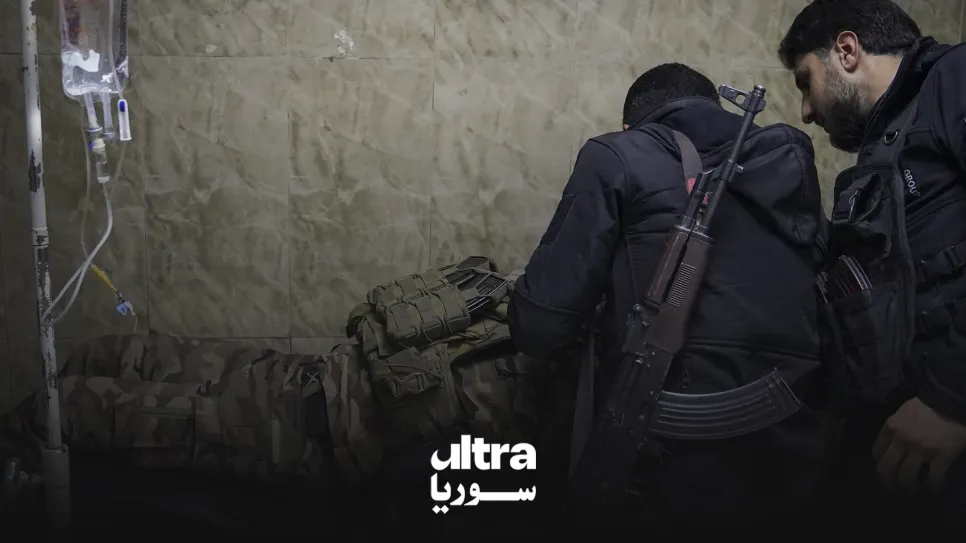
Fighting has intensified around the Aleppo neighbourhoods of Sheikh Maqsoud and Ashrafiyah amid sharply conflicting accounts from the Syrian Democratic Forces (SDF) and the Damascus government, as residents flee under curfew conditions and evacuation corridors are opened for civilians.
The SDF’s General Command says the two neighbourhoods have been under a “complete siege” by government-aligned factions for more than six months, and insists they pose no military threat to Aleppo. In its first public statement on the latest escalation, the SDF rejected claims that its forces are using Sheikh Maqsoud and Ashrafiyah as a staging ground for attacks on the city, describing those allegations as fabricated pretexts intended to legitimise a blockade, shelling, and the targeting of civilians.
The SDF further maintains that it has no military presence inside Aleppo, saying it withdrew previously under a documented arrangement that transferred internal security responsibilities to the Internal Security Forces. It characterised the renewed accusations as political and military cover for what it called an assault on residential areas, warning that continued pressure on civilians could trigger consequences extending beyond Aleppo and risk pushing Syria back toward open warfare. The Command appealed to guarantor states and to Syrian authorities “concerned for national unity” to intervene urgently to halt the siege and bombardment, and condemned the use of civilians as instruments of coercion or as human shields.
Damascus denies
Damascus, for its part, issued a categorical denial that the Syrian Army had begun any advance toward SDF-controlled areas in Aleppo. In a statement carried by state media, the Army’s operations authority said it continued to facilitate the departure of residents from Sheikh Maqsoud and Ashrafiyah through designated routes. It accused SDF elements of deliberately targeting civilians attempting to leave, alleging this was meant to prevent an exodus from the neighbourhoods. The statement also pledged that “security and stability” would be restored through measures presented as protecting residents from what it described as SDF practices.
On the ground, the confrontation has coincided with large-scale displacement. After the Army declared SDF positions inside the neighbourhoods to be legitimate military targets, Sheikh Maqsoud and Ashrafiyah were designated closed military zones and placed under a full curfew. Two “humanitarian corridors” were announced for civilian movement—local crossings known as Awarid and the Street of Flowers—amid reports that the Army had issued a deadline for residents to evacuate, after which fighting escalated further in the surrounding areas.
Public services
Local authorities and public services have moved to manage the civilian fallout. Aleppo’s Public Transport Company said it had placed its personnel and technical capacity on full alert, deploying its bus fleet at maximum capacity to transfer displaced residents from affected areas to temporary shelters. It also reported coordination with relevant authorities to adjust routes and provide additional logistical support, particularly along key city axes including the Zuhour area and the vicinity of the Awarid Bridge.
As the two sides trade accusations—one side framing the situation as a prolonged siege and assault on civilians, the other portraying it as a controlled security response coupled with evacuation facilitation—the immediate reality for residents has been curfews, hurried departures, and escalating clashes in and around two densely populated districts that sit at the heart of Aleppo’s fragile security landscape.
This article was translated and edited by The Syrian Observer. The Syrian Observer has not verified the content of this story. Responsibility for the information and views set out in this article lies entirely with the author.