
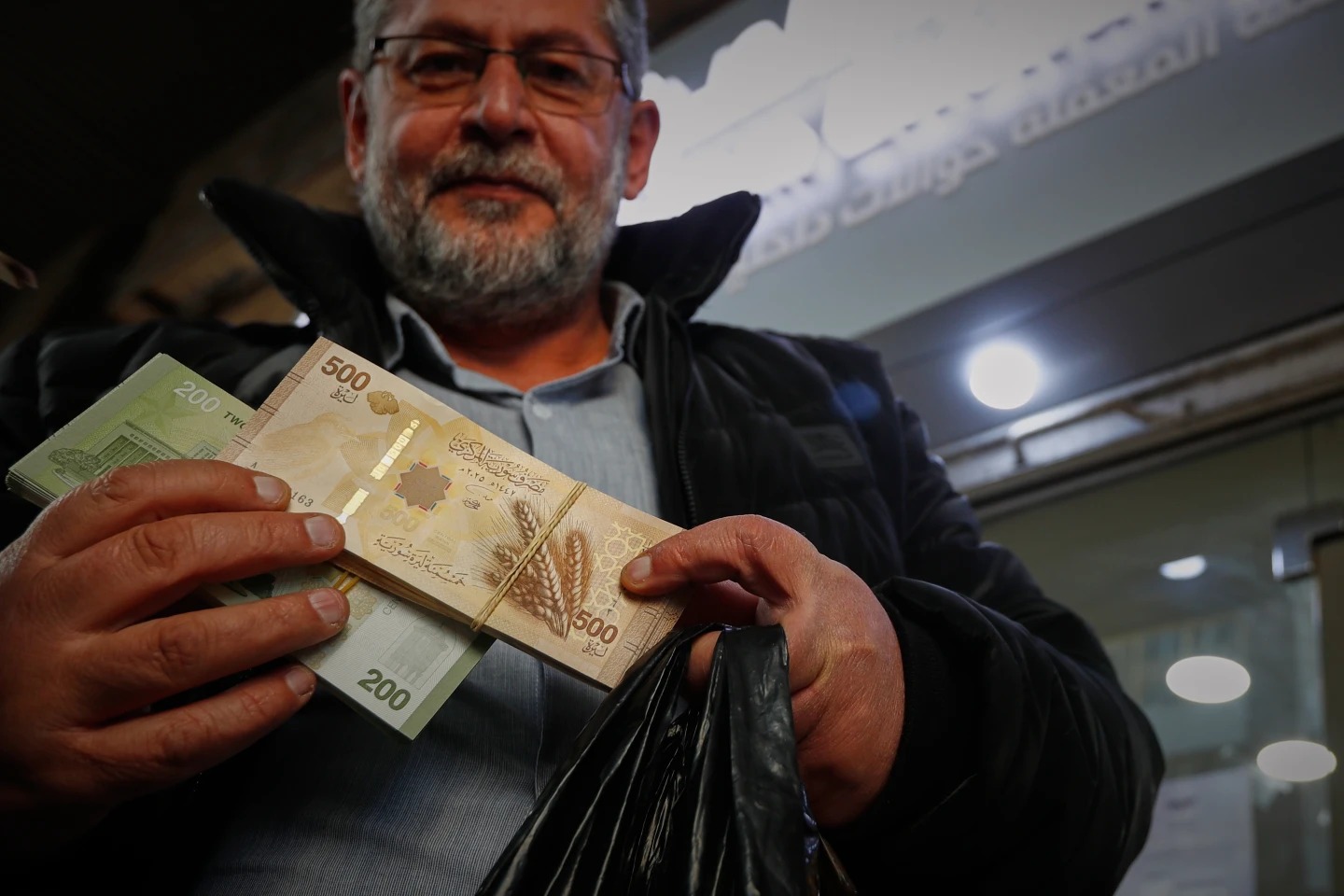
Debate has intensified in recent weeks across Syrian society and media over what many describe as a “severe shortage” of the newly issued Syrian pound. Public attention has gravitated toward competing explanations, the most prominent of which is the claim that the currency is being smuggled abroad, at a moment when pressure on the monetary market is mounting and the liquidity crisis is deepening.
As narratives diverge and rumors proliferate, the need grows for a measured assessment grounded in official data and real economic indicators—an attempt to understand developments without exaggeration or political framing.
A Race Against Time and Persistent Obstacles
The controversy raises essential questions about the volume of currency in circulation, the mechanisms of exchange, and the limits of the Central Bank’s role in managing liquidity. It also underscores the widening gap between public interpretations of the crisis and the financial reality reflected in official figures and declared monetary policies.
In this context, economic expert Younis Al-Karim noted that the escalating debate over the alleged “severe shortage” of the new Syrian pound, along with widespread claims of its smuggling abroad, calls for a more composed reading based on official facts and published monetary data, rather than sensationalism or conclusions unsupported by institutional indicators.
Al-Karim explained in a Facebook post that the new banknotes have been in circulation for no more than 28 days—a period far too short to assess their market penetration, particularly in an economy that has long suffered from acute liquidity constraints and a deep erosion of confidence in the national currency.
Circulation Challenges and Print Quality Concerns
He added that difficulties in circulating the new denomination, coupled with concerns about its rapid deterioration due to perceived lower print quality relative to daily usage, have led some citizens and merchants to avoid handling it. This reluctance has contributed to a misleading impression of a severe shortage.
Al-Karim pointed out that official data from the Central Bank of Syria indicate that the quantities released so far remain extremely limited, with total issuance not exceeding roughly one billion notes. Meanwhile, estimates of the money supply suggest that the market requires tens of billions of banknotes to sustain economic activity. This alone explains the current confusion, without resorting to implausible scenarios.
The Reality of Smuggling Claims
Addressing the claims of smuggling, Al-Karim emphasized that official sources in the Central Bank and customs authorities have not recorded any documented cases or seizures indicating organized smuggling of the new currency. He noted that economic logic itself undermines this assumption: the Syrian pound holds no storage or speculative value outside the country and carries no real weight in regional or international markets, unlike hard currencies.
Exchange Dynamics and Areas Outside the System
Al-Karim clarified that any limited presence of the new pound outside Syria—if it exists—is tied solely to exchange operations conducted in previous periods. This is particularly relevant given the Central Bank’s refusal to exchange currency outside Syrian territory and the exclusion of areas under autonomous administration from the exchange process. These areas, home to nearly four million people, effectively removed part of the money supply from circulation without immediate replacement.
He added that the purpose behind issuing the new currency, according to official indications, extends beyond economic considerations. It also intersects with political and symbolic objectives, including the withdrawal of banknotes bearing the images of Bashar al-Assad and his father within a short timeframe, as part of reshaping the broader monetary landscape.
Al-Karim concluded that the absence of detailed transparency regarding printing and issuance policies—combined with external diplomatic activity and the signing of major economic agreements—creates fertile ground for speculation and rumor. He urged official authorities to provide clear and direct explanations to the public to dispel narratives about smuggling or the disappearance of the new pound outside the natural dynamics of the market.
This article was translated and edited by The Syrian Observer. The Syrian Observer has not verified the content of this story. Responsibility for the information and views set out in this article lies entirely with the author.