
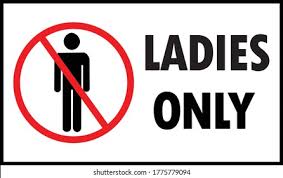
A recent decision by the municipal council of Al-Tall, in the Damascus countryside, has ignited wide public debate after the council announced a ban on male employees in women’s clothing stores, requiring shop owners to hire female sales staff exclusively. The directive warns that non-compliant shops will be closed and sealed under applicable laws, with enforcement beginning immediately upon the decision’s issuance and circulation.
According to a local newspaper, the head of the municipal council, Mohammad al-Tahan, defended the measure as an effort to “uphold public decency,” protect privacy, and respect local customs, traditions, and social values. He confirmed that enforcement has already begun in several shops within the council’s jurisdiction.
Yet the announcement quickly moved beyond local news, raising broader legal questions:
Does a municipal council have the authority to impose hiring conditions on private businesses? And can it legally mandate gender-based segregation in the labor market?
Supporters of the decision have cited Local Administration Law No. 107 of 2011—specifically Article 61—which grants municipal councils regulatory authority in areas not directly overseen by central government institutions. But this reference has only deepened the debate, particularly regarding the notion of a “regulatory vacuum” and the limits of local authority when “public decency” intersects with labor rights.
Opponents argue that such a measure requires higher legislative or executive authorization. They also note that the decision’s current wording leaves key questions unanswered: What are the enforcement standards? Is there a grace period? Which entity is empowered to monitor compliance? And who ultimately has the authority to seal and close shops on the ground?
Social reactions have been sharply divided. Some residents believe female staff in women’s clothing stores reduce embarrassment for customers and enhance privacy. Others view the decision as an unlawful intrusion into the private sector, warning that it opens the door to expanding segregation under the guise of customs and values.
A third line of analysis has shifted the discussion away from simple support or opposition. It interprets the decision as a regulatory act that governs presence in public space before any specific conduct occurs—presuming wrongdoing in the mere presence of men within a feminized commercial setting, then framing this presumption as “protection.” This has revived a fundamental question:
Is the role of local authority to safeguard rights through clear, enforceable regulations, or to police society through ambiguous decisions that leave interpretation and enforcement open-ended?
This article was translated and edited by The Syrian Observer. The Syrian Observer has not verified the content of this story. Responsibility for the information and views set out in this article lies entirely with the author.