
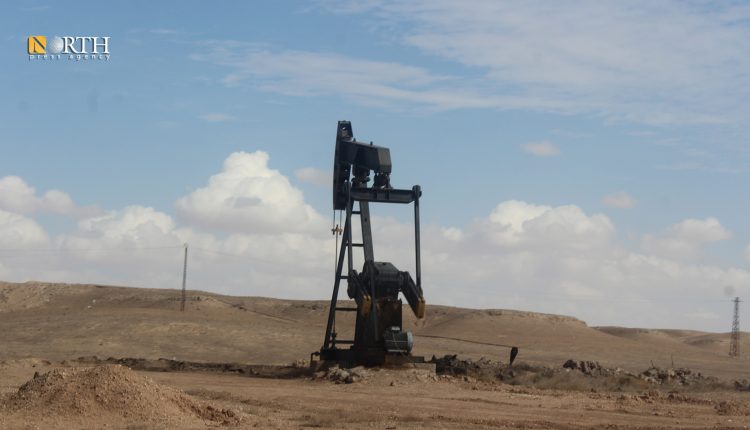
The Kirkuk–Baniyas pipeline, built in the 1950s, was once one of the Middle East’s most important oil arteries. It carried Iraqi crude oil to the port of Baniyas on the Mediterranean, making Syria a strategic export gateway in the regional energy equation. But this pipeline—once a symbol of Arab economic integration—was eventually halted after decades of wars, sanctions, and political rifts. It had a capacity of 300,000 barrels per day, but has remained idle since 2003, when it was severely damaged during the U.S. invasion of Iraq. Even before that, Baghdad had suspended its operation in 1982 and 2000 due to political disputes.
Today, the idea of reviving the pipeline is back in the spotlight after official Iraqi statements confirmed that technical talks had begun between Baghdad and Damascus to restart the 850-kilometer line, bringing this historic project back to the policy agenda after decades of dormancy. The discussions come amid rapid global shifts in energy geopolitics, particularly following the Ukraine war, which redrew the map of energy routes toward the Mediterranean.
Iraqi Prime Minister’s financial adviser Mazhar Muhammad Saleh said earlier that reviving the pipeline represents a strategic choice, giving Iraq greater flexibility in marketing its oil and enhancing its energy security.
In Iraq, the proposal fits into a broader vision to diversify export routes and expand energy infrastructure to ensure flexibility amid volatile global demand. In Syria, meanwhile, the renewed discussion signals a potential revival of its geographic role as a bridge between the region’s energy sources and Mediterranean ports—a role that for decades was central to its economic and political standing in the Middle East.
A study by the Washington Institute for Near East Policy, titled “Sustaining Momentum in Syria’s Energy Sector,” noted that the recent Baghdad–Damascus agreement to study the pipeline’s reactivation reflects a pragmatic approach to energy cooperation. However, it also warned of legal obstacles and the lack of transparency in Syria’s oil contracts, stressing the need for institutional reforms to ensure accountability and curb corruption in future energy projects.
Why Is the Pipeline Being Revisited Now?
The renewed discussion of the Kirkuk–Baniyas line stems from economic and geopolitical developments that reopened the file after decades of neglect. The entire region is undergoing an energy realignment, as producers seek to diversify their export routes and reduce dependency on any single corridor. Baghdad is thus reconsidering its historical paths to the Mediterranean—not as replacements, but as complements to existing routes, aimed at enhancing export resilience.
For Syria, the issue extends beyond technical aspects to symbolic and political dimensions. The pipeline represents a potential lifeline reconnecting the country to its regional environment—a sign of its reintegration into cross-border economic networks. Reviving the line aligns with Damascus’s ambition to restore its economic diplomacy, attract investment, and rebuild domestic confidence through large-scale development projects that create jobs and signal stability.
This comes amid a shifting global energy landscape after the Ukraine war, which forced European states to seek alternative oil and gas corridors linking the Middle East to the Mediterranean. In this new order, energy routes are geopolitical assets, as critical as treaties or alliances. Within this evolving framework, reviving the Kirkuk–Baniyas pipeline appears part of a broader effort to redraw global energy routes, with significant implications for regional power balances.
An analytical paper by the Arab Center in Washington highlighted Iraq’s evolving pragmatic policy toward Syria since the fall of the Assad regime—centered on economic cooperation, border management, and shared security challenges rather than traditional political alignment. Baghdad now views Syria’s stability as an integral component of its national and energy security.
Damascus and the “Transit Economy”
Economic researcher Jaber al-Karmi told Syria TV that reviving the Kirkuk–Baniyas line fits into a strategy to revive Syria’s geographic position and turn it again into a long-term source of income through transit and logistics services.
He explained that Syria’s “transit economy”—based on transportation fees, ports, and pipelines—had been one of its main income pillars more than 15 years ago. Reactivating it could form the basis of a new recovery model, centered on infrastructure and regional integration.
This, he said, requires a realistic national vision that treats energy as both a political and economic asset, and as a convergence point for domestic and regional interests.
Al-Karmi observed that the world is witnessing a shift from traditional geopolitics to functional geography, where a country’s importance depends not only on its size or resources, but also on its ability to serve as a logistical hub within global supply chains.
In this sense, Syria’s position could evolve—from a marginal geography to a central logistics corridor connecting Gulf and Mediterranean markets—if accompanied by a stable institutional environment and legal reforms that attract foreign investment while safeguarding national ownership.
He added that the project aligns with the global shift toward regional energy security networks—interconnected systems designed to ensure stable supply amid crises. “The more interconnected the region’s energy grids become, the lower the political tension,” he said, “because shared economic interests replace zero-sum competition.”
The project’s success, al-Karmi argued, depends on Baghdad and Damascus’s ability to separate economics from politics, managing the pipeline based on cost-benefit logic rather than ideology.
Although the economic returns may not be immediate—given the high rehabilitation costs and the need for major investment—the project’s true value lies in restoring international confidence in Syria’s economic role and demonstrating its readiness to participate again in strategic regional ventures.
He added that such projects could help rebuild Syria’s macroeconomic foundations through real functional networks linking production to markets and restoring the state’s lost economic function.
According to al-Karmi, the region is entering a new phase of economic balance based on mutual benefits rather than zero-sum competition. The Kirkuk–Baniyas line, he suggested, could become a miniature model of Arab economic integration if developed within a broader regional framework that includes electricity, communications, and transport networks.
Syria’s Geographic Capital
Reviving the Kirkuk–Baniyas pipeline cannot be understood outside the broader transformation of the Middle East’s political economy of energy. Today, oil corridors are infrastructure for regional power: they redefine interdependence between producer, transit, and consumer states, and reshape economic sovereignty around “shared benefit” rather than isolation.
From this perspective, the project tests the region’s ability to produce a new Arab model of energy cooperation. It also fits the modern strategy of diversifying energy routes—a key risk-management principle in today’s global economy. Each additional corridor reduces vulnerability to shocks and gives producers greater leverage amid fluctuating demand and prices. The pipeline thus adds a layer of energy security rather than replacing existing routes, linking Iraq and Syria within a flexible, integrated supply network—a concept known as geo-economic hedging.
On the Syrian level, the project represents a deeper shift: a bid to transform geography from a burden into a productive asset—from a closed, besieged economy to an open, intermediary one embedded in regional trade networks. This “exchange-based economy” would derive value from mediation and cross-border services rather than direct production, turning Syria into a “transit state” that monetizes its geography as a long-term economic resource.
Syria thus possesses what could be called “geographic capital”—a non-transferable asset derived from its location. Between the Gulf and the Mediterranean, between Asia and Europe, trade, energy, and transport routes intersect. If coupled with proper institutional governance, this geography can be transformed into political and economic capital. Reopening the Kirkuk–Baniyas line would activate this capital, shifting geography from a symbolic to a productive dimension and making location itself a strategic resource for Syria’s reintegration into the regional economy.
History shows that energy corridors are not only economic structures but also political stabilizers—as seen with the Baku–Tbilisi–Ceyhan line in the Caucasus, the EastMed project in the Eastern Mediterranean, or the Russian gas pipelines to Europe. Similarly, the Kirkuk–Baniyas project could serve as a test of whether the Middle East can evolve from a theater of competition to a space of shared infrastructure and mutual benefit—a form of what scholars call “material diplomacy,” using physical networks to promote stability and cooperation.
Reviving the Kirkuk–Baniyas pipeline is not impossible—but neither is it imminent. The technical, political, and security challenges make it a long-term undertaking requiring careful planning and significant funding. Still, the mere fact that the project is back on the table signals a shift in regional thinking—one that may mark the beginning of a new chapter in Arab economic integration.
This article was translated and edited by The Syrian Observer. The Syrian Observer has not verified the content of this story. Responsibility for the information and views set out in this article lies entirely with the author.