
Syria’s accession to the Global Coalition to Defeat ISIS marks a public alignment with the Western camp, particularly in security and military spheres. Membership in the coalition entails a set of obligations, including intelligence sharing, logistical support and operational coordination — all of which now apply to Syria, the 90th member of the alliance.
Although Damascus has joined in a political rather than military capacity, this does not exempt it from fulfilling its commitments. Syria is already engaged in direct military and security confrontations with ISIS on its own soil, which naturally broadens the scope of counterterrorism cooperation.
Yet this development raises pressing questions about the nature of such cooperation, especially in light of Syria’s longstanding ties to the Eastern bloc and its deep entanglement in long-term Russian arms contracts. What becomes of these agreements? And how will Russian military presence and weapons systems fare now that Damascus has joined a coalition traditionally seen as Moscow’s adversary?
Beyond Politics
Official statements from Syria’s Minister of Information have framed the country’s coalition membership as political rather than military. However, military experts suggest that even within this framework, a degree of operational coordination is inevitable.
Strategic affairs expert Mahmoud Abdul Salam argues that Syria’s accession imposes obligations that require it to become an active player in the fight against terrorism. This, in turn, necessitates access to advanced and effective weaponry, in line with other coalition members. In return, Damascus is expected to offer full logistical support, including access to airports and bases for combat and training missions.
Military analyst Mohammad Abbas Mohammad adds that Syria’s inclusion implies the need for a joint operations room to oversee coordination, cooperation, command and fire control. This requires interoperability among combat units, which can only be achieved through joint training and the establishment of advanced communications and reconnaissance systems, supported by technical and software upgrades for command centres.
He further notes that such integration will likely demand the introduction of Western weapons systems to ensure effective command and control. This must be accompanied by the retraining of Syrian forces to meet the standards of joint operations with coalition partners, should such collaboration become necessary.
The Armament Dilemma
Abdul Salam acknowledges that Syria’s historic arms agreements with Russia may face complications. Since the 1970s, Syria has relied heavily on Russian weaponry, particularly missile and air defence systems, both in terms of training and operation. However, Israel has destroyed much of Syria’s arsenal through over a thousand airstrikes. Should the coalition begin supplying Syria with arms, Russian deliveries would likely cease — introducing new challenges, particularly in training Syrian forces to operate unfamiliar Western systems. The final decision, he suggests, rests with Washington.
Mohammad, however, sees no contradiction. He believes Russian arms can still play a role in refurbishing older systems, which does not preclude Syria’s participation in the coalition. He argues that joint forces can operate with Russian weapons while using American command and control systems. In this scenario, the joint operations room becomes the central hub for managing firepower against terrorism, regardless of the weapons’ origin.
A Shrinking Russian Footprint
Abdul Salam contends that Syria’s political alignment with the coalition will inevitably lead to a reduction in Russia’s military presence. Once the dominant force on Syrian soil, Moscow may find its role diminished, limited to its existing bases, while coalition forces enjoy wider operational freedom.
Mohammad anticipates that these developments will place Russia in an increasingly uncomfortable position. Feeling encircled by the coalition, Moscow may eventually withdraw from Syria altogether, deeming its presence no longer strategically viable. This, he suggests, is precisely what Washington seeks — unless a new understanding is reached between Russian and American leaderships over shared economic interests in the region, particularly in energy and gas infrastructure.
Strategic Footprints
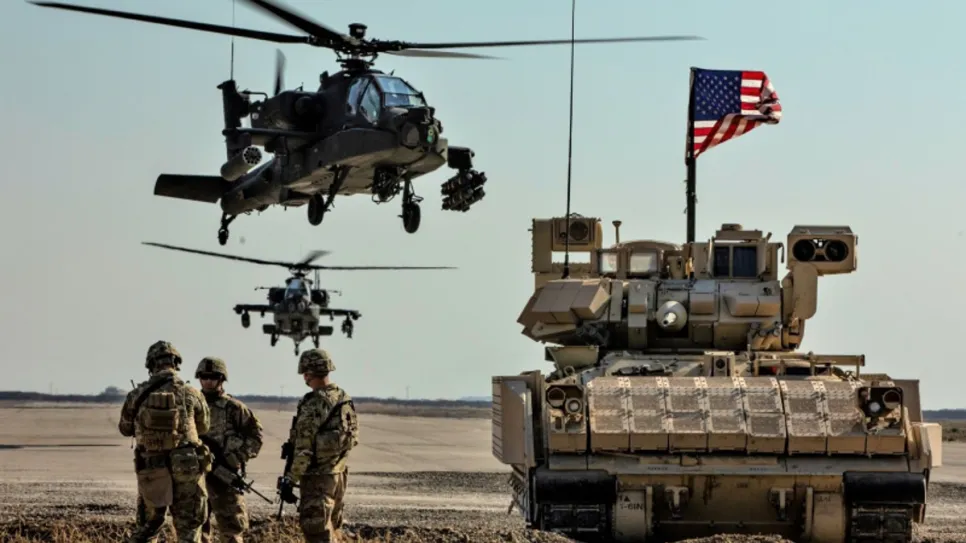
According to Abdul Salam, Syria’s accession opens the door for the coalition to establish military bases — air, land or missile deployment platforms — across Syrian territory. Coalition forces may also gain access to Syrian airbases for manned and unmanned aircraft tasked with counter-ISIS operations.
Mohammad adds that, given the ongoing military operations against ISIS, the coalition may seek to expand its presence across Syria. Existing footholds in Al-Tanf and northeastern Syria provide a foundation for such expansion, particularly if the coalition opts to launch broader campaigns beyond Syrian borders.
This article was translated and edited by The Syrian Observer. The Syrian Observer has not verified the content of this story. Responsibility for the information and views set out in this article lies entirely with the author.