
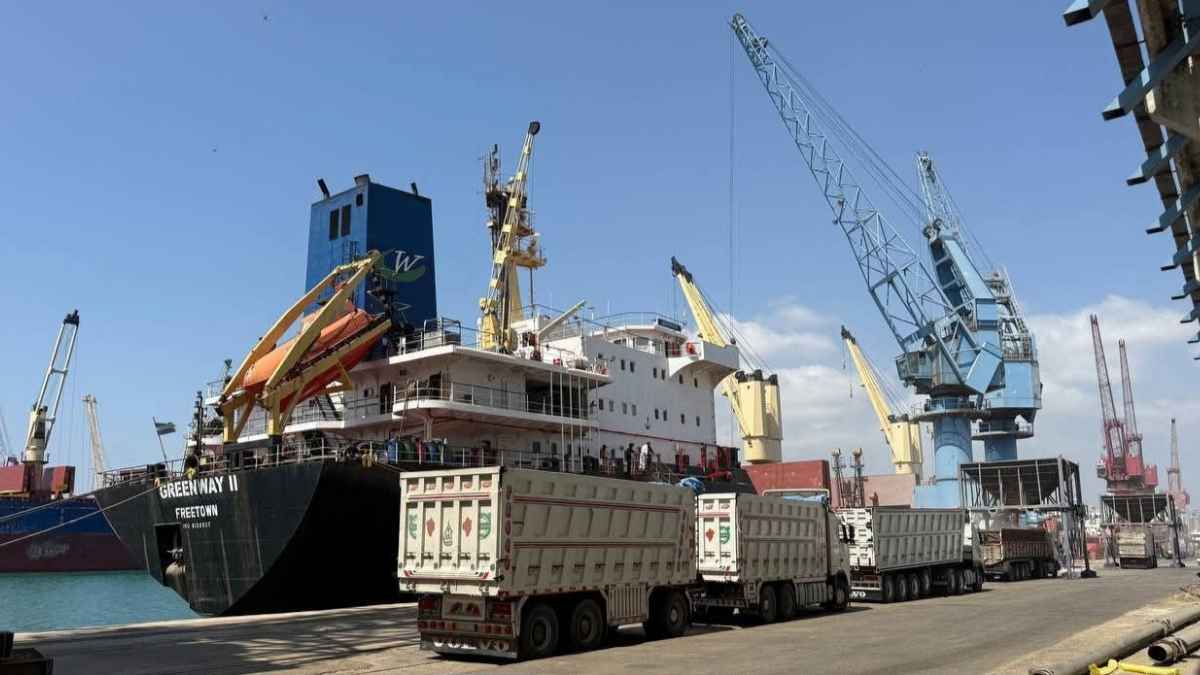
Two cargo ships carrying Ukrainian wheat docked at Syrian ports on Wednesday, 3 September, providing a critical boost to the country’s depleted grain reserves. The vessels, part of ongoing contracts secured by the Syrian Grain Corporation, underscore Damascus’s continued reliance on imports to avert shortages in essential food supplies.
Abdul Wahab Al-Safar, director of internal trade and consumer protection for the provinces of Latakia and Tartus, confirmed the arrivals. Speaking to Enab Baladi, Mazen Alloush, public relations director at the General Authority for Land and Sea Ports, offered further details: one vessel arrived in Latakia with 16,000 metric tonnes of wheat, while another docked in Tartus carrying 21,500 metric tonnes.
“The primary objective of these deliveries is to bolster Syria’s strategic wheat stockpiles,” Alloush said. “This ensures a steady supply of flour to both public and private bakeries across all provinces, thereby stabilising bread production—a daily staple for citizens.”
Alloush added that additional contracts are in progress, with further shipments expected soon as part of a broader strategy to meet domestic demand throughout the year.
Syria’s wheat sector has suffered severe setbacks in recent years, worsened by climate change and mounting economic pressures. The 2024 harvest was particularly poor, with agricultural experts describing it as a “drought year”. Production plummeted due to erratic rainfall—dropping to just 25% of annual averages in some regions—damaging up to 70% of cultivated land.
Estimates placed the 2024 yield at around 750,000 metric tonnes, a steep decline from 2 million tonnes the previous year. Prior to 2011, output typically ranged between 3 and 4 million tonnes, enough to meet domestic needs and leave a surplus for export to Europe. However, the US Department of Agriculture (USDA) offers a higher assessment for the 2024–25 marketing year, projecting production at 3 million tonnes—though still reflecting broader declines amid ongoing challenges.
These figures underscore the growing threat to national food security, prompting urgent government intervention to prevent agricultural collapse. Contributing factors include soaring production costs for fertilisers, seeds, pesticides and fuel; unstable and unprofitable crop prices; and limited state support. As a result, many farmers have shifted from wheat to more economical, higher-yield alternatives such as cumin, anise and nigella seeds.
High irrigation costs have further reduced productivity per acre, with some growers opting to sell standing crops for livestock grazing rather than harvesting them. Policy shortfalls, including minimal subsidies, have exacerbated the crisis.
Syria’s annual wheat requirement stands at approximately 4 million tonnes to feed an estimated 22.5 million people (based on 2020 figures), leaving an 80% domestic shortfall. Efforts to bridge this gap via international tenders have faced difficulties: a bid in April for 100,000 tonnes of milling wheat failed, although 6,600 tonnes from Russia arrived in Tartus during the same month.
The landscape changed significantly following the ousting of President Bashar al-Assad in December 2024. With the European Union lifting most economic sanctions in May 2025—excluding those related to security—imports have become more feasible and cost-effective. The easing of restrictions has eliminated burdensome bank transfer fees (previously adding $2–5 per $100) and streamlined financial transactions.
Ukraine has emerged as a key supplier in the post-regime-change era, having delivered humanitarian aid, including 500 tonnes of wheat flour in December 2024 under its “Grain from Ukraine” initiative. By 2025, amid a historic drought, Syria’s import requirements surged to a record 2.15 million tonnes for the 2025–26 season—up 53% from the previous year, according to USDA projections. The Food and Agriculture Organization (FAO) estimates the 2025 harvest at just 1.2 million tonnes, more than 60% below average.
As Syria navigates post-conflict recovery, these wheat shipments—potentially including Ukrainian grain routed through intermediaries—represent a vital lifeline. Yet with domestic production forecasts remaining bleak, sustained international assistance and meaningful domestic reform will be essential to securing long-term food security.
This article was translated and edited by The Syrian Observer. The Syrian Observer has not verified the content of this story. Responsibility for the information and views set out in this article lies entirely with the author.