
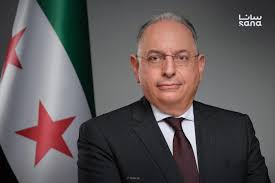
In a declaration marked by optimism and strategic intent, Syria’s Minister of Finance, Muhammad Yasir Barniya, has announced a turning point in the country’s engagement with the International Monetary Fund (IMF) and the World Bank Group. The Syrian delegation’s participation in the annual meetings of these leading global financial institutions, he stated, represents a qualitative leap forward—ushering in new avenues for fiscal, technical, and economic cooperation.
A Strategic Shift with the IMF
In a statement published on his official Facebook page, Minister Barniya outlined the outcomes of recent discussions with the IMF. These talks have culminated in an agreement on a series of technical assistance programs, spanning fiscal and banking reform, public finance management, statistical development, and public debt oversight. The first of these IMF missions is expected to arrive in Damascus this week, marking a concrete step towards sustained engagement.
In addition, Syria and the IMF have agreed to initiate Article IV consultations within the next six months—an important element of the Fund’s oversight framework. Minister Burnieh described this as “crucial for fostering an investment-friendly environment,” laying the groundwork for a Staff Monitored Program. This non-lending arrangement is designed to support reform efforts while respecting Syria’s sovereign economic decision-making.
Significantly, the Minister announced the appointment of a resident IMF representative in Damascus—made possible by the lifting of previous security restrictions on IMF personnel. This, he said, reflects a “qualitative transformation” in Syria’s financial relations with the international community.
World Bank Engagement and Sectoral Investment
On the World Bank front, Minister Barniya revealed plans for at least six technical assistance missions to Syria in the coming weeks. These will focus on key sectors including energy, water, education, healthcare, transport, financial governance, and infrastructure. Agreements reached in Washington foresee development grants totalling up to one billion US dollars over the next three years—aligned with Syria’s priority sectors.
Furthermore, Syria has resumed cooperation with the International Finance Corporation (IFC) and the Multilateral Investment Guarantee Agency (MIGA). This move aims to attract investment and strengthen the private sector’s role in economic recovery. A permanent World Bank office is also set to open in Damascus, intended to streamline project implementation and coordinate technical support efforts on the ground.
Signs of Thaw in U.S. Treasury Relations
In a parallel development, Minister Barniya spoke of a notable shift in engagement with the U.S. Department of the Treasury. What had once been limited to consultations has now progressed to what he described as a “framework of cooperation and partnership.” He credited Syria’s diplomatic efforts with rebuilding international confidence—paving the way for economic dialogue and coordination.
These developments dovetail with ongoing talks with Arab and regional financial institutions, aimed at launching joint investment ventures and reintegrating Syria into the regional economic fold.
A Forward-Looking Vision
Concluding his remarks, Minister Barniya expressed gratitude to the leadership of both the IMF and the World Bank for what he termed their “exceptional responsiveness” to Syria’s calls for cooperation. He pledged that the next phase would be devoted to leveraging international support to drive national development and reconstruction, underpinned by comprehensive fiscal and economic reform.
These announcements follow high-level meetings held in Washington on 19 October, where Minister Barniya met with Eric Meyer, U.S. Treasury Assistant Secretary for Middle East Affairs, and Ousmane Dione, World Bank Vice President for the Middle East and North Africa. Discussions focused on reinforcing Syria’s financial reform efforts and expanding technical cooperation—signalling a shared commitment to rebuilding economic resilience and re-establishing Syria’s place within the global financial system.
This article was translated and edited by The Syrian Observer. The Syrian Observer has not verified the content of this story. Responsibility for the information and views set out in this article lies entirely with the author.