
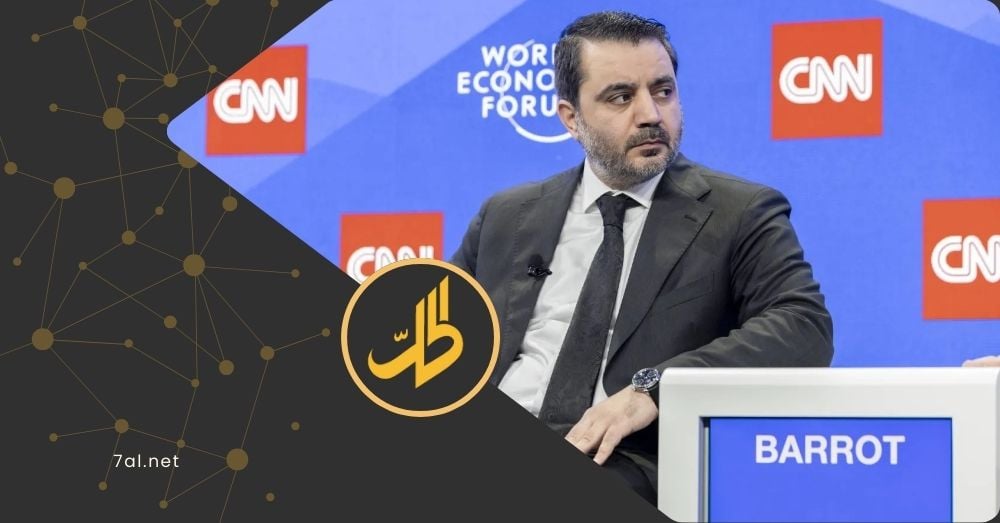
Syrian Foreign Minister Asaad Shibani has said that repeated Israeli attacks following the collapse of Bashar al-Assad’s regime in December last year were “unjustified,” and have made talks of normalisation with Israel “difficult at present.” However, he stressed that Damascus “poses no threat to anyone in the region, including Israel.”
Speaking to American journalist Fareed Zakaria on CNN, Shibani said: “The Syrian people, after 8 December, were surprised by the repeated Israeli attacks and strikes, which had no justification whatsoever.”
Shibani on Normalisation with Israel
The foreign minister said the rationale previously given by Israel—concerning the presence of Iranian militias, Hezbollah, and the former regime—“has vanished with that regime’s departure, leaving only the Syrian people.”
He reiterated that Syria’s official stance is built on the principle that “Syria poses no threat to anyone, including Israel.” Yet, he added: “These positive messages from Syria’s new face—the face of peace and cooperation—have been met with repeated Israeli threats and attacks.”
Addressing the prospect of normalisation, Shibani said: “It is difficult to talk about normalisation now, especially as Syria is under Israeli threat, with the Golan Heights and other areas occupied since 8 December last year.”
He stressed that the first step must involve restoring conditions to their pre-December state, de-escalating tensions, and sending positive signals to reassure the Syrian public. “Only then can we begin discussing the region’s future,” he said.
Have Assad Regime Figures Been Removed from U.S. Sanctions Lists?
Syria and Israel are currently engaged in indirect talks aimed at securing an agreement that Damascus hopes will put an end to Israeli airstrikes and result in the withdrawal of Israeli forces that moved into southern Syria after Assad’s fall.
What Did He Say About Events in Suwayda and the Coast?
Commenting on the clashes, violations, and massacres that occurred in Suwayda province and coastal regions during March and July, Shibani reaffirmed the state’s commitment to civil peace and accountability. He confirmed the formation of two fact-finding committees and expressed openness to an independent UN commission for investigation.
He accused Israel of exacerbating the crisis in Suwayda, saying it had “encouraged outlaw groups and obstructed efforts to integrate local forces into state institutions.” He added that this “external interference” has been a key obstacle to de-escalation since the very beginning.
Shibani said the roadmap developed in partnership with the United States and Jordan “has received broad local and international support” and “reflects the aspirations of our Druze brothers in Suwayda.” He added that Damascus is committed to resolving internal problems through national mechanisms “that ensure civil peace and do not serve foreign interests.”
The minister also stressed the importance of controlling loose weapons: “The state cannot ignore the presence of uncontrolled arms, as it leads to chaos, division, and potential civil war.” He said the state alone must maintain the monopoly on force, through “a national army responsible for protecting citizens, borders, and national interests.” He extended an invitation for local factions to join this army.
Relations with Washington
Turning to U.S.-Syria relations, Shibani described the policy of U.S. President Donald Trump after the Assad regime’s collapse as “positive and deserving of the Syrian people’s respect.” He said Trump’s May decision to lift sanctions on Syria “was widely welcomed” and helped alleviate the suffering of the population.
He argued that the original justification for the sanctions had disappeared, and therefore, “they must all be lifted and not used as bargaining tools by political actors bartering with the Syrian people’s freedom and dignity.”
ISIS Targeted in Idlib
Meanwhile, the Turkish Interior Ministry has announced the killing of eight ISIS fighters during a military operation in rural Idlib.
Shibani acknowledged that some sanctions remain in place, including the Caesar Act of 2020—targeting those supporting the former Syrian regime—and the 1979 U.S. law listing Syria as a state sponsor of terrorism. He asserted that “the Syrian people have no connection to these decisions.”
He expressed hope that these measures would be lifted soon: “We believe this will happen, and it will help the Syrian people rebuild their country. Lifting sanctions means stability, development, and the return of refugees.”
In conclusion, Shibani said he believes Syria will be “safe and stable” within five years, and that it will be moving towards economic development. He expressed optimism about Syria’s future ties, saying the country is looking to become “open to the European Union and its member states, and to establish strategic relations with the United States.”
This article was translated and edited by The Syrian Observer. The Syrian Observer has not verified the content of this story. Responsibility for the information and views set out in this article lies entirely with the author.