
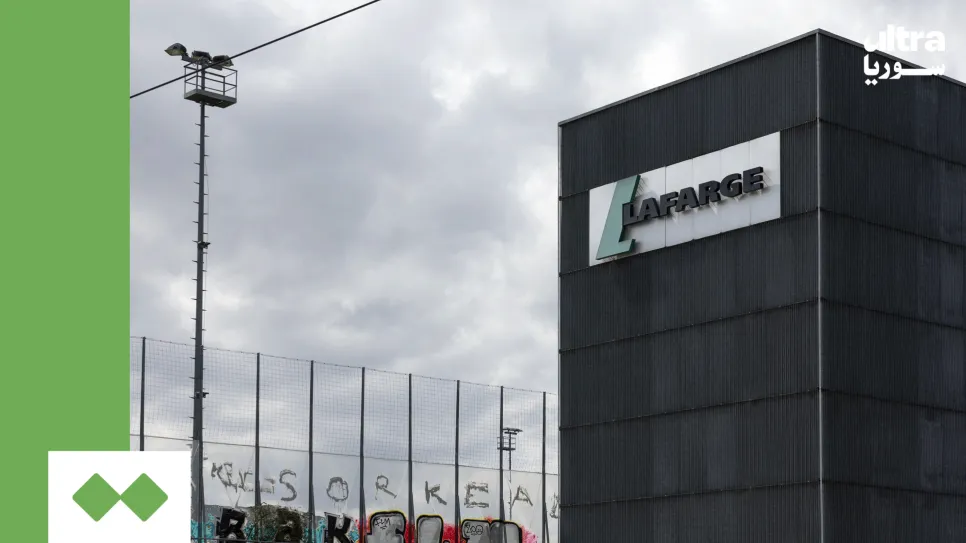
The French multinational Lafarge stands accused of paying millions of euros to terrorist groups in Syria—including the Islamic State (Daesh) and Jabhat al-Nusra—in exchange for securing its business interests in the war-torn country during 2013 and 2014.
The trial opens this Tuesday in Paris, where the company faces serious charges of financing terrorism to maintain operations at its northern Syrian cement plant during a period when the area was under the control of extremist factions.
According to the indictment, Lafarge, through its Syrian subsidiary Lafarge Cement Syria, paid intermediaries and armed groups to ensure the safe passage of its convoys and the security of its facilities in the town of Jelabiya, located in rural Aleppo.
The charges also implicate former CEO Bruno Lafont, five senior executives from the firm’s security and administrative divisions, and two Syrian intermediaries.
Court documents reveal that Lafarge transferred nearly five million euros to terrorist groups and local agents between 2013 and 2014 in an effort to protect its factory, ensure staff safety, and maintain production amid an environment dominated by extremist forces.
The controversy centres on a factory Lafarge built in 2010, following an investment of nearly 680 million euros. Unlike other international companies that withdrew from Syria in 2012, Lafarge chose to remain, evacuating only its expatriate employees while continuing to employ Syrian staff—up until Islamic State forces took control of the area in September 2014.
Now owned by the Swiss multinational Holcim, Lafarge is charged with “financing terrorism” and “violating international sanctions.” Holcim denies any knowledge of Lafarge’s activities in Syria prior to their 2015 merger.
The case stems from a judicial investigation launched in 2017, prompted by complaints from non-governmental organisations and former employees. They allege the company not only financed terror groups but also recklessly exposed Syrian workers to danger by keeping the plant operational under militant rule.
The trial is expected to continue through to mid-December.
This article was translated and edited by The Syrian Observer. The Syrian Observer has not verified the content of this story. Responsibility for the information and views set out in this article lies entirely with the author.