
Syria’s high-profile diplomatic return to the world stage at the United Nations General Assembly has taken a striking turn, with reports that Damascus and Israel are edging closer to a de-escalation agreement—potentially marking a significant breakthrough in a decades-long conflict.
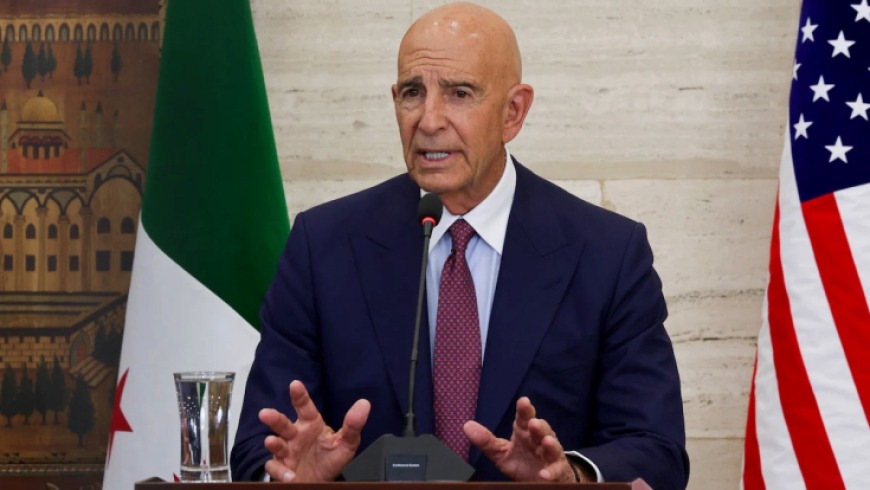
The announcement came from U.S. Special Envoy to Syria, Tom Barak, who told reporters on the sidelines of the General Assembly that the two adversaries were nearing an accord. “Syria and Israel are approaching a de-escalation agreement, under which the occupation [Israel] will stop its attacks on Syrian territory,” Barak stated. He described the talks as a “first step towards the security agreement that the two sides are negotiating.”
Details of the Prospective Deal
According to Envoy Barak, the proposed agreement involves a reciprocal understanding: Israel would cease airstrikes within Syrian territory, while Syria would refrain from deploying heavy military equipment near the border with the Israeli-occupied Golan Heights.
“I believe all parties are engaging in good faith,” Barak added, although he cautioned that a final deal may not be reached this week, citing delays due to limited progress and the ongoing Jewish High Holidays.
President Sharaa Signals Openness to Dialogue
The U.S. envoy’s remarks were reinforced by unprecedented public statements from Syrian President Ahmad al-Sharaa. Speaking during a dialogue at the Concordia Summit, President Sharaa affirmed Syria’s willingness to engage constructively. “Syria is prepared to discuss Israel’s security concerns,” he said. “We do not wish to enter into conflict with Israel and are working towards calm.”
He framed the de-escalation initiative within Syria’s broader strategy. “Syria is moving towards ensuring its territory poses no threat to any neighbour,” Sharaa declared, adding that the country is currently in a “phase of reconstruction” and requires “normal relations with all states.”
He revealed that negotiations had progressed significantly under the framework of the 1974 Disengagement of Forces Agreement, a longstanding accord that governs military positions in the region. “We must find a way for Syrians and Israelis to coexist if we are serious about reaching an agreement,” Sharaa said, while also referencing regional dynamics. He noted that ongoing conflict in Gaza continues to inflame public sentiment in Syria, influencing the broader political atmosphere.
A Dual-Track Diplomatic Approach
The potential understanding with Israel adds a powerful geopolitical dimension to President al-Shar’s diplomatic campaign in New York. His visit has been characterised by a dual-track strategy: advancing Syria’s economic recovery while restoring its international political standing.
His engagements have included a major economic roundtable with representatives from 39 multinational firms, alongside bilateral meetings with leaders from Jordan, Kuwait, Italy, Yemen, and Pakistan, as well as talks with U.S. Secretary of State Marco Rubio.
The convergence of economic outreach, regional diplomacy, and now possible security arrangements reflects a pivotal moment in Syria’s international reintegration. It also suggests that the U.S. and its allies may be testing a new framework—linking Syria’s economic reopening to verifiable moves towards regional stability.
As President Sharaa remarked, “The ball is in Israel’s court and in the international community’s hands to determine the real paths we should take.”
This article was translated and edited by The Syrian Observer. The Syrian Observer has not verified the content of this story. Responsibility for the information and views set out in this article lies entirely with the author.