
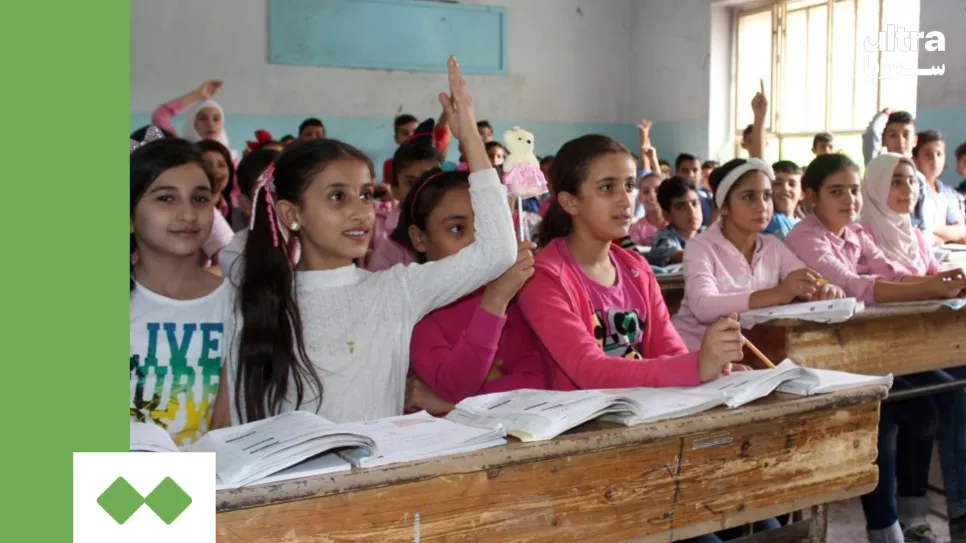
The presidential decree No. 13 concerning the Kurdish component in Syria marked a pivotal moment in the path toward recognition of Kurdish identity as an integral part of the Syrian social fabric, particularly as it permitted the teaching of the Kurdish language in schools located in predominantly Kurdish areas. Yet this legislative shift necessarily requires an organized executive effort, grounded in the laws and regulations in force within the Syrian Ministry of Education, in order to translate the decision from a legal framework into formal educational practice that institutionally reflects Kurdish language and culture.
In this context, the Ministry of Education issued decision No. 943 assigning the National Center for Curriculum Development the task of preparing Kurdish-language curricula for all educational stages. The work is to be completed within a period not exceeding six months, with preparation, approval and printing finalized before the start of the next academic year, amid methodological and academic challenges related to the nature of the language and the mechanisms of teaching it.
Weekly Hours and Curriculum Content
The mechanisms for teaching Kurdish in schools have sparked broad debate and numerous questions, particularly regarding the status of the subject and the number of weekly hours allocated to it. In remarks to Ultra Syria, Dr. Issam Ramadan, director of the National Center for Curriculum Development, explained that Kurdish would be taught at a rate of two periods per week, alongside linguistic and cultural activities to be held in activity halls that will be established in the schools concerned.
Ramadan indicated that work is under way to develop a comprehensive curriculum linking language with Kurdish identity and culture, while taking into account the specificity of vocabulary and texts for each grade level. Kurdish will be taught from the first year of primary school through the third year of secondary school, with a focus on equipping learners with core language skills – listening, speaking, reading and writing. Linguistic and cultural content appropriate to different age groups will also be provided, accompanied by attractive and age-suitable design and printing for each stage. He confirmed that the curriculum would be built according to international reference frameworks in language education, such as the Common European Framework of Reference for Languages (CEFR) and the standards of the American Council on the Teaching of Foreign Languages (ACTFL).
Criticism of the Preparation Process
Despite this step, academic and political researcher Marwan Hami criticizes the absence of a specialized committee comprising Kurdish academics and experts working in partnership with the Ministry of Education to prepare accredited curricula. He argues that the lack of such partnership renders the development process opaque and vulnerable to politicization and central oversight.
Hami notes that the use of the phrase “within the framework of national sovereignty” in Article Two effectively means that the content is subject to the approval of state institutions that have long regarded Kurdish identity as a threat. According to this view, the process of defining and codifying the language risks being emptied of its substantive meaning, reduced to a symbolic measure lacking real depth, and depriving Kurds of the right to develop their own linguistic and educational standards independently.
Shortage of Teaching Staff
Teaching Kurdish requires qualified and properly trained educational staff capable of implementing the new curricula. In this regard, Dr. Rawaa Al-Huswani, head of the Studies and Research Department at the National Center for Curriculum Development, stated that in the coming days the center will open nominations to select teachers of Kurdish who are proficient in the language and hold qualifications no lower than a secondary-school certificate.
Al-Huswani explained that accepted candidates will subsequently undergo ongoing training courses aimed at strengthening their linguistic and pedagogical skills in teaching Kurdish. Selection will be conducted through oral and written examinations assessing proficiency in reading and writing the language.
For his part, Marwan Hami believes that assigning the task of selecting and qualifying teaching staff to the Curriculum Development Center or similar bodies subordinate to the central executive authority necessarily subjects the process to a single state vision. He contends that standards of competence and eligibility may pass through undeclared filters, beginning with political loyalty, moving through security approvals, and ending with conformity to a narrow official narrative of national identity. This, he argues, could result in the exclusion of many genuine actors in the Kurdish linguistic and cultural field, whether independent academics or civil-society activists.
The “Kurmanji” Dialect in the Curriculum
Questions have also been raised about which Kurdish dialect will be adopted for instruction, given the presence of two principal dialects, Kurmanji and Sorani. In this context, Dr. Marah Kahila, head of Public Relations at the National Center for Curriculum Development, clarified that the adopted dialect is Kurmanji, as it is the most widespread in Syria and the mother tongue of the majority of Kurds in Syria, Turkey and Iraq, in addition to areas in Azerbaijan, Georgia and parts of Khorasan.
Kahila indicated that the number of Kurmanji speakers is estimated at between 15 and 20 million people. The Kurdish language subject will be introduced as an elective from the first year of primary school through the third year of secondary school. It will be included in grade calculations but will not affect overall promotion or failure.
Administrative and Legislative Obstacles
Dr. Issam Ramadan pointed to several obstacles that continue to limit the spread of Kurdish-language education, foremost among them the shortage of specialized staff capable of authoring and preparing curricula, in addition to the need to secure qualified teachers to cover all areas where instruction will be offered. Ongoing training and professional development will also be required in a manner that reflects the richness of the Kurdish language and its cultural depth.
For his part, Marwan Hami stresses that recognition of the Kurdish language through a presidential decree, rather than through a constitutional amendment, renders this right fragile and subject to cancellation or restriction through a subsequent decree or administrative decision. He believes this reality weakens any genuine incentive to build a long-term language policy, whether at the level of the state or civil society, and limits prospects for serious investment in the future development of Kurdish-language education.
This article was translated and edited by The Syrian Observer. The Syrian Observer has not verified the content of this story. Responsibility for the information and views set out in this article lies entirely with the author.
