
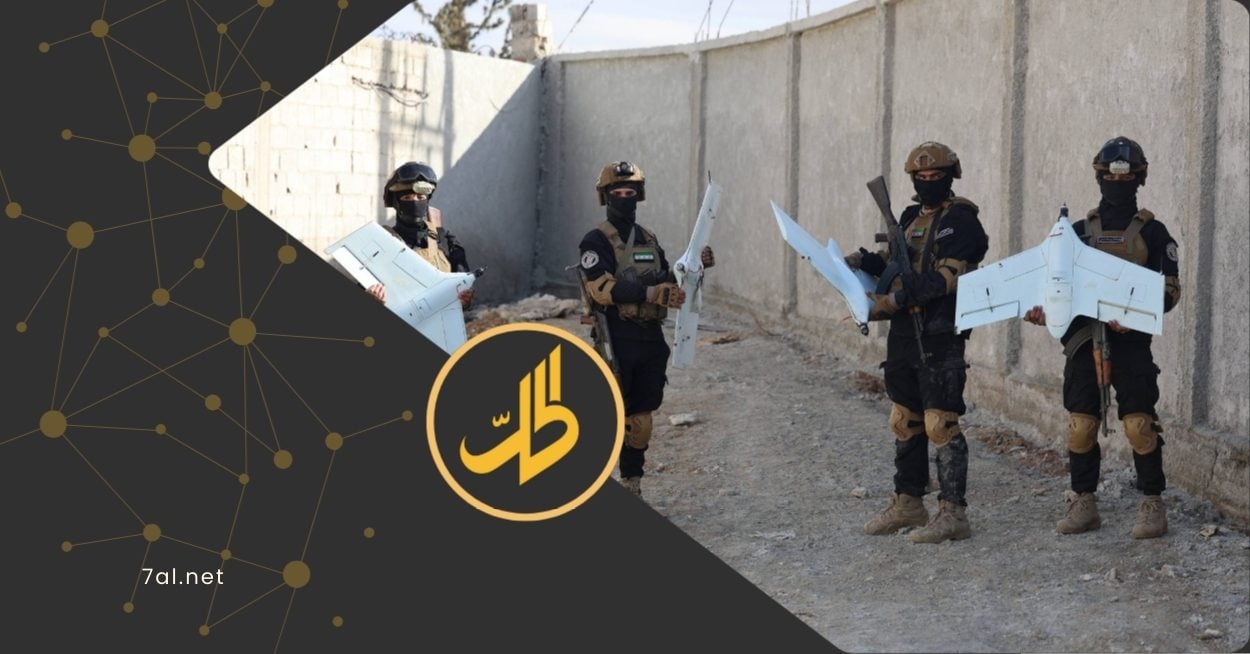
Syrian authorities announced on Monday that they had dismantled an armed cell accused of carrying out a series of rocket attacks on the Mezzeh military airport in Damascus. Officials said that preliminary investigations indicated the weapons used originated from the Lebanese group Hezbollah—a claim the group has firmly rejected.
In a statement, the Syrian Interior Ministry said that months of security investigations—focused on monitoring suspected launch sites in and around the capital—culminated in coordinated raids that resulted in the arrest of all cell members.
According to the ministry, surveillance operations in the Darayya and Kafr Sousa areas led to the identification of one suspect, whose arrest subsequently revealed the rest of the network. Authorities reported seizing rocket-launch platforms and drones allegedly prepared for use in “terrorist operations.”
The ministry added that initial interrogations pointed to links between the detainees and “external parties,” without naming them directly, but asserted that the seized rockets, launchers, and drones were sourced from Hezbollah.
Hezbollah’s media relations office swiftly issued a statement categorically denying the accusations, describing them as “arbitrary.” The group reiterated its longstanding position that it “has no activity, connection, or relationship with any party inside Syria, nor any presence on Syrian territory,” while affirming its commitment to Syria’s unity and security.
The announcement comes amid reports of sporadic attacks in the capital. In January, rocket shells fell in the Mezzeh area, and in December 2025 the military airport was targeted—incidents that caused no reported casualties.
Syrian security forces continue to operate in a complex environment marked by lingering weapons caches left behind by former armed groups and ongoing speculation about emerging security arrangements in the region.
This article was translated and edited by The Syrian Observer. The Syrian Observer has not verified the content of this story. Responsibility for the information and views set out in this article lies entirely with the author.