
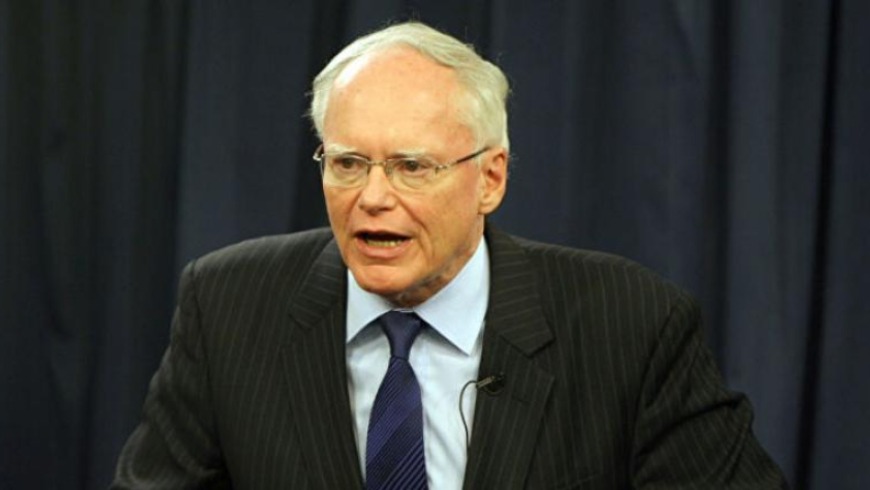
Former U.S. Special Envoy for Syria James Jeffrey stated that Washington’s relationship with the Syrian Democratic Forces (SDF) was a “temporary and tactical partnership” solely aimed at defeating ISIS. He emphasized that the United States never offered any lasting political or military guarantees to the Kurds in Syria.
Jeffrey made these remarks in an interview with Voice of America, rejecting characterizations of the partial U.S. withdrawal from northern Syria as a “betrayal of the Kurds.” He explained that U.S. officials have consistently clarified that the relationship was temporary and based on the shared objective of combating ISIS.
Jeffrey noted that successive U.S. administrations, since the Obama era, have not committed to defending the Kurds against other parties. “We never told the Kurds that we would ultimately support an autonomous Kurdish region or defend them militarily against the Syrian government or the opposition,” he said.
He added that the United States supports UN Security Council Resolution 2254 regarding a political settlement in Syria and has repeatedly informed Kurdish representatives that it favors a solution within that framework.
Jeffrey also affirmed that the Syrian government, led by Ahmad al-Shara, is “cooperating with the international community” to implement steps outlined in Resolution 2254. He noted that most regional countries—except Israel—support the reunification of Syria, a position also backed by Washington.
Regarding future cooperation, Jeffrey indicated that U.S.-Kurdish collaboration remains possible within the context of the fight against ISIS. He described the most realistic solution as the “integration of Kurdish forces into the Syrian army with strong local administration,” while ruling out the establishment of an autonomous Kurdish entity in Syria similar to the Kurdistan Region of Iraq.
This article was translated and edited by The Syrian Observer. The Syrian Observer has not verified the content of this story. Responsibility for the information and views set out in this article lies entirely with the author.