
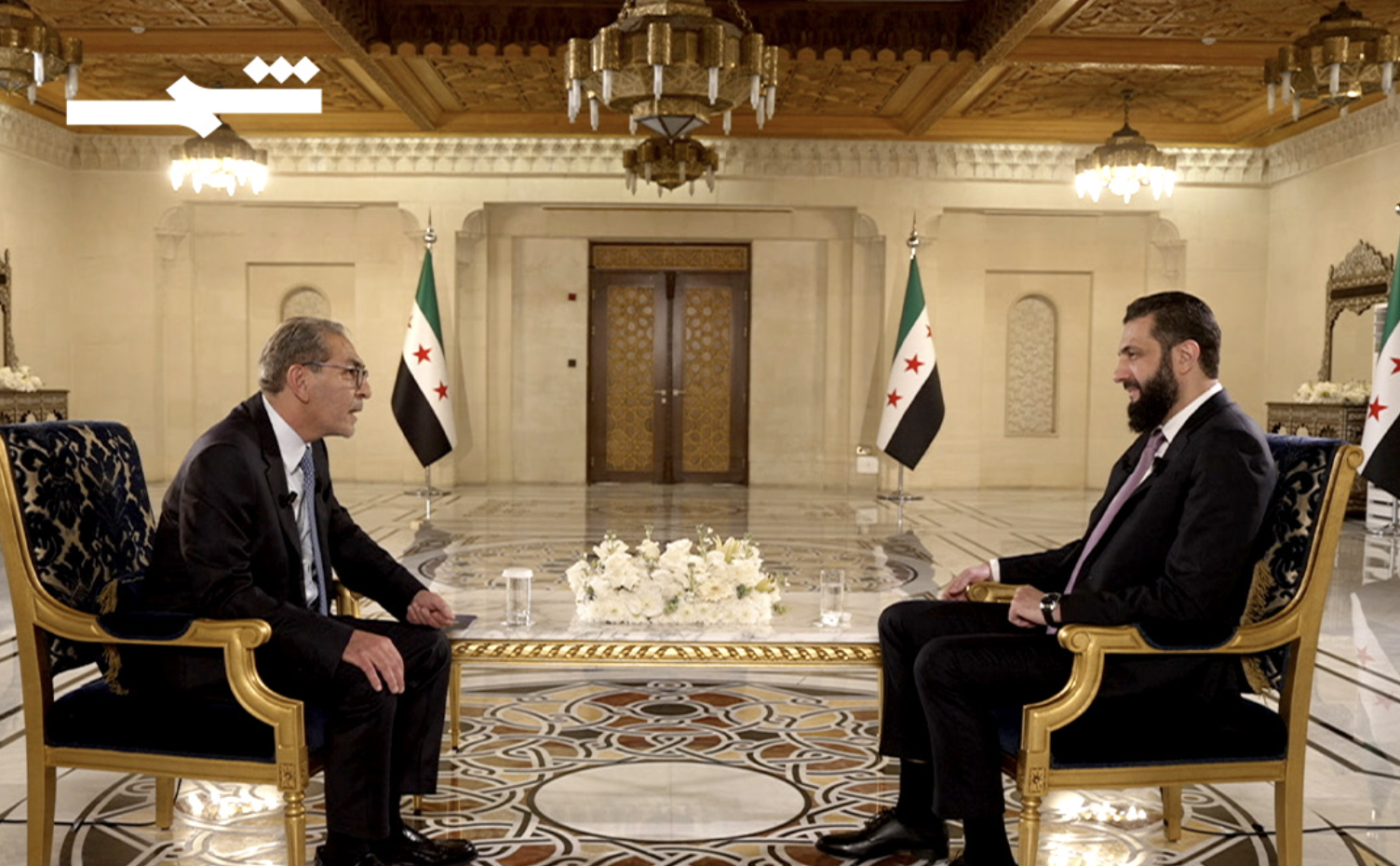
German journalist and Middle East analyst Kristin Helberg, who has spent years reporting on Syria and is frequently invited as a commentator in German media, says Syria’s transitional president Ahmad al-Sharaa is expected in Berlin on Monday – a visit that, in her view, lays bare how deeply Syrian society remains divided, whether inside the country or scattered across exile. For some Syrians, he is a man who should be arrested for his past as a jihadist “responsible for thousands of deaths”. For others, he is the “liberator” who ended 54 years of Assad rule.
Helberg notes that she is often asked, as a Syria specialist, to decide which view is correct. But the reality, she argues, is far more complicated.
One undeniable fact is that al-Sharaa has managed to gain international confidence abroad, a development that matters greatly for reconstruction and Syria’s return to the world. Yet at the same time, she believes he has lost restraint at home, where the transition is unfolding amid fear, revenge, and deep mistrust.
Across Syria, Helberg says, people continue to be killed, tortured, or persecuted because they are Alawites, Druze, or Kurds. The perpetrators, she argues, are extremist ideologues who dehumanise their fellow Syrians, branding them “pigs”, “infidels”, “traitors”, or “separatists”. What makes this even more alarming is that some of those responsible wear the uniforms of the new security forces, acting in direct contradiction to al-Sharaa’s public assurances that minorities are a natural part of Syrian society and have nothing to fear.
The result, she says, is that many non-Sunnis and non-Arabs no longer feel safe in the “new Syria”. What began as scepticism has, in many communities, turned into outright rejection. Trust, Helberg argues, can only grow if the Sunni Arab majority clearly defends the safety and equal status of all Syrians. At the same time, she adds, Alawites, Druze, and Kurds must also avoid falling into alliances with Assad-era generals or with Israel, warning that neither actor has Syria’s interests at heart.
Helberg stresses that the picture is not uniformly bleak. Many members of the new security forces, she says, are genuinely trying to protect civilians and stabilise the country. Yet they face regular attacks from remnants of the former regime operating underground, as well as from the Islamic State, both of which seek to sabotage the transition.
The deeper problem, she argues, is that Syria’s social fabric has been shattered by almost 14 years of war and more than five decades of totalitarianism. Propaganda, sectarian narratives, and political agitation have not disappeared with the fall of Assad. Instead, they have adapted to a new environment where social media accelerates misinformation “like fire”. Many Syrians, she says, now consume only the information that reinforces their existing worldview, making dialogue almost impossible. The divisions between Kurds and Arabs, Alawites and Sunnis, Druze and Islamists appear entrenched, while foreign powers – especially Turkey and Israel – are fuelling tensions to advance their own interests.
Helberg argues that al-Sharaa’s biography reflects a blend of three ideologies: pan-Arabism, Islamism, and nationalism. For many Syrians, particularly among Sunni Arabs, this makes him a familiar and even reassuring figure. But she warns that the same ideological mix risks reinforcing a state model that alienates minorities. If al-Sharaa truly wants to convince Kurds, Druze, and Alawites that Syria belongs to all its citizens, Helberg writes, the country will need a decentralised, democratic, pluralist order – not an authoritarian, centralised system dominated by Sunni Arab identity.
Still, she acknowledges that many Syrians believe only a strong central state can keep the country intact. Yet she insists that unity will not be achieved by concentrating power in Damascus alone. Those entrusted with responsibility at the local level, she argues, will be more likely to solve problems and identify with the new Syria rather than resist it.
Decentralisation, in her view, is not simply a Kurdish demand in the northeast or a Druze preference in the south. It is a practical necessity rooted in Syria’s lived experience over the past decade. Many regions have already operated under forms of local self-administration for years, managing daily life without meaningful oversight from Damascus. The interim government, she argues, should recognise this reality and allow greater participation across Syria’s 14 provinces.
A central and urgent test, Helberg says, is the agreement between al-Sharaa and SDF commander Mazloum Abdi on integrating the SDF and the Autonomous Administration into the Syrian state. She rejects simplistic portrayals of northeast Syria, arguing that it is neither merely a separatist PKK project nor an ideal democratic model. Kurdish society itself is divided, and not all Kurds support the SDF. Yet many fear a repeat of massacres such as those reported in March and July. At the same time, she notes, many Arab residents in Raqqa and Deir ez-Zor view the SDF as an occupying force, and the SDF has also committed abuses.
Helberg argues that any settlement must preserve certain gains, such as Kurdish-language education. She suggests that structures like the YPJ could be transformed into local police forces. Symbolism also matters, she adds: renaming the “new army” the Syrian Army would reflect a national identity that is majority Arab but not exclusively Arab. Recognising Newroz on 21 March as a public holiday, she says, could serve as a conciliatory gesture.
So far, Helberg concludes, al-Sharaa has relied on control and technocratic competence, bringing in individuals rather than organisations or political parties. But whether Syria becomes democratic will depend largely on him, because power remains concentrated in the presidency. He must demonstrate, she argues, that he is serious about participation, institutions, and freedom of expression. If elections are to take place in four years, Syrians will need the ability to organise politically, protest without fear, and access independent information.
The transition, she warns, is also threatened by entrenched interests built over decades. Syria could slide into a new version of authoritarianism – centralised, corrupt, and favour-based – producing the opposite of what Syrians once demanded in the streets.
Will Syria succeed? Helberg says the answer is uncertain. But if it does, she argues, it will only happen through the collective effort of all Syrians, together.
This article was translated and edited by The Syrian Observer. The Syrian Observer has not verified the content of this story. Responsibility for the information and views set out in this article lies entirely with the author.