
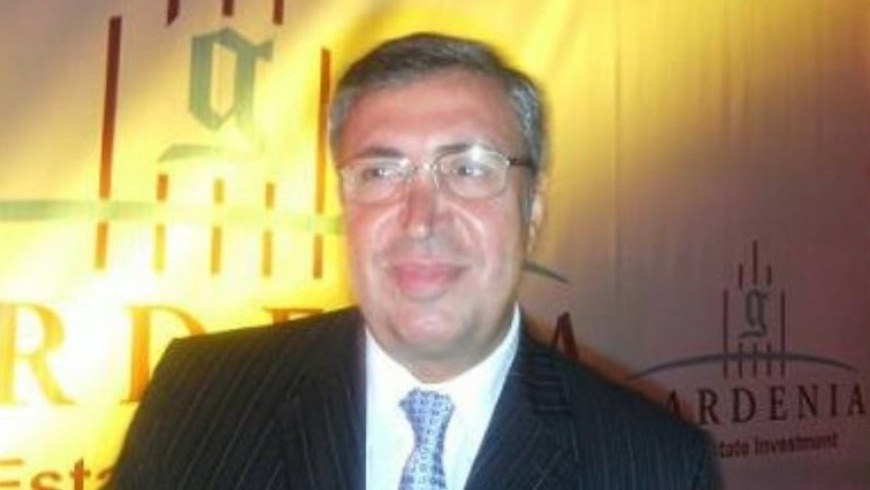
The General Court of the European Union has dismissed an appeal lodged by Syrian businessman Issam Anbouba against the Council of the European Union, affirming the lawfulness of the decision to retain his name on the sanctions lists imposed in connection with the situation in Syria.
The Court stated that the Council’s decision of 27 May 2024, which extends Anbouba’s inclusion on the lists enforcing asset freezes, economic resource restrictions, and entry bans within EU member states, rests upon sufficient justification and a clear legal criterion. This criterion pertains to his designation as “a prominent businessman carrying out activities in Syria.”
The Fall of Assad Does Not Alter the Assessment of the 2024 Decision
During the proceedings, Anbouba argued that subsequent developments, including the fall of the Assad regime on 8 December 2024, should lead to the lifting of measures against him. The Court, however, emphasised that the legality of sanctions decisions is assessed according to the facts and the law at the time the contested decision was adopted—namely, on 27 May 2024. Consequently, subsequent events do not affect the evaluation of this specific decision’s legality.
The European Court based its decision to maintain Anbouba on the sanctions lists on his status as a prominent businessman active across multiple sectors within the Syrian economy. It noted his financial ties to officials within the Assad regime, as well as his role as a co-founder of *“Sham Holding,”* a company formerly owned by businessman and cousin of Bashar al-Assad, Rami Makhlouf.
The Court found that the Council had provided *“an adequate surplus”* of supporting material from public sources, including reports, articles, and research, demonstrating tangible indicators that the criterion of *“prominent businessman”* applied to him. It concluded that Anbouba *“did not succeed in rebutting the presumption of association with the Assad regime that applies to this category under the legal framework of the European sanctions.”*
Rejection of Claims Regarding Defence Rights, Property, and Reputation
The Court also rejected arguments concerning insufficient reasoning, violation of rights of defence, the right to a fair trial, and effective remedy. It deemed the grounds for listing to be comprehensible and noted that the European Council had allowed the applicant access to the material relied upon and the opportunity to submit observations.
Regarding claims of infringement upon property rights, proportionality, private life, and reputation, the Court acknowledged that the restrictions imposed by sanctions may indeed be impactful. However, it ruled that they are justified by an overriding public interest objective: to exert pressure on supporters of the Assad regime and to protect civilians. These measures, the Court held, do not exceed what is necessary to achieve this aim, particularly as licensing mechanisms and humanitarian exemptions exist.
Who is Issam Anbouba?
Issam Anbouba stands as one of the most prominent economic and financial faces of the Assad regime, and among the foremost businessmen who formed the economic backbone supporting it during the two decades preceding the outbreak of the Syrian revolution.
The ascent of Issam Anbouba and his fortune has been inextricably linked to his position within the narrow inner circle of the ruling power under the Assad regime. He benefited from the network of privileges and protection afforded by the regime to a select group of trusted businessmen.
Born in Homs in 1952, Anbouba completed his secondary education in Latakia and studied petroleum engineering in the United States. He worked for Halliburton before later moving to the United Arab Emirates, where he began his commercial activities in the real estate and trade sectors. The pivotal turn in his economic trajectory, however, came with his return to Syria following the enactment of Investment Law No. 10 in 1991.
In the early 1990s, Anbouba founded “Proteinia,” the largest vegetable oil factory in Syria and the Middle East, which formed the foundational pillar of his wealth. Yet his true business expansion began with Bashar al-Assad’s rise to power in 2000, when he transformed into one of the pillars of the new bourgeoisie upon which Assad relied to reshape the Syrian economy according to a logic of monopoly and an alliance between political power and capital.
During this phase, Issam Anbouba’s investments expanded to encompass food, chemical, and agricultural industries, alongside real estate, tourism, banking, insurance, and education.
In the two decades preceding the Syrian revolution, Anbouba built a vast economic empire comprising dozens of companies and factories employing thousands of workers, extending from cement and gypsum board to grains and transport. He also held influential stakes in banks, insurance, and currency exchange companies.
This expansion was not separate from Anbouba’s political and economic standing; rather, it resulted from his functional role within the Assad regime’s system as a trusted businessman tasked with managing and deploying capital linked to the authorities.
This role was reinforced through his close partnerships with Rami Makhlouf, the foremost economic arm of the Assad family—beginning with “Sham Holding” and extending to major projects such as the Choueifat School and “Sama Syria,” in addition to his position as a major agent for the company “Syriatel.”
Subsequently, European Union sanctions lists classified him as one of the primary financial conduits for Rami Makhlouf, and thus part of the economic structure underpinning Assad’s rule.
In 2011, the European Union imposed sanctions on Anbouba on charges of providing economic support to the Assad regime. A European court later affirmed these sanctions in subsequent rulings, stating that his success as a prominent businessman could not be divorced from the favouritism shown to him by the Assad regime, in return for the financial and economic support he provided to the authorities.
In 2017, the “Panama Papers” revealed that Issam Anbouba owned offshore companies in Lebanon—a path considered one of the tools for circumventing international sanctions, similar to several other Syrian businessmen linked to the regime. This further solidified his image as a cornerstone of the Assad economic apparatus, rather than merely an independent investor.
This article was translated and edited by The Syrian Observer. The Syrian Observer has not verified the content of this story. Responsibility for the information and views set out in this article lies entirely with the author.
