
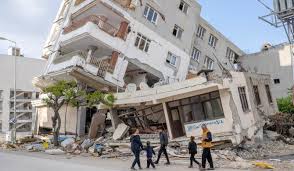
In a pivotal move towards national recovery, large-scale operations to clear and recycle the rubble of Syria’s war-torn cities are now under way. Supervised jointly by the Syrian Civil Defence (The White Helmets) and the Ministry of Emergency Management, the initiative has already processed more than 550,000 cubic metres of debris—transforming a landscape of destruction into raw materials for rebuilding.
Strategic Clearance and Processing
The effort forms part of a wider national plan to clear debris from heavily affected areas. Munir Mustafa, Director of the Syrian Civil Defence, told Al-Modon that current operations are concentrated in the cities of Daraya and Douma. There, the project aims to remove 75,000 cubic metres of rubble, with around 35,000 cubic metres already undergoing recycling through a dedicated processing system.
“Work is progressing simultaneously on removal and recycling,” said Mustafa. A specialist sorting machine separates metals from the debris before the remaining material is crushed and graded for reuse in construction.
Beyond Daraya and Douma, clearance has been completed in parts of Aleppo city, the southern Idlib countryside, and several areas surrounding Hama and Damascus. Operations are ongoing in the western Idlib region and Latakia countryside. Altogether, approximately 550,000 cubic metres of rubble have been cleared nationwide.
Overcoming Major Hurdles
The operations depend on Civil Defence equipment, supported by private contractors for transport and technical recycling. Mustafa also revealed plans to acquire a new, environmentally friendly recycling machine to improve future processing efficiency.
The teams face formidable challenges. Chief among them are issues surrounding private property rights and the lethal remnants of war. “We are currently focusing on public buildings and roadways,” Mustafa said, stressing that debris on private land is not removed without the explicit consent of property owners.
An even greater hazard comes from the presence of thousands of unexploded ordnances and landmines hidden in the rubble. These dangers necessitate strict safety measures at every stage of the clearance process.
From Rubble to Resource: The Recycling Process
The recycling scheme turns the remnants of destroyed buildings into construction materials suitable for infrastructure and rebuilding projects. Debris is collected and sorted to separate metal, wood, and hazardous waste, before being crushed and screened to produce graded aggregate. Once cleaned and tested to meet engineering standards, the recycled material can be used for road foundations, backfill, and low-stress concrete applications.
According to international disaster and crisis management expert Mohamed Al-Hajj, the value of the initiative extends well beyond engineering. “It enables roads to be reopened, neighbourhoods to be cleared, and rebuilding to begin more quickly and at lower cost,” he said. “It also reduces strain on natural resources.”
The advantages are multifaceted:
- Environmental: Reduces pollution from debris, cuts transport emissions, and conserves resources such as sand and gravel.
- Economic: Provides affordable building materials, generates employment in collection and processing, and significantly lowers overall reconstruction costs.
- Safety: Eliminates dangerous remnants of war, improving public safety and facilitating the safe return of displaced communities.
Laying the Groundwork for Sustainable Recovery
Responding to concerns over the performance of recycled concrete, Al-Hajj pointed to international examples. “European experience shows that recycled concrete is both safe and effective for non-structural applications such as pavements, roads, and backfill,” he explained. “It can also be used in light structural elements if properly processed.”
The success of such efforts, he noted, depends on rigorous quality control throughout sorting, processing, and mixing.
Ultimately, Al-Hajj sees the removal and recycling of rubble as an essential precondition for meaningful reconstruction. “Without this phase, any rebuilding effort will remain constrained or unaffordable,” he said. “By converting rubble into a usable resource, the process becomes faster, more sustainable, and directly beneficial to returning residents.”
This article was translated and edited by The Syrian Observer. The Syrian Observer has not verified the content of this story. Responsibility for the information and views set out in this article lies entirely with the author.
