
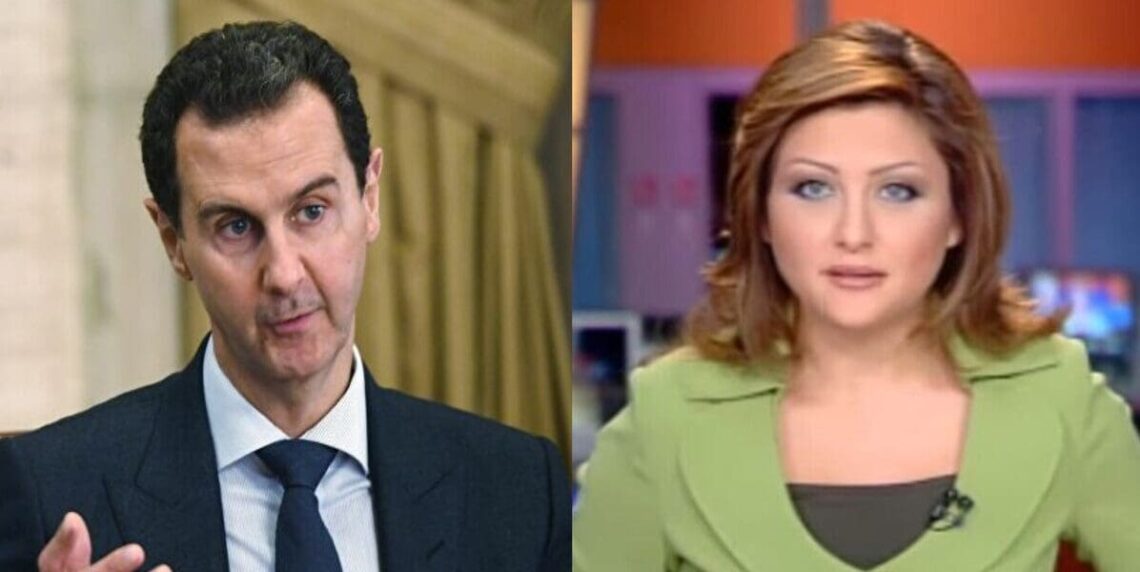
A fresh wave of leaked video and audio recordings, alongside thousands of newly surfaced intelligence files and prison documents, has ignited a political, human-rights, and media storm. For the first time, the world can hear and see the real voice of Bashar al-Assad, stripped of his public persona, as he speaks privately with his former adviser, Luna al-Shibl.
What emerges is a stark and damning portrait: a ruler who, from the very seat of power, expressed open contempt, disgust, and crude scorn for entire regions of his own country and for the people he governed.
The Car-Ride Recordings: Assad Unfiltered
The most explosive material is footage filmed inside a moving vehicle. Assad is at the wheel, with military escorts visible in the rear-view mirror. Luna al-Shibl sits beside him. The conversation turns to Eastern Ghouta, the once-fertile Damascus suburb that endured years of siege, starvation, and chemical attacks.
In one clip, Assad mocks the Ghouta and its people in language so obscene it cannot be printed. He laughs as he recalls the destruction inflicted by his own forces. Al-Shibl does not appear shocked. Instead, she engages him in discussion about Hezbollah’s battlefield claims and its absence during key phases of the conflict.
Another recording captures a moment when Assad speaks about Syria itself. There is no trace of pride or sorrow. What leaks out is deep revulsion — a visceral disgust at the country he ruled for nearly a quarter of a century. The contrast with his public rhetoric of resistance and unity could not be sharper.
These were not staged interviews. They were private moments, inside a sealed car, far from any camera crew. It appears al-Shibl recorded the conversations herself.
The “Damascus Dossier” — An Archive of Death
Alongside the car footage, an extensive cache of internal security documents has been released under the title “Damascus Dossier”. Thousands of files from various intelligence branches detail surveillance operations, arrest orders, interrogation transcripts, and methodical records of torture and extrajudicial killings.
Photographs of corpses, each tagged with prison numbers, are accompanied by medical reports outlining methods of execution. Chains of command link senior officials to the darkest corners of Syria’s prison system. Human-rights groups have called it “an archive of death”, and many believe it could one day serve as key evidence in international war-crimes trials.
Public Fury and the Court of Social Media
The moment the clips were broadcast on Arab satellite channels, Syrian social media erupted. For many in Ghouta and other besieged areas, hearing Assad ridicule them in crude and mocking tones felt like a second violation. Survivors and the families of the dead shared the leaked insults alongside images of mass graves and emaciated children.
Regime loyalists reacted with familiar defences. The clips were “taken out of context”, “old material”, or “part of a campaign to embarrass Syria’s Arab allies”. Yet even among former supporters, some privately acknowledged that the voice and laughter were unmistakably Assad’s.
Timing and Motive
Observers were quick to note the timing. Several Gulf capitals have spent the past year weighing the costs of re-engagement with Damascus. These leaks surface just as internal debates in those states have begun to ask whether restoring ties with a man who speaks of his own people in such terms is politically or morally defensible.
The obvious question follows: who held on to these recordings for so long, and why release them now? Most analysts believe they were part of a pressure file, quietly maintained by foreign intelligence services for use in back-channel diplomacy. When talks stalled or lost value, the decision was made to make the material public.
A Wound Reopened, a Reckoning Postponed
For the families of the detained and the disappeared, the leaks offer both pain and validation. They reopen old wounds, but they also provide tangible proof of what so many endured. Some fear that releasing such explosive material without any legal follow-up could spark personal acts of revenge. Others insist that only structured transitional justice can turn this evidence into meaningful accountability.
Even in the Syria of late 2025, where the political and security landscape has been radically redrawn, the leaks exert moral pressure. Former intelligence officers and local collaborators now sleep less easily, knowing that the next revelation might include their names.
One thing is beyond doubt: the era of total secrecy that once protected the Assad regime is ending. Wave after wave of footage, voices, and documents — some recorded by members of the inner circle — are peeling away the final layers of myth. What now emerges is the image of a man who, from the very throne of power, despised the country he ruled. And it is Luna al-Shibl, once seated at his right hand, who has exposed him to the world.
This article was translated and edited by The Syrian Observer. The Syrian Observer has not verified the content of this story. Responsibility for the information and views set out in this article lies entirely with the author.