
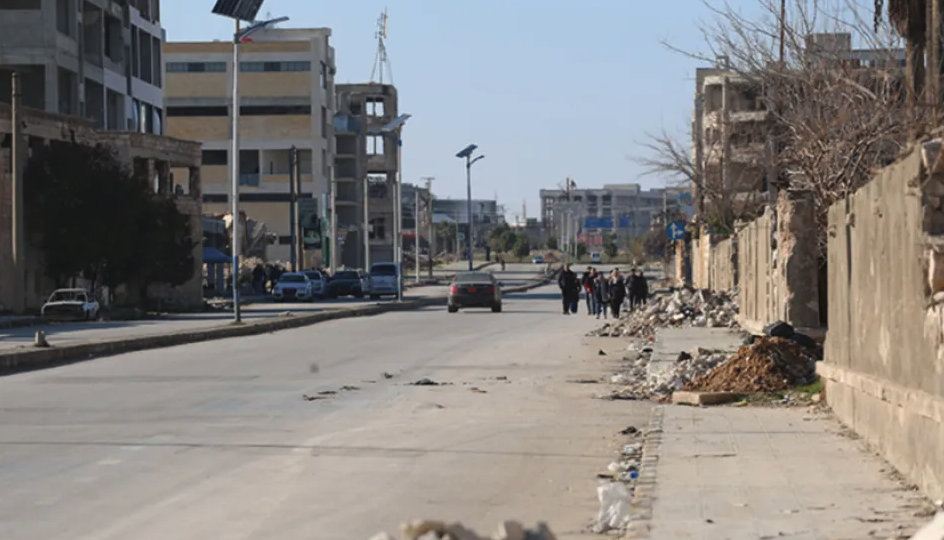
Armed clashes broke out in Aleppo’s Ashrafieh and Sheikh Maqsoud neighborhoods between the Kurdish Internal Security Forces (Asayish) and the Syrian Internal Security Forces, backed by units from the Syrian army.
The confrontation came just hours after a meeting in Hassakeh between U.S. envoy Thomas Barrack, CENTCOM Commander Admiral Brad Cooper, and Mazloum Abdi, the Commander-in-Chief of the Syrian Democratic Forces (SDF) — prompting analysts to link the two events.
Following the clashes, a ceasefire was announced, and on the following morning, Mazloum Abdi met Syrian President Ahmad al-Sharaa in Damascus, according to AFP.
After the meeting, Syrian Defense Minister Murhaf Abu Qasra announced an agreement for a comprehensive ceasefire across northern and northeastern Syria, saying it had been reached during his talks with Abdi in the capital.
Later, President al-Sharaa received Barrack and Admiral Cooper in Damascus. According to the Syrian Presidency, the talks covered “the latest developments in Syria, ways to support the political process and strengthen security and stability,” and discussed mechanisms for implementing the March 10 Agreement in a way that safeguards Syria’s sovereignty and territorial integrity.
Field Pressure and Testing Positions
Amin Aliko, a member of the Relations Office of the Syrian Democratic Council (MSD) in Aleppo, told Ultra Syria that the timing between Abdi’s meetings with U.S. officials and the clashes in Sheikh Maqsoud “does not necessarily imply a direct causal link.”
He explained that Syria is currently in a highly sensitive phase, where political moves at the leadership level are often mirrored by field escalations meant to test reactions and reshape the dialogue’s direction.
“What’s happening can be described more as field pressure or a test of positions rather than an internal dispute,” he said, adding that the aim is “to push the parties toward concessions on other files.”
On the meeting between Abdi and President al-Sharaa, Aliko said it came within the framework of containing tensions and reaffirming that dialogue remains the preferred option for all sides. He reminded that both parties remain committed to the March 10 Agreement and the April 1 Agreement, which specifically covers the Ashrafieh and Sheikh Maqsoud areas.
Regarding Sharaa’s meeting with U.S. envoy Barrack, Aliko said the U.S. approach is based on reassessing balances of power inside Syria and supporting one side over another “in line with its shifting interests.” Washington’s regional policy, he added, “is based on managing balances, not establishing fixed alliances,” and such meetings reflect “a phase of reordering regional and international relationships.”
He stressed that the SDF leadership seeks to build a national and strategic partnership within the international coalition against ISIS, emphasizing that the SDF “is not just a military force but a social, political, and national project for northern and eastern Syria.”
Raising the Negotiation Bar
As contacts intensify between SDF, Syrian, and American officials, debates are growing over the future governance structure in the north and east — particularly following media reports alleging that Abdi demanded autonomy similar to Iraqi Kurdistan.
Commenting on those reports, Aliko clarified that “the Iraqi Kurdish model is completely different from the Syrian context,” emphasizing that discussions focus on a decentralized political and administrative framework that preserves Syria’s unity — land and people.
He reiterated that the SDF “remains committed to Syria’s unity and rejects any partition plans.”
Aliko said current movements amount to an undeclared political effort to reset frontlines and possibly form new understandings under international sponsorship. He revealed that the latest Damascus meeting verbally reaffirmed four key points:
-
A ceasefire,
-
Integration of some security forces,
-
Creation of joint committees, and
-
Discussion of constitutional provisions.
He concluded that all sides “recognize their mutual need amid Syria’s ongoing political vacuum,” stressing that dialogue and compromise remain the only path to ensure stability and national unity.