
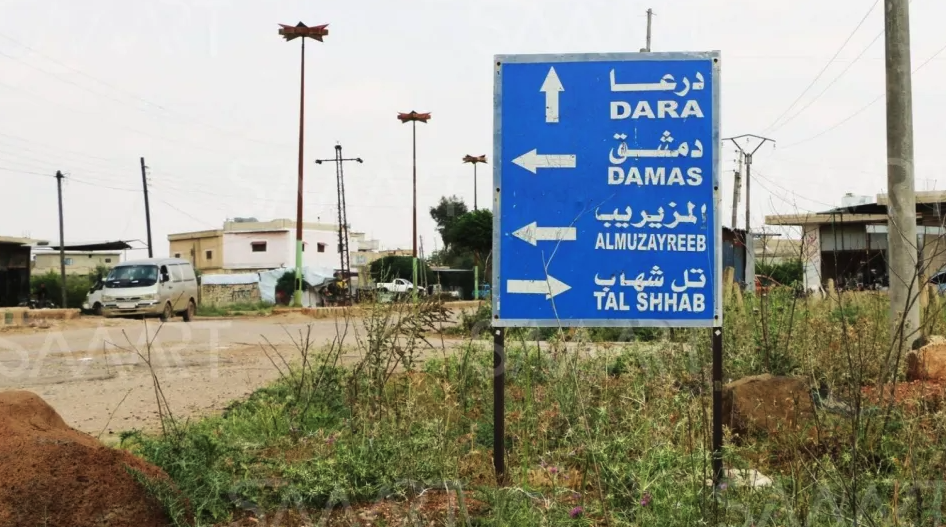
Sources speaking to Ultra Syria reported that Daraa Governorate continues to witness rising levels of violence and assassinations, despite the efforts of the Ministry of Interior and the 40th Division of the Syrian Army. The region faces persistent security threats stemming from tribal disputes and ISIS sleeper cells, amid a lack of serious public or governmental response proportionate to the scale of the crisis.
Alarming Numbers
In recent days, armed men attacked the Jassim police station in northern Daraa with automatic weapons, while a family dispute in the western city of Tafas turned into armed clashes that left one person dead and four wounded. The incident prompted the Internal Security Forces to deploy across the city’s main squares and vital points to restore calm and stability.
Unidentified attackers also targeted a security forces vehicle with an RPG in the town of Muzayrib, while gunmen assassinated Mohammad Ahmad al-Huwaidi inside his home in the eastern town of Maaraba.
According to the Ahrar Horan Gathering, at least 217 people have been killed in Daraa between January and the end of June 2025. Most assassinations occurred in northern Daraa, especially in the city of al-Sanamayn, which alone witnessed 17 killings during that period.
Timid Government Attempts
In an effort to curb the chaos, Daraa’s Internal Security Command issued a circular banning the illegal possession of weapons, calling it a “direct threat to public safety and stability.” The directive strictly prohibited carrying firearms in public places, brandishing or using them at gatherings, or using them for intimidation or extortion.
The statement warned that anyone caught violating these rules would face strict legal consequences and urged citizens to cooperate by reporting suspicious behavior or armed activity.
A security source told Ultra Syria that the Internal Security Forces, in coordination with the army’s 40th Division, have conducted several operations and raids targeting wanted individuals, including former ISIS affiliates. However, most of the violence reportedly stems from old tribal and family feuds, particularly in areas like the Yarmouk Valley—once a stronghold of ISIS.
A Persistent and Unresolved Dilemma
Journalist Mohammad al-Awaid, a native of Daraa, said the current wave of assassinations differs from the past. “Previously, the regime and its Iranian allies were blamed for the killings. Now, under the new state, there’s no decisive reaction from either the public or the government,” he said.
He argued that the Interior Ministry’s circular banning firearms is insufficient, citing recent assassination attempts, including one against Munif al-Qaddah in central Daraa and the brutal killing of Mohammad al-Huwaidi in front of his family.
Al-Awaid criticized the “complacency” of the security forces, saying their lack of a strong and systematic response “disrespects the sacrifices of Daraa’s people” and “risks igniting hidden tensions that could erupt into a new cycle of violence.”
He estimated that since the start of 2025, around 300 assassinations have been recorded, while the government’s main response was limited to a public notice banning weapons — “a statement rather than a strategy,” as he put it.
Weak Enforcement and Lack of Expertise
Al-Awaid emphasized that the authorities must declare a state of full alert and, if necessary, request reinforcements from central command to restore order. He noted that many local security forces lack professional training and that the widespread availability of weapons makes further violence inevitable.
As for the public’s compliance with the weapons ban, al-Awaid observed minimal adherence, stressing that enforcement “ultimately falls on the state,” which has yet to make any notable arrests of armed individuals — a failure that only encourages further lawlessness.
