
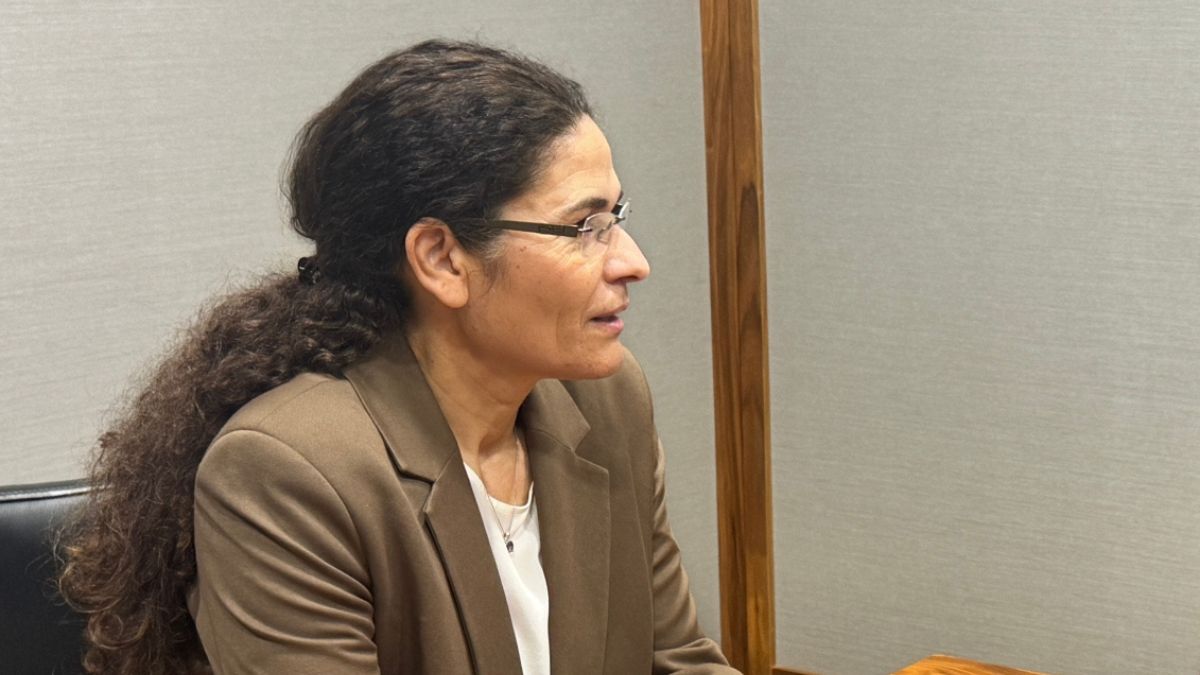
Ilham Ahmed, head of foreign relations for the Autonomous Administration in northeast Syria, revealed that proposals have been circulated suggesting Mazloum Abdi—commander of the Syrian Democratic Forces (SDF)—or another officer from the group could be appointed as Syria’s Minister of Defense or Chief of Staff. The suggestion comes amid ongoing negotiations between the transitional Syrian government and the Autonomous Administration regarding the future of military integration and decentralized governance.
In an interview with Al Majalla magazine on September 27, Ahmed identified two key points of contention with Damascus: the relationship between the SDF and the newly formed Syrian army, and the structure of governance in northeast Syria—particularly the balance between centralization and decentralization.
Ahmed expressed skepticism about reports quoting transitional President Ahmad Al-Sharaa warning of potential Turkish military action if no agreement is reached by year’s end. She criticized the use of deadlines and threats, calling such language “problematic” and counterproductive.
Sharaa, meanwhile, stated that Damascus had persuaded Ankara to hold off on military operations against the SDF following Assad’s ouster, giving negotiations a chance. However, he warned that if integration efforts fail by December, Turkey may take unilateral action.
Ahmed emphasized the need for Syrians—regardless of ethnicity—to engage in constitutional dialogue focused on stability and de-escalation. She stressed that any military integration must be gradual and based on shared principles, noting that the SDF and internal security forces number around 100,000 personnel. Under the proposed constitutional framework, these forces could be reorganized into corps within a unified national army.
She also highlighted the importance of inclusive representation in Damascus and constitutional guarantees for the Autonomous Administration, describing the current phase as transitional and requiring joint committees and coordinated efforts.
Regarding her latest meeting with Syrian Foreign Minister Asaad al-Sha=ibani in late August, Ahmed said both sides agreed to establish a timeline for committee meetings to address key issues. However, she noted that Damascus has yet to respond with concrete steps.
In contrast, Sharaa has pushed back against the SDF’s demands for decentralization, arguing that Syria is already 90% decentralized under Law No. 107. He dismissed federalism as a veiled form of separatism and asserted that Kurdish rights are fully recognized under his leadership.
Sharaa also blamed factions within the SDF and the PKK for obstructing the implementation of the March 10 agreement, which he claims had backing from both the U.S. and Turkey. He warned that the current situation in northeast Syria poses a threat to the national security of both Turkey and Iraq.
While Sharaa remains wary of Israel and does not rule out Turkish military action, Ahmed insists that constitutional dialogue and gradual integration are the only viable paths forward.
This article was translated and edited by The Syrian Observer. The Syrian Observer has not verified the content of this story. Responsibility for the information and views set out in this article lies entirely with the author.
