
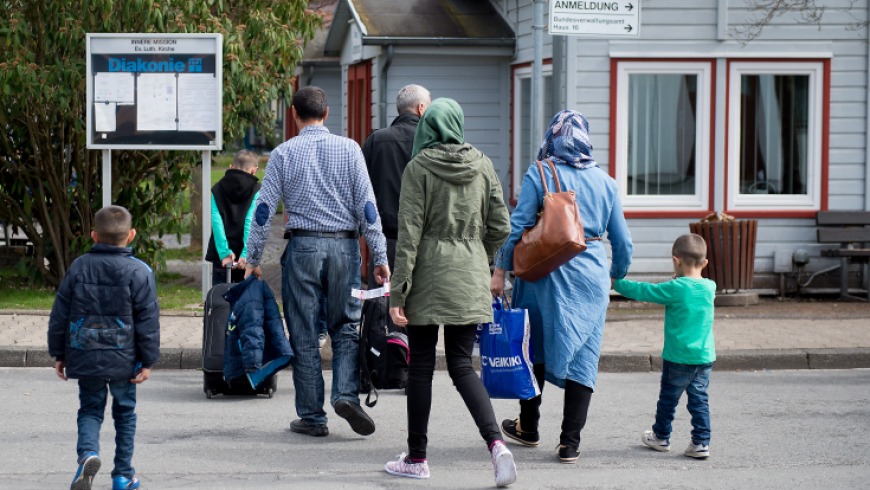
European asylum centers are witnessing a surge in rejections of applications submitted by Syrians, often accompanied by official notices granting applicants a limited timeframe to appeal.
While these decisions carry severe consequences for applicants’ lives, they reflect a growing trend toward reevaluating Syrians’ legal status following the fall of the Assad regime—implying that grounds for protection no longer exist. This is occurring despite Germany’s continued classification of Syria as an unsafe country for refugee returns.
The justification—frequently phrased as “the reason expired with the previous regime”—runs counter to the spirit of the Geneva Convention and international protection standards. Asylum rights are not tied to the form of government but to an objective assessment of whether an individual faces persecution or danger upon return.
Given the current instability in Syria, where security and basic services remain fragile, deportation decisions pose direct risks to individuals’ lives. International law is unequivocal: states are absolutely prohibited from returning anyone to a place where they may face torture or threats to life—a principle known as non-refoulement. Yet, implementation in parts of Europe is moving in the opposite direction, exposing a troubling gap between legal commitments and practical policies.
Amid the bureaucracy of Europe and the continuing tragedies in Syria, thousands of refugees now find themselves stranded, deprived of basic rights to safety and stability. Their case files are not merely legal documents but human stories repeating a single message: Syrians are still in need of protection that remains elusive.
When Official Papers Become Barriers
For years, UNHCR reports have shown that most Syrian asylum claims in Europe combine individual protection motives with the broader dangers of war. Meanwhile, Germany’s Federal Office for Migration and Refugees (BAMF) statistics indicate rising rejection rates for both asylum and subsidiary protection, especially when no clear evidence of personal persecution exists.
The story of Adi, a 25-year-old from rural Aleppo, illustrates the divide between humanitarian realities and legal standards. Adi left school in ninth grade as conflict escalated, facing closed classrooms and repeated attempts to conscript him into fighting. Refusing any military role, he fled Syria in 2023 and reached Germany, where he applied for asylum, seeking both safety and an education.
On September 2, BAMF rejected his application in every category: no refugee status under §3 AsylG, no constitutional protection under Article 16a of the Basic Law, no subsidiary protection under §4 AsylG, and no impediments to deportation under §60 Abs.5 or §60 Abs.7 AufenthaltsG.
The decision required Adi to leave Germany within 30 days—or after a final court ruling if he appeals—and imposed a 30-month ban on re-entry to Germany and the Schengen Area if deported. BAMF argued that his claims did not establish an “individual fear of persecution” based on protected grounds and that the absence of schools or the presence of armed groups represented general conditions, insufficient for protection. It cited UN OCHA and Liveuamap data to argue that violence levels in his area did not constitute indiscriminate danger.
Syria’s dire economic and social conditions were also deemed inadequate grounds. Instead, the decision referenced voluntary return programs such as REAG/GARP and NRP Syria, offering financial and logistical support for those willing to return.
Adi’s case is far from unique. It underscores the tension between Germany’s strict asylum standards and the complex realities Syrians face. As long as protection is granted only for demonstrable, individual persecution, thousands risk rejection and deportation—fueling debates over whether German policy aligns with the humanitarian challenges still emerging from Syria’s war.
Germany Reshapes Asylum Policy
Recent rulings have reinforced this trajectory. The Administrative Court in Cologne rejected a Syrian asylum appeal, ruling that Syrians no longer automatically qualify for protection after the fall of Assad.
The applicant, from Hasaka province under SDF control, was found not to face threats from the former regime, the transitional government in Damascus, or the autonomous administration. His family remained unharmed in Syria, and the court argued he could live with them, benefitting from voluntary return programs. Claims of economic hardship after the aid expired were dismissed as unsubstantiated in light of “relative economic improvements,” including rising wages and falling food prices.
The ruling upheld BAMF’s denial, though the applicant may appeal to a higher court.
This decision follows a rare case reported by Syria TV, where—for the first time in years—a Syrian refugee was ordered deported to Syria. Authorities assessed that “general danger in Syria has ceased,” signaling a potential legal shift from rejections without deportations to active returns.
Such developments raise pressing questions: is Germany moving toward a fundamental recalibration of its asylum policy for Syrians, with temporary protection gradually being withdrawn?
“BAMF’s Superficial Assessments Undermine Refugee Rights”
Critics argue that BAMF’s reviews are shallow and overly reliant on general data rather than the specifics of each case.
Legal advisor Ahmad al-Aqra told Syria TV that BAMF often fails to probe crucial personal indicators, such as:
- The nature of armed group control in the applicant’s village and risks of forced recruitment.
- The absence of education, pointing to institutional collapse.
- The applicant’s young age and lack of social support networks upon return.
Al-Aqra stressed that BAMF must consider not only what applicants state but also the surrounding realities and potential risks, using open sources where necessary. Between 2011 and 2024, he noted, some Syrians received protection even without personal evidence, as general and specific risks were assessed together.
Controversy Over Refugee Housing
As asylum policies tighten, political battles are escalating. In Thuringia, the far-right Alternative for Germany (AfD) unveiled plans for a €60 million “container village” at Erfurt Airport to house 4,000 refugees awaiting deportation.
The plan includes ending cash benefits in favor of in-kind aid, abolishing church asylum, scrapping temporary residence status (Duldung), and relocating the deportation detention center from Arnstadt to the airport. AfD declared its aim to make Thuringia “Germany’s first remigration state.”
The proposal provoked outrage. The Greens and the Left condemned it; Justice Minister Beate Meissner called it “delusional,” citing a 44% drop in asylum applications this year. The Left accused AfD of “racist incitement,” warning it threatened to undermine Germany’s reputation for successful integration since 2015.
Meanwhile, legal pressure is mounting: appeals against asylum decisions are soaring. Germany registered over 100,000 appeals in 2024, and the first quarter of 2025 alone saw 46,427 cases—a 67% increase compared to the previous year.
This article was translated and edited by The Syrian Observer. The Syrian Observer has not verified the content of this story. Responsibility for the information and views set out in this article lies entirely with the author.
