
Turkish intelligence chief Ibrahim Kalin arrived in Damascus on Wednesday for an official visit, according to Turkish security sources cited by Anadolu Agency. Kalin is expected to meet Syrian President Ahmad al-Sharaa and other officials to discuss bilateral relations, regional security, and the latest developments.
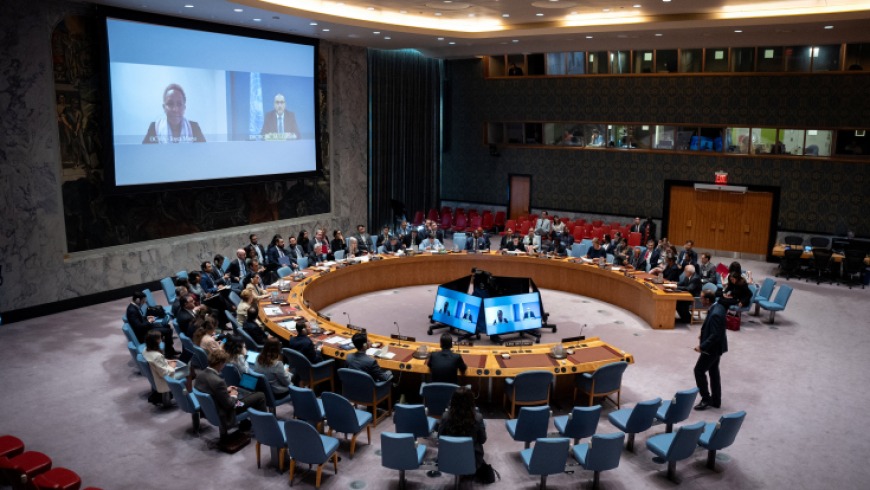
Meanwhile, the UN Security Council in New York convened to address Israel’s military actions in Gaza, underscoring the broader regional volatility.
A Sensitive Phase in Syria–Israel Negotiations
Negotiations between Syria and Israel have entered a critical stage after a five-hour meeting in London on Wednesday that brought together Syrian Foreign Minister Asaad al-Shibani, Israeli Minister of Strategic Affairs Ron Dermer, and U.S. Special Envoy to Syria Tom Barrack. According to Axios, the talks centered on a potential security agreement aimed at curbing Israeli strikes in southern Syria. An announcement could come during President Sharaa’s upcoming visit to the UN General Assembly in New York, September 21–25.
Israel’s Security Demands
Israeli proposals, relayed via Barrack, reject both a return to the 1974 disengagement agreement and the “December 8 lines” established after the fall of the Assad regime. Instead, Israel seeks:
- control of the Mount Hermon observatory and surrounding areas;
- expansion of the buffer zone in southern Syria;
- three demilitarized or lightly armed zones;
- continued air dominance, including an air corridor for possible strikes on Iran.
A Syrian military official told AFP that Syrian forces have already withdrawn heavy weapons from the south, a process that began two months ago following unrest in Suweida. A diplomatic source in Damascus confirmed the withdrawal extended to areas roughly 10 kilometers south of the capital.
Syria’s Position
Damascus insists on reactivating the 1974 disengagement agreement and demands Israeli withdrawal from territories occupied since December 8, 2024. Syria has expressed readiness to sign a new security accord to ensure border stability, provided Israel respects sovereignty and halts attacks. It has also called for restoring the UN Disengagement Observer Force (UNDOF) to its monitoring role.
On Tuesday, the Syrian Foreign Ministry said Damascus is working with Washington on understandings concerning southern Syria, aligned with a U.S.–Jordan-backed roadmap for Suweida. The roadmap emphasizes sovereignty and territorial integrity and has gained Arab and international support.
Turkey’s Role
Kalin’s visit highlights Ankara’s efforts to help contain the crisis in Suweida. According to Yeni Şafak, he has coordinated with U.S. officials and President Sharaa in advancing de-escalation initiatives.
Sharaa Hints at Progress
In remarks on Wednesday evening, President Sharaa suggested that negotiations with Israel could soon yield results. He noted Israel’s record of over 1,000 airstrikes and 400 ground incursions since Assad’s fall, but stressed that “peace and normalization” remain off the table. He also emphasized that Washington is not pressuring Damascus to settle.
Sharaa revealed that a deal was close in July but stalled after the Suweida events. He described talks on the occupied Golan Heights as premature, pointing to contradictions between Israel’s actions and U.S. calls for a stable, unified Syria. A Foreign Ministry source told AFP that “progress” has been made, with agreements expected by year’s end, focused mainly on security and military arrangements.
U.S. Proposals and Congressional Engagement
Envoy Tom Barrack has put forward proposals combining elements of the disengagement agreement with new security arrangements, early-warning mechanisms, and direct support for Syrian forces in the south to counter Iranian influence.
On Thursday, Foreign Minister Shibani is scheduled to meet members of the U.S. Congress—including Senator Lindsey Graham—in Washington, the first such high-level Syrian visit in 25 years. Reuters reported that Graham has floated lifting Caesar Act sanctions if Syria signs a security deal with Israel and joins the international coalition against ISIS.
Toward a Potential Breakthrough in New York
As world leaders gather in New York, Sharaa’s September 24 address may reveal Damascus’ intentions. Meetings with U.S. Secretary of State Marco Rubio could also set out key understandings. Four sources told Reuters that Washington is pushing for enough progress to allow President Donald Trump to announce a breakthrough—possibly framed around “mutual deterrence” to bolster regional security.
Should a comprehensive accord prove elusive, mediators may instead pursue a “declaration of principles” as a foundation for future agreements. Turkish President Erdoğan has already described Sharaa’s visit as “historic.”
This article was translated and edited by The Syrian Observer. The Syrian Observer has not verified the content of this story. Responsibility for the information and views set out in this article lies entirely with the author.