
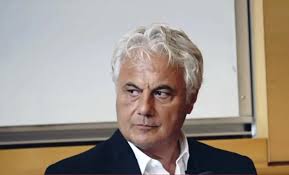
Just days ago, a lecture by Brigadier General Manaf Tlass at the Paris Institute of Political Studies, hosted by a student association, sparked a storm of debate, accusations, and polemics across social media and in segments of Arab and Syrian media. The event itself was not the true source of controversy; rather, it was the wave of anger, rejection, and suspicion that surrounded it—led by many supporters of Syria’s new political order or backers of de facto powers within the country. Notably, the attacks on Tlass preceded his lecture. Many did not wait to hear what he had to say; they were preoccupied with issuing sweeping “political verdicts” against him. The charge was ready-made: he is the son of Mustafa Tlass, Minister of Defense under Hafez al-Assad, and therefore, by default, complicit in the former regime and responsible—if only by inheritance—for all its crimes and violations.
This view rests on a logic so reductive it borders on the absurd: if the man is the son of a symbol of the fallen regime, then he is the regime. If his lineage is tied to former centers of power, then he has no right to speak on politics, to offer any national vision, or even to participate in an academic discussion. In short, a political death sentence was issued against him before he had uttered a word.
The dilemma exposed by this campaign is not about Tlass himself, but about the logic of exclusion that permeates Syrian public discourse. The issue is broader than a lecture or a family name; it is a struggle over a fundamental question: who has the right to engage in political life in Syria’s future—and who does not? What we see today is a deeply rooted mentality based on the principle: “If you’re not with us, you’re against us.” This mentality is not confined to the new ruling order; it has also seeped into the opposition in all its forms. The exclusionary rhetoric is the same: if you’re not part of our political camp, you’re rejected. If you don’t agree with the “inspired” leader’s policies, you’re sidelined. If you criticize a faction or current, you’re branded a traitor or pariah.
Meanwhile, the return of figures and businessmen deeply implicated in corruption and bloodshed is justified and normalized within the political and economic scene. Yet, a military officer with experience—who chose from the outset of the revolution to distance himself from the repression of Syrians and publicly condemned the regime’s crimes—is categorically denied the right to speak. The stark irony is this: the regime itself recycles figures tainted by blood and corruption, reintroducing them as “statesmen” or potential contributors to reconstruction. In contrast, individuals whose hands are clean are barred from even voicing an opinion.
Here, a deeper problem emerges: Syria’s selective memory, which suddenly decides that responsibility is inherited, and that the father’s sin forever stains the son—even if he has chosen a different path. This view reflects not only the absence of institutional transitional justice, but also a vengeful mindset that can only conceive of politics as retribution or score-settling.
The essential question raised by this controversy is: is politics the exclusive domain of one side? Is freedom of expression reserved only for those favored by public or media sentiment at a given moment? The obvious answer is that politics, by nature, is an open field—accessible to anyone who wishes to participate, provided their hands are not stained with blood. Excluding Manaf Tlass solely because he is the son of a former regime figure, while ignoring his political awareness and personal stance against the massacres, is a reinforcement of an authoritarian mentality not unlike that of the regime itself.
True freedom is not merely the toppling of one regime and replacing it with another. True freedom also means accepting difference, listening to dissenting voices, and relying on dialogue and debate—not on political executions.
This is not a defense of the man, who is being attacked unjustly and irrationally, nor is it a political endorsement. It is a defense of a basic principle: every Syrian has the right to express their opinion and to take part in shaping their country’s future. Decisions about leadership and representation should be made through transparent political dialogue—or one day, through the ballot box—not through smear campaigns and accusations on Facebook.
If Syrians aspire to build a state governed by law, then the standard must be clear: those who committed crimes must be held accountable through the judiciary, and those who did not must be granted the right to participate in public life, regardless of their lineage or family background.
The controversy surrounding Manaf Tlass’s lecture reveals the fragility of Syria’s current political culture. We remain captive to a mentality of exclusion, one that in essence mirrors the very regime Syrians rose up against. Tlass may not be the man to lead change, and many may oppose him for legitimate reasons. But it is unacceptable to exclude him solely because of his family ties. A revolution founded on the principles of freedom and dignity cannot morph into a new version of intellectual and political authoritarianism.
If Syrians truly wish to move beyond the past, they must first learn how to accept difference—and how to grant the right to speak even to those they disagree with. Only then can the conversation about a new future begin—rather than a reproduction of old hatreds.
This article was translated and edited by The Syrian Observer. The Syrian Observer has not verified the content of this story. Responsibility for the information and views set out in this article lies entirely with the author.
