
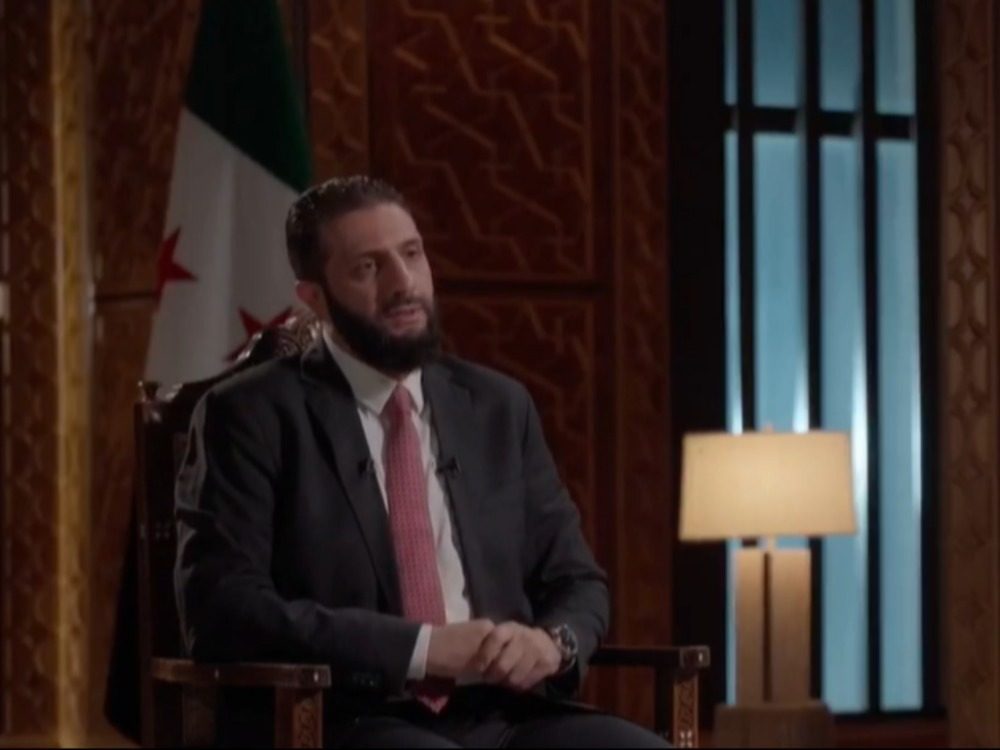
President Ahmad al-Sharaa affirmed that the liberation of Syria on 8 December marked a historic turning point for the region, declaring that the country would never return to its previous state. He noted that decades of isolation and turmoil had deprived both Syria and the world of its potential, stressing that the current phase presents a chance to reorganise priorities at both the national and regional level.
In his first interview on Al-Ikhbariya on Friday, the President suggested that Israel had “grieved” the fall of the previous regime, which it had long counted on as a guarantor of the status quo. Instead, Damascus has embarked on a new trajectory—one built on sovereignty, stability, and recalibrated regional ties.
Al-Sharaa confirmed that Syria remains committed to the 1974 security agreement with Israel, while signalling that negotiations are underway to reshape security arrangements in a manner that safeguards national interests.
The Regional Dimension
Political researcher Saleh al-Abdullah told Al-Ikhbariya that the President’s characterisation of Syria’s liberation as a “historic opportunity” reflects its unique geopolitical role. “Syria’s stability is the region’s stability,” he said, arguing that the Assad regime’s alignment with Iran’s expansionist agenda had destabilised Arab neighbours, from Lebanon and Jordan to the Gulf. The regime’s collapse, he added, has opened the door to greater regional balance—relieving countries exhausted by conflict and drug trafficking.
Abdullah also underscored the President’s remark that the world had “lost Syria” during the Assad era, pointing to decades of repression, corruption, and mismanagement that estranged Syria from its natural regional role.
From Subservience to Sovereignty
Reflecting on Israel’s “sorrow” at Assad’s downfall, Abdullah argued that the new Syrian leadership is no longer beholden to external powers. “The regime survived by trading concessions—even serving Israeli security needs, as revealed in documents discovered after its fall,” he said. “Today, by contrast, Syria’s leadership prioritises national interests and the aspirations of its people.”
He added that Israel continues to prefer partition and instability in Syria, whereas the revolution has produced an authority determined to preserve unity and reject division.
Commitment to State Logic
The researcher highlighted the President’s emphasis on stability and state-building, noting that this pragmatic approach also governs relations with Russia. “Despite Moscow’s role as Assad’s key ally, the new leadership has placed Syrian interests above old loyalties,” he said.
Equally important, he stressed, is the President’s effort to maintain open communication with Syrians themselves. “Periodic engagement between leadership and people strengthens trust,” he said, citing Sharaa’s statement: ‘I am from you, and you are from me.’
Security Commitments and Israeli Aggression
Military analyst Brigadier General Ahmad Hammada underlined that Assad’s forces had long acted as “faithful guardians” of Israel’s borders under the 1974 ceasefire agreement. The regime, he noted, never demanded the liberation of the Golan Heights and ensured calm along the front.
Today, Hammada explained, Israel’s continued shelling of civilian and military sites aims to prevent Syria from regaining strength. “Israel does not seek peace,” he argued. “It seeks to keep Syria fragmented and weak.”
He added that any renewed security agreement—whether an amendment or reaffirmation of the 1974 accord—would secure borders and allow Syria to focus on reconstruction and economic recovery.
This article was translated and edited by The Syrian Observer. The Syrian Observer has not verified the content of this story. Responsibility for the information and views set out in this article lies entirely with the author.
