
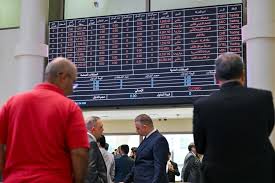
A stock exchange is more than just a platform for a select group of investors and traders — it can serve as a barometer of confidence in a government’s economic stewardship. As Syria enters a new chapter following the fall of the Assad regime, a pressing question emerges: does “New Syria” need a stock exchange, and did the old one ever truly serve the country’s interests?
A Modest Return from Baathist Economics
The history of stock trading in Syria predates the formal establishment of the Damascus Stock Exchange (DSE). In the early 20th century, informal trading took place in the Al-Asrouniyah section of the Hamidiyeh market, where brokers and bank representatives exchanged shares in Syrian companies. This fledgling financial market persisted until the 1960s, when the Baathist regime under President Amin al-Hafiz nationalised most private enterprises and banned trading activities, effectively dismantling Syria’s early financial infrastructure.
Syria lagged behind its regional peers in formalising a stock market. Egypt unified its Alexandria (1883) and Cairo (1903) exchanges in 1997; Beirut established its exchange in 1920. Even latecomers such as Jordan, which launched the Amman Stock Exchange in 1999, moved ahead of Syria. The creation of the DSE in 2009 symbolised a tentative shift away from Baathist socialism towards a so-called “social market economy”, marking a retreat from rigid state economic controls.
Legislation passed in 2005 established the Syrian Securities and Financial Markets Authority. This was followed in 2006 by a decree creating the DSE as an independent entity with both financial and administrative autonomy. Unlike typical public institutions, the DSE is exempt from standard government regulations, and its staff are not subject to civil service employment laws. It launched in Barzeh, on the outskirts of Damascus, near the notorious Scientific Studies and Research Centre — long linked to Syria’s chemical weapons programme. After a three-week trial period, official trading began on 10 March 2009.
The DSE’s early operations were modest. It listed just six companies — four banks (Bank Bemo Saudi Fransi, Arab Bank-Syria, Syria and Overseas Bank, and Bank Audi-Syria), the United Group for Publishing, Advertising and Marketing (UG), and the Ahlia Transport Company. Trading was conducted through four brokerage firms, one of which was affiliated with Bank Bemo. Initial trading sessions occurred twice weekly, later increasing to four and briefly falling to one in March 2020 before settling at five per week. Trading volumes often reached only a few thousand dollars per session, highlighting the limited reach of the exchange.
The DSE’s final session under Assad’s regime, on 5 December 2024, saw its main index (DLX) fall by 4.17 per cent — a surprising decline, given the simultaneous depreciation of the Syrian pound, which typically inflates local stock values. Following a seven-month hiatus after the regime’s collapse, the exchange resumed operations on 2 June 2025. Yet, the DSE’s overall contribution to the Syrian economy, both pre- and post-revolution, has been minimal. By the end of 2023, the combined market capitalisation of listed firms stood at approximately 10 trillion Syrian pounds (around $700 million) — just 3.5 per cent of Syria’s GDP of $19.9 billion, according to World Bank estimates. By comparison, the London Stock Exchange’s $3.4 trillion valuation closely matches the UK’s GDP of $3.7 trillion.
Does Syria Need a Stock Exchange?
Stock exchanges form a vital link between savers and borrowers, underpinning the broader financial sector — including banks, insurers, and brokerage houses. In an interview with Daraj, Mohammad Habash, editor of the Arabic economic blog Nasdaq, outlined the key benefits of a stock exchange. For companies, it provides a route to raise capital for expansion without incurring debt, either by issuing new shares or reinvesting profits. For individuals, it offers a legitimate investment avenue for savings, diverting capital from speculative real estate ventures. For the broader economy, it channels small-scale savings into productive sectors, stimulating growth and capital circulation.
Stock exchanges also foster transparency and help curb corruption in the private sector. As Habash pointed out, publicly traded firms are subject to stricter governance than family-run businesses, through shareholder assemblies and boards of directors. When the DSE reopened in June 2025, only 15 of the 27 listed companies resumed trading — the rest had failed to disclose their 2024 financial statements. This lapse underscored the exchange’s role in enforcing financial accountability.
In Syria, most major firms remain either family-owned or state-controlled, and their true value is largely unknown. Notable exceptions include MTN and Syriatel, whose shares were traded informally even before the DSE existed. Their stock performance has offered rare insight into corporate valuations. A July 2025 Reuters report highlighted the persistent opacity of Syrian conglomerates, noting that Syriatel was the only major firm with a known market valuation among those expropriated by a secretive state committee. This lack of transparency extends to Syria’s newly formed sovereign wealth fund, whose constituent companies remain largely obscure in terms of ownership and valuation.
Since the early 2000s, Syria’s economic direction has remained ambiguous. Both the Assad regime and the current transitional government have vacillated between centralised control — through mechanisms such as state-regulated exchange rates and strategic sector management — and neoliberal tendencies, marked by weak taxation, limited social protection, and underdeveloped crisis-response subsidies. A dynamic and transparent stock exchange, inclusive of leading Syrian and foreign companies operating domestically, could play a transformative role by reducing opacity and curbing manipulation — a critical need, given recent government contracts worth billions awarded to firms with questionable financial reporting.
From a fiscal perspective, public share trading can reduce tax evasion by large corporations — particularly those previously protected by the regime — by subjecting their financials to public scrutiny. Additionally, issuing treasury bonds through the DSE would enable the government to secure domestic financing, reducing reliance on conditional external loans from institutions like the IMF.
The Stock Exchange as a Political Indicator
Stock exchanges also serve as political indicators, reflecting investor sentiment towards government policies. The global rivalry between Tesla and China’s BYD illustrates this dynamic. Despite comparable sales and technological capabilities, BYD’s market valuation is just 15 per cent of Tesla’s — a discrepancy shaped by investor confidence in the regulatory environments of the US and China, as expressed in the Nasdaq and Hong Kong markets.
A well-functioning stock exchange provides a real-time reading of public sentiment. After the Brexit referendum, for example, the UK’s FTSE100 fell by 7 per cent, signalling investor concern. Similarly, US markets dropped in response to tariff proposals under President Trump, reflecting doubts over their economic impact. In Syria, the DLX index surged by over 140 per cent between June and 27 July 2025, reflecting optimism among traders. However, it fell by 13 per cent in the following fortnight, coinciding with the announcement of major government projects in cooperation with US envoy Thomas Brack.
At the DSE’s reopening, Syrian Finance Minister Mohammed al-Hussein announced plans to privatise the exchange, mirroring the governance models of major international exchanges. Yet, privatising the DSE now could diminish regulatory oversight, despite the supervisory role of the Securities and Financial Markets Authority. While the DSE currently operates as a private, self-funding entity, it still requires state loans to offset financial shortfalls.
A Double-Edged Sword
The future of the DSE — whether in terms of ownership, scale, or function — remains uncertain. It could become a cornerstone of a transparent, rules-based economy or, conversely, a mechanism for legitimising corruption and masking government failures. As Syria navigates its political and economic transition, the fate of its stock exchange will hinge on its capacity to earn trust, enforce accountability, and contribute meaningfully to sustainable development.
This article was translated and edited by The Syrian Observer. The Syrian Observer has not verified the content of this story. Responsibility for the information and views set out in this article lies entirely with the author.
