
A recent series of targeted operations in northern Syria has exposed the fragile and tactical balance between the Syrian transitional government and the Islamic State (ISIS), with analysts warning that an open confrontation is not only likely, but imminent.
On Wednesday, a US-led Coalition air raid in the town of Atma, Idlib, killed Salah al-Numan al-Jubouri, an Iraqi national identified as a senior ISIS figure responsible for coordinating the group’s operations across Syria. Hours earlier, Syrian Internal Security Forces, with Coalition air support, had launched a separate operation targeting another ISIS cell in the same area.
These operations, along with a similar strike in July in Al-Bab that eliminated a prominent ISIS leader, form part of an ongoing campaign to decapitate the organization’s leadership. This effort is consistent with the objectives outlined at the Paris Conference on Syria in February 2025, where international stakeholders pledged to prevent terrorist groups from establishing a foothold in Syrian territory.
Yet despite the outwardly aggressive posture, the current landscape remains defined by a curious strategic restraint. Since the collapse of the Assad regime in December 2024, ISIS has stepped up its activities, carrying out 161 attacks over the past eight months, according to the Syrian Observatory for Human Rights. However, 157 of these have taken place in areas controlled by the Syrian Democratic Forces (SDF), with only four minor incidents occurring in zones now under the transitional government’s authority—resulting in minimal casualties.
This disparity reveals a calculated choice by ISIS to avoid direct confrontation with the new authorities in Damascus. Instead, the group has confined its response to ideological denunciation, branding the transitional administration an “apostate regime” aligned with Western interests in its official magazine Al-Naba.
Conversations with both current and former ISIS operatives—including a January interview with a commander known as Abu Muqdad al-Iraqi near Palmyra—suggest this approach is rooted in a multi-faceted strategy.
A Calculated Delay
First, a tenuous non-aggression pact is believed to exist between ISIS and certain powerful factions, informally arranged during the chaos following Assad’s downfall. This understanding has reportedly allowed ISIS cells to operate with limited interference in the desert regions, particularly the Syrian badiya, in return for abstaining from attacks on strategic government supply lines.
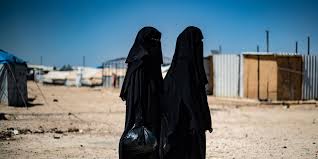
Second, the fate of ISIS detainees looms large. The transitional government is expected to assume eventual control over SDF-held prisons in eastern Syria, which contain thousands of ISIS fighters and their families. For the group, the threat of extradition represents a red line. “Handing over the organization’s fighters to their countries will be the spark of war,” warned Abu Muqdad, equating such moves with a death sentence for foreign combatants.
Third, with its senior leadership still concentrated in Iraq, ISIS appears to be using Syrian territory as a logistical and operational rear base—consolidating resources, recruiting, and preparing for what it dubs a “third revival” in Iraq, where deep-seated sectarian grievances remain unresolved.
Finally, the group’s current military inferiority—particularly when compared to internationally supported government forces and militant rivals such as Hay’at Tahrir al-Sham—means it is biding its time. Rather than launching open offensives, ISIS is focused on embedding itself in urban areas, quietly expanding its networks and recruiting from disaffected communities amidst ongoing instability.
An Inevitable Reckoning
Despite these delaying tactics, analysts agree that conflict is inevitable. The transitional government, bound by international obligations to fight terrorism, cannot afford to let ISIS entrench itself. Once it secures full control of northeast Syria, the issue of detainees will force a reckoning—and ISIS has signalled that any such move will be met with violence.
Beyond security imperatives, the government will face intense domestic and international pressure to assert its legitimacy by demonstrating control and dismantling ISIS infrastructure. Yet, as the battles of Mosul and Raqqa have shown, rooting out the group from urban strongholds will not be easy. ISIS has repeatedly demonstrated an ability to survive and regenerate, even in the face of overwhelming military pressure.
This delayed confrontation is no longer a question of if, but when. The recent raids in Atma represent the opening moves in a broader and more perilous contest—one that will not only shape the future of Syria’s transition but may redefine the wider regional security landscape.
This article was translated and edited by The Syrian Observer. The Syrian Observer has not verified the content of this story. Responsibility for the information and views set out in this article lies entirely with the author.