
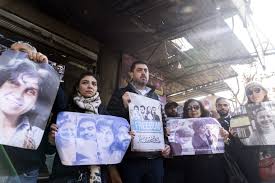
In a bid to strengthen national dialogue and coordination, the National Commission for Missing Persons has held a virtual meeting with the Syrian Network for Human Rights (SNHR), represented by its Executive Director, Fadel Abdul Ghany. The talks focused on creating a structured, collaborative approach to address the plight of disappeared persons in Syria.
The meeting forms part of a series of national consultations aimed at engaging civil society organisations in developing a unified vision and practical mechanisms for tackling this critical issue. Abdul Ghany stressed that pooling expertise and resources was essential to advancing the rights of victims and their families.
Speaking to the Shaam News Network, Abdul Ghany emphasised the need for an organic law to formally establish the Commission. Such legislation would define its relationship with civil society groups, advisory councils and government ministries, while also setting out clear mechanisms for cooperation.
He noted that SNHR has been documenting cases of enforced disappearances since 2011, with around 177,000 individuals still unaccounted for. He described the matter as a top priority for transitional justice in a post-Assad Syria.
Concerns Over the Commission’s Structure
Abdul Ghany has previously voiced concern that separating the National Commission for Missing Persons from the broader transitional justice framework risks undermining its effectiveness. Writing for Syria TV, he argued that enforced disappearances cannot be treated in isolation from the wider transitional justice process.
According to Abdul Ghany, the Commission—created by Presidential Decree No. 19 of 2025—operates outside a comprehensive transitional justice system, posing institutional challenges that could hinder coordination and limit an integrated response. Addressing such crimes, he said, demands a unified strategy encompassing judicial accountability, victim compensation, and reform of the security and judicial bodies implicated in the violations.
He warned that organisational separation could lead to information and procedural gaps, duplication of work and conflicting decisions—undermining public trust in the new institutions. Syria’s unique circumstances, he insisted, call for a holistic approach in which all units work in concert to deliver a coherent and effective response.
Call for Integration into a Truth Commission
SNHR reiterated its April call for the Missing Persons Commission to be integrated into a Truth Commission. Abdul Ghany argued that a dedicated unit for missing persons within such a body would ensure closer coordination with judicial accountability committees and reparation programmes, while making use of existing technical infrastructure and legal expertise. This, he said, would improve efficiency and prevent duplication.
He concluded that genuine transitional justice requires interconnected institutions working in harmony to uncover the truth, deliver justice, and provide reparations. Integrating the Missing Persons Commission into a Truth Commission, he maintained, is not merely an administrative decision but a comprehensive vision for addressing the tragedy of enforced disappearances and overcoming the legacy of denial left by the former regime.
This article was translated and edited by The Syrian Observer. The Syrian Observer has not verified the content of this story. Responsibility for the information and views set out in this article lies entirely with the author.
