
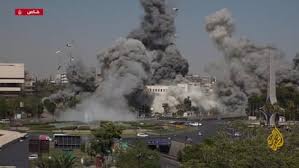
The Democratic Syria Assembly has issued a strongly worded report condemning the recent wave of violence in the southern province of Suweida, describing the events as “a dangerous and deliberate escalation” that threatens to unravel Syria’s already fragile social fabric.
In a report released on July 23, the Assembly denounced what it called a “deliberate military campaign” targeting civilians in Suweida. It accused pro-government forces and allied militias of launching attacks on residential neighborhoods under the pretext of combating armed local factions, leading to widespread destruction, civilian casualties, and displacement.
“What happened in Suweida was not a security operation but a politically motivated punitive campaign,” the report said, warning that “some forces are pushing the country toward a model resembling the ethnic cleansing of the Balkans in the 1990s.”
Echoes of Past Crimes
The Assembly drew parallels between the Suweida assault and the March massacres in Syria’s coastal regions, which remain under investigation. It warned that such episodes, left unaddressed, reinforce impunity and deepen sectarian resentment.
The report criticized the Syrian government for framing the Suweida events as counterterrorism, arguing that such language is being used to justify collective punishment and to strip the local Druze community of its political voice. It also condemned the silence or complicity of regional and international actors who, it claims, are “choosing strategic alignment over human rights.”
Call for Political Action
The Democratic Syria Assembly urged Syrian Arab Sunnis—the country’s largest demographic group—not to allow their name or presence to be co-opted into what it called “a project of extermination and exclusion.” It called on Sunni leaders and communities to speak out against the violence and reclaim a political role rooted in inclusivity and justice.
The report also warned against the instrumentalization of minority communities, including the Druze, as pawns in broader political calculations. It decried attempts by pro-government media and nationalist voices to portray the events in sectarian terms, accusing them of inflaming divisions.
Recommendations and Next Steps
The Assembly called for:
- An independent international investigation into the Suweida events.
- Immediate humanitarian relief for displaced families and victims.
- A national political initiative to prevent further sectarian fragmentation.
- Enforcement of UN Resolution 2254, especially provisions related to civilian protection and political transition.
It concluded with a stern warning: “If these crimes go unpunished and unacknowledged, the foundations of any future political settlement in Syria will be undermined.”
The Suwayda campaign has drawn regional and international attention, especially given its timing—just weeks after tentative ceasefire talks and regional investment initiatives. Analysts warn that such attacks could derail any efforts toward political stabilization.
