
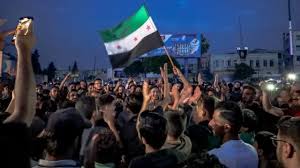
Eight months after the fall of Bashar al-Assad’s regime, the promise of a new era of freedom in Syria is proving hollow for many activists and journalists. Reports point to a resurgence of restrictions on free expression and lingering fears of arbitrary arrest, despite assurances from the transitional authorities in Damascus that the oppressive tactics of Assad’s rule are a thing of the past.
A recent BBC investigation has highlighted growing concerns over shrinking civil liberties, particularly in the wake of violent incidents in coastal areas and Suweida. The report, based on interviews with Syrian dissidents both inside the country and in exile, depicts a fragile post-Assad landscape where old methods of repression appear to endure.
Activists describe a brief “honeymoon period” of open discourse following the regime’s collapse, only to see a return of interrogations, online harassment, and security checkpoints as tools of control.
One activist, using the pseudonym Nada, recounted her disillusionment after attempting to return to Syria for a conference on transitional justice. “I thought things had changed,” she told the BBC. “But at the Lebanese border, I was subjected to a lengthy interrogation—about my work, my city of origin, even my views on justice. They barred my entry at first. I ended up deleting everything from my phone out of fear—the same old fear of checkpoints and borders.”
Nada, who fled Syria during Assad’s rule, said the experience echoed the same oppressive tactics she once escaped. “Under Assad, we knew the boundaries and hid our opinions cleverly. Now, after a fleeting moment of freedom, those same views are being used against us. I’m not returning as long as this authority remains—there’s a real danger from security forces, militias, and total chaos. The law is absent, and there’s no meaningful inclusion of all Syrians in decision-making.”
Incitement and fear
Similar sentiments were shared by writer and activist Yamen Hussein, who visited Syria for the first time in over a decade but cancelled a follow-up trip due to safety concerns. “I live in fear and anxiety, especially for my family still inside,” Hussein said. “The problem isn’t just the security apparatus—it’s the environment, primed for incitement and fear.”
Hussein cited developments in the coastal regions as a turning point, highlighting the rise of pro-authority supporters who target critics online with impunity. “The authorities might not arrest you directly for a Facebook post, but they allow intense harassment campaigns,” he said. He described how civil rights work has become clandestine, with activists now concealing their identities at public events to avoid reprisals.
Another activist, Layla (a pseudonym), who holds dual citizenship and is planning a cautious return, expressed concerns over phone surveillance and threats on social media. “I’ve heard of many whose phones are being monitored,” she said. “My biggest fear isn’t the economy—it’s the lack of personal security and legal protection. Things are better than under Assad, but still far from ideal. We shouldn’t measure progress against his lows.”
The crackdown has also extended into the cultural sphere, according to the BBC. In July, Syrian novelist Khalil Sweileh revealed that censors had blocked the printing of his decade-old book Paradise of the Barbarians, demanding the removal of passages documenting the Syrian conflict and references to Gabriel García Márquez’s The Autumn of the Patriarch. Sweileh quipped on Facebook: “Perhaps I need to find another exile for this novel.”
In a separate incident, novelist Mamdouh Azzam shared images of his torched home and destroyed library in rural Suweida, lamenting: “These aren’t barbarians—they’re Syrians who burned my house.”
Authorities have denied Sweileh’s claims. Haj Ahmed, Director of Media Affairs, said only minor edits were requested to correct “historically inaccurate information and offensive descriptions of Syrian revolutionaries”, including references to “jihad al-nikah” (marriage jihad) and acts of banditry. He insisted no full chapters or title changes were demanded.
These developments come amid broader reports of human rights abuses, including kidnappings, unexplained killings, and torture targeting journalists and activists. The BBC estimates that around 10,000 people have died in the eight months since Assad’s ousting, including more than 1,000 women and children—fuel for public anger and growing demands for accountability.
Transitional officials insist Syria remains on the path to democracy and deny any systematic crackdown. Yet for many Syrians in exile, the vision of a rebuilt, inclusive nation feels ever more remote. As Nada put it: “Assad’s school is still standing, and political participation is still fraught with risks. The situation is worsening.”
This article is based on a BBC Arabic report and interviews with affected individuals. For many Syrians abroad, one question remains unanswered: is it safe to go home?
This article was translated and edited by The Syrian Observer. The Syrian Observer has not verified the content of this story. Responsibility for the information and views set out in this article lies entirely with the author.