
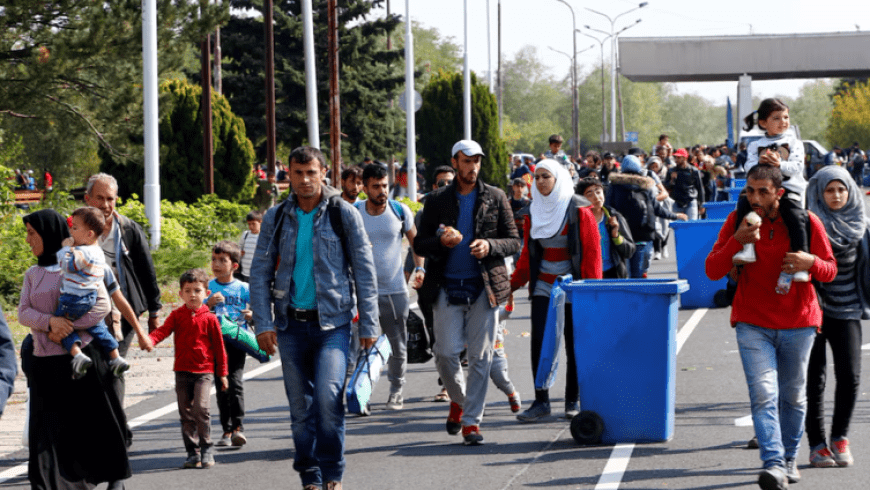
In extending our earlier examination of the lived realities of Syrian refugees in Europe, we confront a dilemma that grows more urgent with each passing year: the enduring barriers that prevent the return of the nation’s most essential expertise. Germany has become a principal refuge for Syria’s medical community, now the largest foreign cohort of physicians in the Federal Republic. Official records from 2024 list 7,042 Syrian doctors, a figure that almost certainly understates the true scale of the exodus, as it excludes the thousands who have since acquired German citizenship.
European governments may express a desire to accelerate repatriation, yet the overwhelming majority of these skilled professionals harbour no immediate intention of returning voluntarily. Their hesitation springs from profound uncertainty regarding national stability and the absence of institutions governed by transparency and the rule of law. Many ask, with painful clarity, whether a viable homeland exists to receive them after the forced displacement and systemic violations of the previous era.
The Erosion of Stability and the Deficit of Reconstruction
A survey conducted by the United Nations High Commissioner for Refugees in early 2026 revealed a stark reality. Most exiles, including academics and entrepreneurs, lost their primary residences during the fourteen-year upheaval. Despite the transformative events of 8 December 2024, the transitional authorities have struggled to fulfil the pledges set out in the Constitutional Declaration. A coherent reconstruction strategy remains absent. When the state cannot provide adequate shelter for those still languishing in domestic camps, the prospects for citizens whose homes lie in ruins appear bleak.
True patriotism rests upon a social contract that affirms the national state as the common property of all its citizens, grounded in equal rights and obligations. Yet the framework for transitional justice has faltered. War criminals from the former security apparatus and from various paramilitary factions have not faced formal accountability. Instead of a rigorous judicial process, the authorities have relied on vague references to “rogue elements” or “remnants,” offering financial settlements to former mafias and allowing perpetrators of sectarian violence to escape punishment. This culture of impunity threatens the very possibility of comprehensive national reconciliation.
Institutional Stagnation and the Lure of Integration
The political landscape remains equally unsettled. Before the passage of a law governing political parties, the “Political Administration Body” was announced, assuming a role reminiscent of the former ruling party’s claim to leadership over state and society. The optimism that followed the collapse of the previous regime has steadily diminished. In December 2024, seventy percent of surveyed physicians expressed an initial willingness to return. Many who later participated in voluntary medical missions came back to Europe burdened by disappointment.
These professionals have achieved deep socioeconomic integration within their host societies. A new generation of Syrians, educated in European institutions, knows its ancestral land only through the recollections of parents who have built successful enterprises and found security in robust healthcare systems and social protections. Such stability, absent under the former autocracy, remains elusive under the current transitional governance.
The Necessity of a Just Social Contract
The reluctance to return is not a matter of sentiment alone. It reflects a sober assessment of prevailing conditions. The transitional phase is marked by a vacuum of governance and a lack of legal guarantees for a dignified and safe homecoming. The security environment remains volatile, and the absence of a transparent judicial mechanism leaves the rights of victims and the status of perpetrators suspended in uncertainty.
In Europe, Syrians encountered societies founded upon the rule of law and equal citizenship. They fear that these qualities are still missing in the “New Syria.” A national state is realised only through a social contract that ensures an independent judiciary, a free press, and transparent economic opportunities. Investment must be governed by open competition rather than the closed circles of political loyalists.
Even academics who remain inside the country contemplate emigration, constrained by the dominance of loyalists and the intrusion of ideological extremism into scientific life. The central question persists: will the transitional authority transform its promises into a lived reality that opens the path to a dignified return? Will it reassure the diverse components of Syrian society — sectarian, ethnic, and intellectual — or will it continue to elevate loyalty above competence?
This article was translated and edited by The Syrian Observer. The Syrian Observer has not verified the content of this story. Responsibility for the information and views set out in this article lies entirely with the author.