
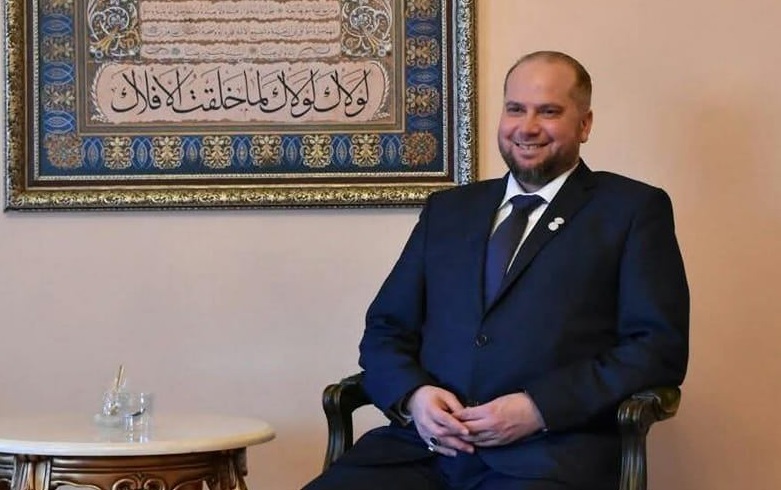
Syrian authorities detained Dr. Muhammad Khair al-Ghabban al-Husseini, a prominent academic and former Secretary-General of the Association of Arab Universities, on Friday in Hama province, sparking debate over the limits of public criticism during Syria’s transitional period.
Sources close to al-Husseini say the arrest followed a series of public criticisms he directed at government officials. The academic had returned to Syria after the fall of the previous regime, declaring his intention to contribute to national reconstruction.
Criticism Through Social Media
Al-Husseini, known for his early involvement in opposition movements, recently posted a video describing the “tragic conditions” in Idlib’s camps after severe flooding, saying the scenes “brought everyone to tears.”
He explained that he turned to social media only after months of attempting to raise concerns through official channels, including the Presidential Palace’s General Secretariat, following advice from ministers and governors.
His criticism extended to governance issues. Al-Husseini said he had submitted a proposal for an international investment and reconstruction summit for Syria, claiming he had “solutions for addressing the camps file.” In another video, he broadcast a woman’s complaint that a man was building a wall blocking her home’s entrance, alleging that the provincial governor had approved the construction.
The detention prompted sharp reactions. Sheikh Abdul Rahman al-Akkari described the move as “muzzling mouths,” urging solidarity with the academic and questioning how authorities intend to handle critical voices during the transition.
As of Saturday, officials had issued no statement explaining the legal basis for al-Husseini’s arrest.
Broader Implications
The incident highlights ongoing tensions surrounding freedom of expression in Syria’s evolving political landscape. It raises questions about whether authorities will tolerate constructive criticism, even when accompanied by proposed solutions to urgent national challenges.
It also underscores the complexity of reconstruction efforts and the need for effective channels between experts offering policy proposals and the institutions responsible for implementing them.
Observers note that al-Husseini’s profile — an academic with both opposition credentials and a stated commitment to rebuilding — makes his detention a significant indicator of how Syria’s new administration will balance stability concerns with open discourse.
The arrest comes one day after the Ministry of Information launched a Professional and Ethical Code of Conduct for journalists, adding another layer to the debate over expression boundaries in contemporary Syria.
This article was translated and edited by The Syrian Observer. The Syrian Observer has not verified the content of this story. Responsibility for the information and views set out in this article lies entirely with the author.
