
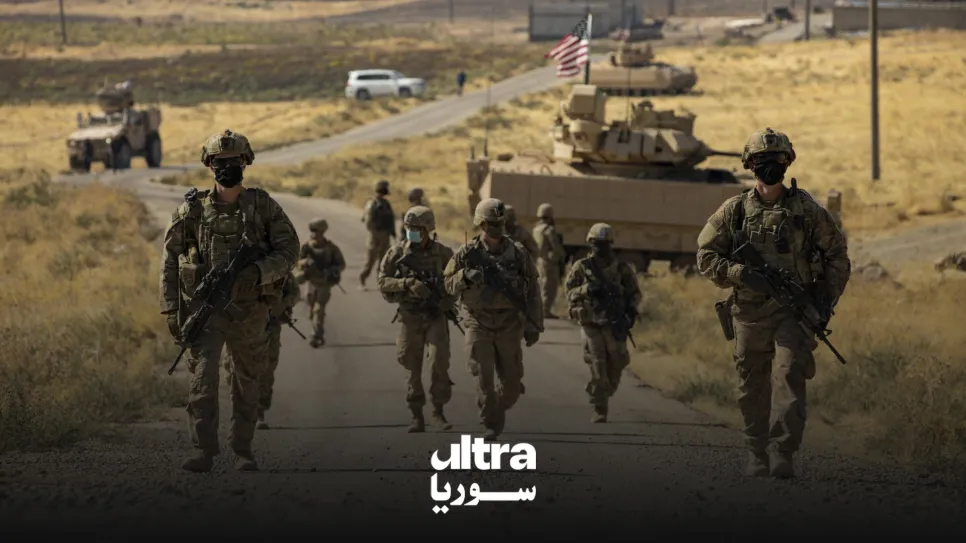
The United States has evacuated its forces from the al-Tanf garrison in southeastern Syria, relocating personnel to neighboring Jordan as part of a broader military drawdown from Syrian territory, according to two security sources cited by Reuters on Wednesday.
Strategically located at the tri-border junction of Syria, Jordan, and Iraq, al-Tanf has long served as a key operational hub for US and coalition forces, including allied factions such as the Free Syrian Army. Its evacuation marks a significant shift in Washington’s regional posture, though officials have yet to disclose the full scope of the withdrawal or provide further operational details.
The move aligns with a series of concurrent US pullbacks from northeastern Syria. Local media report that coalition forces have begun vacating installations such as the Khrab al-Jir base in Hasakah province. Last week, Iraqi security sources confirmed the withdrawal of US personnel from the al-Shaddadi base toward Erbil in Iraq’s Kurdistan Region.
In parallel, Iraqi authorities have received more than 4,500 detainees affiliated with the Islamic State (ISIS), transferred from Syrian detention centers in recent days. Iraq’s Security Media Cell, led by Maj. Gen. Saad Maan, stated that the figure includes Iraqi, Syrian, and other foreign nationals. Just last week, 2,250 prisoners were moved by land and air in coordination with the international coalition and placed in fortified holding facilities.
The total number of transferred ISIS detainees is expected to exceed 7,000, following earlier announcements by US Central Command. These transfers come in the wake of Syrian government forces assuming control over large swaths of Hasakah province—including major detention complexes previously managed by the Syrian Democratic Forces—prompting a reconfiguration of regional security responsibilities.
The drawdown from al-Tanf and northeastern Syria signals what officials describe as a comprehensive US military exit from the country, reshaping the coalition’s years-long presence and raising new questions about the future of counterterrorism operations and regional stability.
This article was translated and edited by The Syrian Observer. The Syrian Observer has not verified the content of this story. Responsibility for the information and views set out in this article lies entirely with the author.