
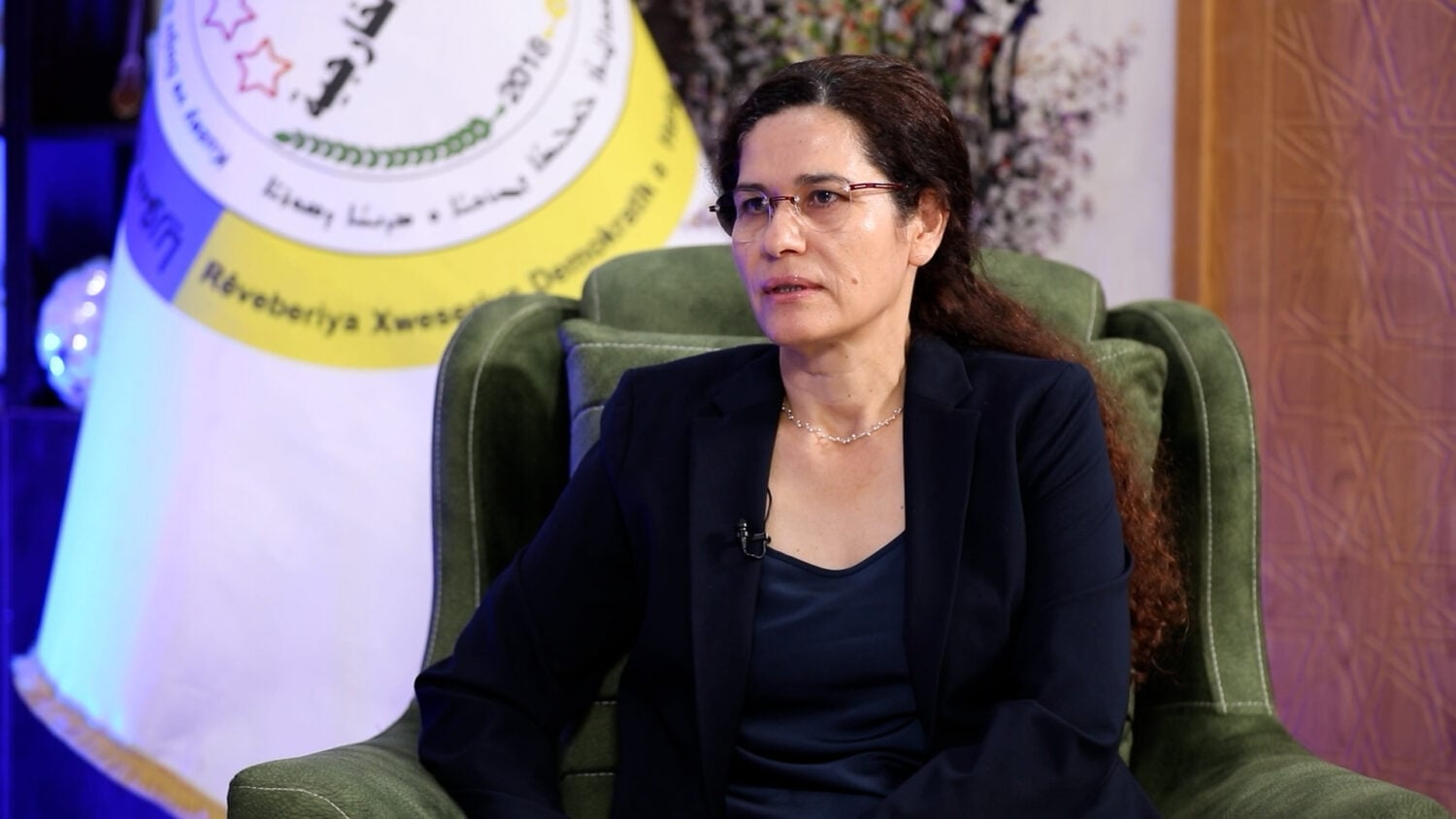
In a striking and highly symbolic gesture, Tuncer Bakırhan, co-chair of Turkey’s pro-Kurdish DEM Party (Peoples’ Equality and Democracy Party), has publicly invited Ilham Ahmed—the influential co-chair of the Foreign Relations Department of the Syrian Kurdish-led Autonomous Administration of North and East Syria (AANES)—to visit Turkey to “meet and reach an agreement.”
Speaking during his party’s parliamentary group meeting in Ankara, Bakırhan declared: “Let Ilham Ahmed come to Turkey. Let them sit down and agree.”
He framed the invitation as part of a wider push to shift the “democratic and political track” for resolving the decades-long Kurdish question, citing the recent historic visit by a DEM delegation to Abdullah Öcalan in İmralı prison as “a concrete step toward peace.”
A Direct Appeal for a Peace Conference in Istanbul
Bakırhan specifically urged the Turkish government to grant Ilham Ahmed entry to attend an international peace conference scheduled for 6–7 December in Istanbul. Although Ahmed has already received a formal invitation, Ankara has so far withheld permission.
“The priority must be dialogue and diplomacy,” Bakırhan emphasised. “Peace is only possible through direct talks, not through exclusion.”
DEM’s other co-chair, Tayip Temel, confirmed to Kurdish media outlets Rudaw and Welat that the party is conducting intensive bureaucratic and political efforts to secure Ahmed’s visa. He added that if physical attendance proves impossible, she will either participate via video link or send a written message. High-level guests from the Kurdistan Region of Iraq, including figures close to Masoud Barzani, are also expected to attend.
The Bigger Picture: A Turkish Opening Toward the Syrian Kurds?
The invitation comes amid a rapidly evolving regional context:
- Direct Turkish-SDF contacts have been ongoing for months. In May 2025, SDF commander Mazloum Abdi confirmed the existence of open communication channels—both direct and US-mediated—and even a “temporary ceasefire” along the border.
- Senior PYD figure Salih Muslim has acknowledged meetings with Turkish Foreign Ministry and intelligence officials.
- Ankara’s relations with Damascus have warmed considerably since the fall of Assad, removing the former regime’s backing of the PKK as a key point of contention.
- Washington continues to advocate for SDF inclusion in any final Syrian political settlement, subtly increasing pressure on Ankara to develop a viable framework.
Against this backdrop, Bakırhan’s public statement—delivered from the floor of the Turkish parliament—is widely viewed as a signal that Ankara is at least entertaining the prospect of a negotiated arrangement with the Syrian Kurdish leadership, potentially detaching it from the PKK and incorporating it into a post-Assad stabilisation framework.
Fragile but Real Momentum
Nonetheless, the path forward is far from clear:
- Turkey still officially designates both the PYD and YPG as terrorist organisations.
- Hardline nationalist voices within the Turkish establishment and the MHP coalition partner remain firmly opposed to any perceived concessions.
- SDF leaders have repeatedly stated they will not disarm or dismantle their institutions without firm constitutional guarantees within Syria.
Yet Bakırhan’s invitation marks the first time a major Turkish political party has publicly and unequivocally called for a senior Syrian Kurdish official to be welcomed to Turkey for direct talks.
Whether Ilham Ahmed physically attends the Istanbul conference or not, the fact that her name is now being mentioned in the Turkish parliament as a potential partner for peace—rather than an adversary to be eliminated—demonstrates how dramatically the political landscape has shifted in the year since Assad’s downfall.
For the first time in a decade, the door appears visibly ajar.
This article was translated and edited by The Syrian Observer. The Syrian Observer has not verified the content of this story. Responsibility for the information and views set out in this article lies entirely with the author.
