
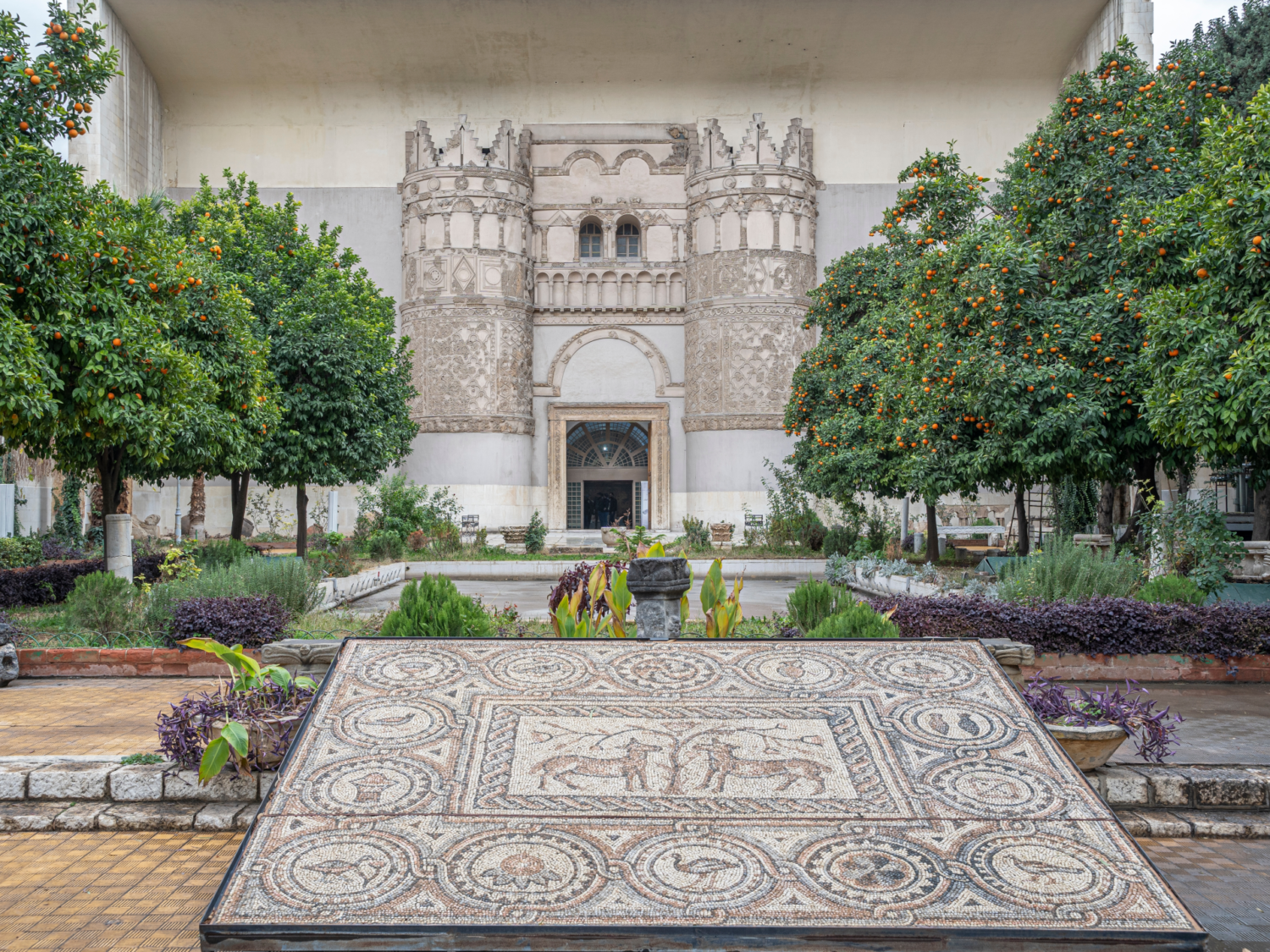
In what is being described as the most serious incident of its kind in decades, Syrian authorities have confirmed that the National Museum in Damascus has been targeted by a brazen overnight robbery. Thieves made off with an array of Roman-era statues and artefacts of immeasurable value, amid official silence and a conspicuous lack of detail regarding the full extent of the theft.
On Tuesday, officials from Syria’s Ministry of Interior announced that unknown individuals had broken into the museum in the capital, stealing several Roman antiquities. They stated that investigations are ongoing to identify the perpetrators and recover the stolen treasures.
A Mysterious Theft Resonates Through Damascus
One official told the Associated Press: “Six marble statues have disappeared from the Hall of Classical Antiquities,” adding that the break-in occurred on Sunday evening and was only discovered early Monday when a shattered door was found.
Another official noted that the investigation includes questioning the museum’s guards and staff, and confirmed that the ministry is handling the matter “with the utmost discretion.”
In the government’s first public statement, Brigadier General Osama Atikah, Damascus’s internal security chief, said on Tuesday via local media: “We are investigating the theft that deprived the National Museum of its antiquities and unique artefacts. Extensive efforts are underway to identify and apprehend those responsible and to recover what was stolen.”
Brigadier Atikah added: “The investigation involves the museum’s security personnel and relevant parties to uncover the full circumstances of the incident. Immediate steps have been taken to strengthen protection at all archaeological sites across the capital.”
On Tuesday morning, an Associated Press reporter attempted to access the museum—located near Umayyad Square in central Damascus—but was turned away by guards, who said it had been closed indefinitely and declined to comment.
Sources within the General Directorate of Antiquities and Museums confirmed that several guards and staff were detained late into Monday night for questioning, though no official statement has yet been released.
The Museum: Syria’s Living Memory
The National Museum of Damascus is one of the most prestigious in the Arab world, often referred to as “the dean of Syrian museums.” Founded in 1919, it houses collections spanning from prehistory to the Islamic era, including Hellenistic, Roman, and Byzantine masterpieces of rare significance.
Currently, it holds the majority of Syria’s museum collections, many of which were relocated there during the war to protect them from looting and destruction.
Ma’mun Abdulkarim, the former head of the Antiquities and Museums Directorate, told the Associated Press that the looted wing is “among the museum’s richest and most refined,” featuring “unique artefacts from the Hellenistic, Roman, and Byzantine periods.”
Its Most Treasured Artefacts
Syrian journalist Muhammad al-Salloum was the first to report the theft on social media, stating that the break-in “targeted the museum’s wealthiest wing, the Classical Section.” He added: “The investigation is unfolding under an impenetrable veil of secrecy. Staff were held for questioning late into the following day without any apparent outcome.”
Al-Salloum also noted that the museum is “among the top ten globally,” with its Classical and Islamic sections being the “crown jewels,” containing rare artefacts, hoards, and ancient gold coins.
In another report, al-Salloum clarified: “The theft affected the public exhibition halls, not the storage areas, according to current information. The vaults house tens of thousands of artefacts, many of which are not registered.”
The stolen items include a collection of gold and silver coins, along with drachmae from the Classical section, as well as seven or eight small marble statues—light enough to be smuggled out beneath a coat—including figures of the goddess Aphrodite.
In July, Dima Ashqar, Director of Museums Affairs, and Sami al-Rifa’i, Director of Administrative Development at the General Directorate of Antiquities and Museums, strongly denied earlier rumours of theft from the National Museum and the dismissal of staff.
Notably, the museum had only reopened in January, one year after the collapse of Bashar al-Assad’s regime in December 2024, which ended the Assad family’s 54-year rule.
It had been closed temporarily amid the security chaos that followed the regime’s fall, before being quietly reopened by the transitional government.
Since the outbreak of the Syrian revolution in 2011, the country has witnessed widespread looting and trafficking of antiquities. Historic landmarks in Palmyra, Aleppo, and Deir ez-Zor have been plundered and destroyed.
In response, previous authorities relocated hundreds of artefacts from provincial museums to the National Museum in Damascus for safekeeping—especially after ISIS ravaged large parts of Palmyra in 2015, a site recognised as a UNESCO World Heritage Site.
This article was translated and edited by The Syrian Observer. The Syrian Observer has not verified the content of this story. Responsibility for the information and views set out in this article lies entirely with the author.