
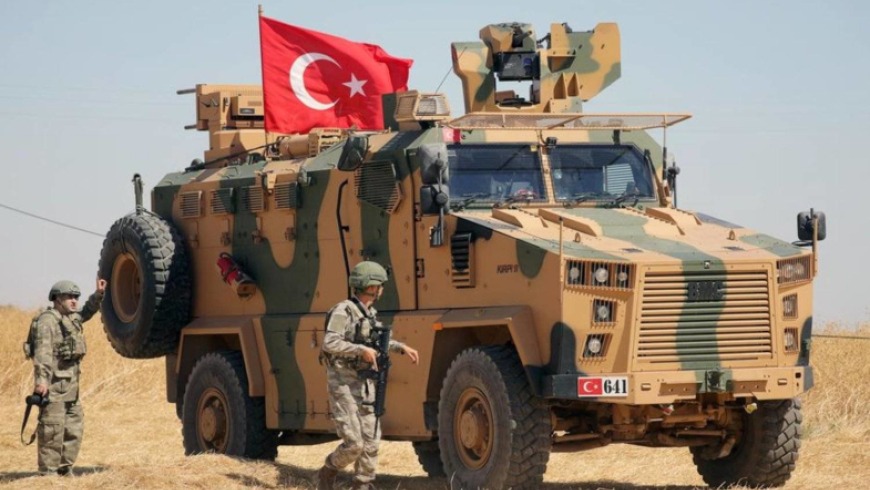
A senior Syrian official told Reuters on Monday that Turkey may back a military operation against the Syrian Democratic Forces (SDF) if the March Agreement signed between the parties is not implemented before the end of the year.
The official stated that Ankara views the Kurdish autonomous administration in northern Syria as “a direct threat to its national security”, adding that Turkey believes time is running out and that U.S. President Donald Trump has effectively granted it “freedom of action” in dealing with the SDF. This, according to the official, raises the likelihood of a military escalation should delays persist.
Ankara: We Will Not Remain Silent in the Face of SDF Threats
Turkey has accused the SDF of exploiting the ongoing Israeli crisis in Syria to strengthen its territorial control. Turkish Foreign Minister Hakan Fidan stated: “The SDF is stalling in implementing the March Agreement with Damascus, banking on renewed instability to improve its negotiating position.”
Speaking at a conference in Rome, Fidan claimed that members of the Kurdistan Workers’ Party (PKK) are infiltrating from Iraq and Iran into Syria to join the SDF, warning: “Turkey will not stand idly by in the face of these threats.”
In contrast, Turkish President Recep Tayyip Erdogan struck a more measured tone, while expressing frustration with the slow political process. In an official speech, he declared: “Turkey is a guarantor of the security and safety of Kurds, just as it is for other communities,” urging dialogue and diplomacy among Syrian actors to resolve the crisis.
Erdogan added: “Those who align with Ankara and Damascus will come out ahead,” reaffirming Turkey’s commitment to stability in Syria and its ongoing role as a regional guarantor.
In response, the Autonomous Administration—the civilian arm of the SDF—denied any intent to secede from Syria. In a statement, it stressed that its adoption of a decentralised governance model does not equate to separatism, stating: “Accusations of separatism are disconnected from reality.”
The Autonomous Administration reiterated that any political solution must be rooted in UN Resolution 2254, and expressed its willingness to resume implementation of the March Agreement, contingent on Damascus establishing a clear timeline. It also called for recognition of the diverse identities in northeastern Syria, warning that confrontational rhetoric undermines peaceful coexistence.
Suweida: Partial Return of Displaced Persons and Early Signs of Reconciliation
The Syrian official also told Reuters that reconciliation efforts in Suweida must begin with the return of displaced Bedouin and Druze populations to their homes. He noted that recent prisoner exchanges between the parties represent an initial step toward rebuilding trust, though the social fractures caused by the crisis will take years to fully heal.
Meanwhile, the Syrian government is seeking to contain the “Suweida crisis,” which erupted around two months ago and led to the displacement of tens of thousands, primarily from Bedouin communities.
Suweida’s governor, Mustafa al-Bakour, recently announced that the government is preparing a comprehensive plan to facilitate the “safe and dignified” return of the displaced to their villages and properties, with new directives issued to restore basic services in the affected areas.
This article was translated and edited by The Syrian Observer. The Syrian Observer has not verified the content of this story. Responsibility for the information and views set out in this article lies entirely with the author.
