
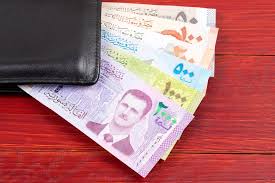
At a moment of deep economic crisis and amid the collapse of the Syrian pound, Damascus appears ready to take a step that looks technical on the surface but carries significant political and economic weight: entrusting the Russian state-owned company Goznak with printing Syria’s new currency.
According to a Reuters report, the move aligns with Damascus’s growing dependence on Moscow. But the decision raises pressing questions, for Goznak is no ordinary printing house—it is a company already mired in sanctions, controversies, and allegations of destabilizing other nations’ economies.
A Company Under Sanctions
For years, Goznak has been in the crosshairs of Western governments. In 2024, the U.S. Treasury Department sanctioned it for supporting Russia’s Federal Security Service, accusing the company of producing sensitive materials with military applications. The European Union soon followed, blacklisting Goznak for its role in undermining Ukraine’s sovereignty by issuing passports and documents in Russian-occupied territories. The UK, Switzerland, and New Zealand imposed similar measures, sealing its reputation as one of the most controversial actors in the international financial sphere.
Perhaps most damaging, however, are the allegations that Goznak printed more than a billion dollars in counterfeit Libyan currency, exacerbating Libya’s financial chaos and contributing to the collapse of the dinar. Any government doing business with Goznak must therefore reckon with suspicion—and the risk of additional sanctions.
Contradictory Signals from Damascus
Here lies the paradox. On the one hand, Syrian officials tirelessly argue that sanctions obstruct reconstruction and exacerbate public suffering, urging the international community to reintegrate Syria’s economy. On the other, Damascus now signals it is prepared to contract one of the world’s most heavily sanctioned companies to handle a sovereign matter as sensitive as printing its money.
The message this sends abroad is not one of openness but of defiance, effectively inviting further mistrust. For foreign banks, the introduction of Syrian banknotes produced by a sanctioned company could cast doubt on their legitimacy, complicating financial transactions. Investors, already wary, may hesitate further, questioning the credibility of a currency associated with a firm accused of counterfeiting.
Risks to Syria’s Own Economy
Beyond reputational concerns, there are practical dangers. If Goznak could flood Libya with counterfeit dinars, what guarantees exist that the Syrian pound will not become another instrument of manipulation—whether through Russian leverage or the company’s opaque practices? At home, the fragile public confidence in the pound could erode even further if doubts about the quality, authenticity, or independence of the new banknotes spread.
It is true that Damascus has few options. Sanctions and diplomatic isolation leave only a limited pool of companies willing to work with the Syrian government. Yet turning to Goznak risks deepening the problem. A wiser course would have been to appeal to states advocating the lifting of sanctions to facilitate the production of Syria’s currency, rather than embracing a partner whose very name triggers red flags in global markets.
A Misstep with Lasting Consequences
In the end, contracting Goznak sends the wrong message at the wrong time. Far from advancing Syria’s case for reintegration into the global economy, it entrenches the perception that Damascus prefers shortcuts, circumvention, and short-term maneuvers over sustainable, confidence-building policies.
Politically, legally, and technically, it is hard to see this as a sound decision. Goznak’s record of economic meddling, its entanglement with Russian security interests, and its presence on international sanctions lists make it an ill-suited partner for such a crucial task. If carried out, the deal may complicate efforts to lift sanctions, further isolate Syria, and expose the country to new risks it can ill afford.
This article was translated and edited by The Syrian Observer. The Syrian Observer has not verified the content of this story. Responsibility for the information and views set out in this article lies entirely with the author.