
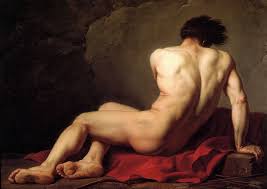
A controversial new decree from the dean of the Faculty of Fine Arts at the University of Damascus has banned the use of nude models in student graduation projects, sparking widespread outcry over artistic freedom and the growing influence of moral conservatism in Syria’s transitional period.
The ruling, which applies to the departments of painting, sculpture, and printmaking, mandates a failing grade for any student found in violation. The decision is justified on the grounds of preserving “moral constants”.
A Step Backward for Artistic Education
For students like “Lujain” (a pseudonym), a photography major, the decision has come as a severe blow. “Just when we expected an opening for art after the fall of the Assad regime, this decree landed like a fatwa,” she remarked.
The move has triggered confusion and anger among both students and faculty, who view it as an encroachment on academic integrity and a clear attempt to subordinate artistic education to the prevailing political and societal image. Since its establishment in 1960, the Faculty of Fine Arts has upheld life drawing and artistic anatomy as foundational elements of its curriculum—a global standard essential for mastering form, light, shadow, and geometric composition.
A former teaching assistant at the faculty observed, “The human form in the classroom was never perceived as nudity, but as a study of mass and proportions. Creativity cannot flourish under pre-imposed moral constraints—otherwise, it loses its meaning.”
A Crisis of Credibility
Critics have also highlighted the apparent hypocrisy of the dean, Fouad Dahdoh, who has previously incorporated nude forms in his own artistic work. This contradiction, they argue, represents a stark betrayal of the faculty’s own mission, which promises to “develop the student’s capacity for critical thinking and creativity” and to “engage with the cultural output of other civilisations”.
Syrian visual artist Anas Al-Berrihi underscored the centrality of the human form in the arts: “The body is not merely a shape—it is a vessel of soul, meaning, and expression. To erase representation and nudity from artistic practice is to strip artists of one of their most essential tools.” He also questioned whether Syria’s ancient artefacts—many of which depict nude deities—would also be deemed inappropriate “in the name of modesty”.
Censorship Beyond the Canvas
The ban is widely seen as part of a broader pattern of increasing societal control by Syria’s transitional authorities. Though it remains unclear whether the move was directly influenced by conservative political pressure, it mirrors other recent policies aimed at policing morality in public life.
These include the banning of shorts in public, the imposition of burkinis at resorts, gender segregation initiatives, and anonymous campaigns promoting “legally appropriate dress” for women via public stickers.
Such measures suggest a shift in censorship from overt political repression to moral regulation. In this climate, the expressive human body has become a “zone of suspicion”—a site where the boundaries between personal freedom and state authority are increasingly contested. As the article notes, while the visual representation of the Syrian body is under scrutiny, the body itself remains vulnerable elsewhere: “killed, detained, or under siege. Decisions would be better focused on protecting it in life, not treating it as a flaw in an image.”
Calls for Repeal and Artistic Resistance
In response, the Syrian Student Movement has issued a statement condemning the ban and demanding its immediate repeal, along with a public apology from both the Ministry of Higher Education and the university administration. They have declared their support for peaceful demonstrations by students at the Faculty of Fine Arts, affirming that academic freedom must remain a pillar of any legitimate education system.
The controversy raises pressing questions for Syria’s artistic community. At a time when documenting violence against the Syrian body remains urgent, will representations that truthfully reflect this transitional era be permitted? Many fear this moralistic turn is a political smokescreen—a pre-emptive attempt to sanitise emotion and conceal future evidence.
This article was translated and edited by The Syrian Observer. The Syrian Observer has not verified the content of this story. Responsibility for the information and views set out in this article lies entirely with the author.