
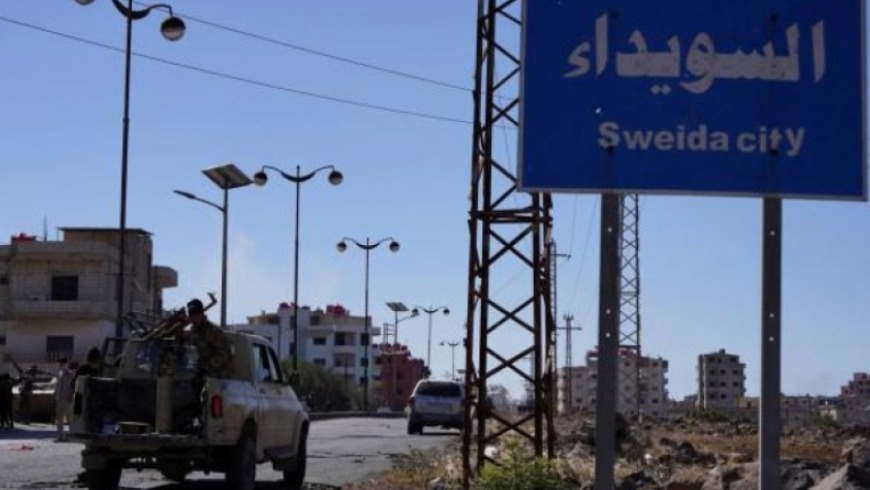
In the highlands of Suweida, where ancient stone bears silent witness to generations of Druze resilience amid Syria’s shifting storms, a fresh wave of repression has descended. Local sources report that the National Guard—armed loyalists of Sheikh Hikmat al-Hijri, one of the three senior Druze religious leaders—has launched a widespread campaign of arrests across the city and its surrounding villages. Officially, five people have been detained, but accounts from the ground suggest a broader sweep, including women, with their cries echoing through narrow alleyways as raids unfold under cover of night.
Media outlets aligned with al-Hijri have confirmed the detention of five individuals, including the prominent Sheikh Raed al-Matni and Asim Abu Fakhr—names of considerable weight in the province’s contentious political landscape. But residents describe a darker picture: indiscriminate raids that breach family homes, leaving women pleading with armed forces at their doorstep. One widely shared video shows a scene of panic and protest, disseminated by Suweida’s embattled internal security chief, Suleiman Abdul Baqi, whose own home was targeted.
In the footage, women confront masked members of the Guard, their voices cracking with fear. Abdul Baqi, visibly incensed, responds with an incendiary address: “For the sake of your eyes, O Mother, O sisters—else I shall scorch the earth beneath you, you swine. Your manhood falters against women.” He continues, directing his ire at the Guard: “We have come for you, pigs of the National Guard, Suweida’s syndicates, dogs of Hikmat al-Hijri.” Shared widely online, the video has become a flashpoint—seen by some as a call to arms, by others as a desperate cry against rising tribal authoritarianism.
As families of the detained reach out for answers—some even contacting Suweida 24, a network previously aligned with al-Hijri’s bloc—no clarity has emerged. The National Guard has issued no formal statement. Their supporters have vaguely cited a “foiled attempt to disrupt security,” but have offered no evidence. Local activists believe the real targets are affiliates of Sheikh Youssef Jarbu’, whose family compounds have also been placed under siege. The dragnet has reportedly extended to relatives of Layth al-Bal’ous, from the influential al-Zaydan clan, as well as members of Abdul Baqi’s own family—a deepening spiral of retaliatory politics.
This is not a sudden flare-up, but a recurring expression of al-Hijri’s dominance. Past crackdowns have sent a clear message: any coordination with Damascus—or even dialogue—is treated as betrayal, punishable by force. In this environment, the transitional regime led by President Ahmed al-Sharaa has remained conspicuously silent, issuing no statement or intervention. In that silence, instability festers—and Suweida teeters on the edge of further internal strife.
Justifying the Crackdown: Accusations of High Treason
In recent statements, the National Guard has attempted to legitimise its actions, citing allegations of “grand treason” and claims that those detained were involved in a conspiracy with the Syrian government aimed at orchestrating “a major security breach”. The rhetoric has grown increasingly aggressive, with declarations of “verified intelligence” uncovering plans to endanger women, children, and the very fabric of Suweida’s society. Promises of future legal proceedings have been made—but no evidence has been released, and no independent judicial authority has confirmed the charges.
Meanwhile, graphic videos show Guard members enacting forms of public humiliation and abuse. Detainees are reportedly subjected to forced shaving and physical punishment—rituals of degradation with no legal basis. Footage has also emerged of homes being stormed, with terrified women and children caught in the chaos, and men dragged away without warrants or explanation. These arrests, conducted outside any transparent legal framework, have deepened public fear and anger.
What Happened in Suweida?
At least five people have been arrested in this latest campaign, echoing past operations targeting those aligned with Sheikh Jarbu’ and his allies. Local reports describe a series of night-time raids on family homes, some of which were recorded and circulated by witnesses. One clip shows a woman pleading: “Please, stop—there are children in the house.” The National Guard has issued no official list of charges or arrestees. Instead, they rely on a brief statement invoking “national security” and warning of consequences for those allegedly involved in sedition.
Damascus, meanwhile, has remained silent. President al-Sharaa has issued no response to the escalation, and no government figures have addressed the situation. In contrast, Suleiman Abdul Baqi’s video has reignited calls for retribution, with his words framed by supporters as a declaration of resistance to what many see as a creeping militia rule.
In Suweida, where al-Hijri’s edicts have long eclipsed official government authority, previous crackdowns have come with explicit threats: any communication with Damascus is grounds for death. As tensions mount, calls for protection from the central government—however muted or mistrusted—are resurfacing. The province now stands at a crossroads, caught between the unchecked power of local militias and the void left by a retreating state. In this climate, Syria’s fragile post-conflict order appears ever more precarious, and Suweida’s role within it increasingly volatile.
This article was translated and edited by The Syrian Observer. The Syrian Observer has not verified the content of this story. Responsibility for the information and views set out in this article lies entirely with the author.