
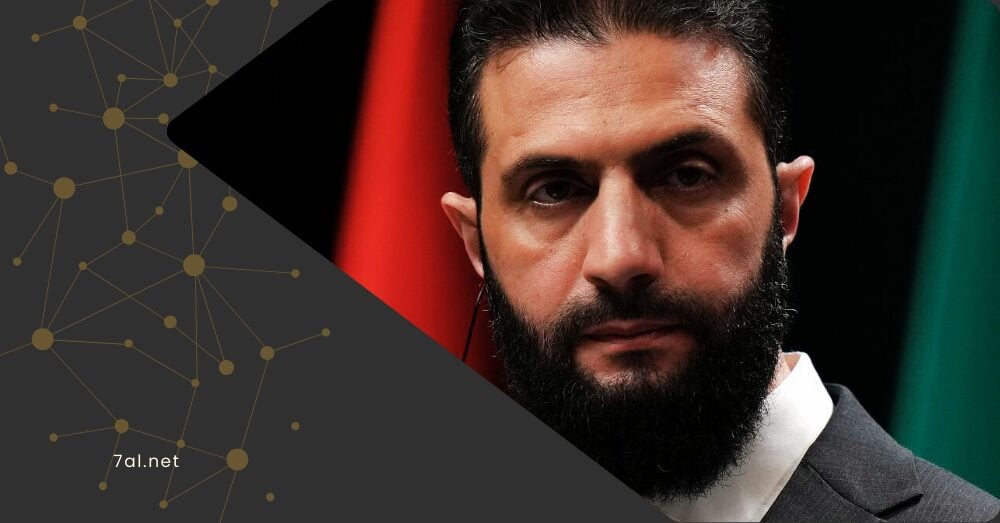
In the ever-shifting sands of Syria’s post-revolutionary landscape, a structural pivot of profound—and profoundly contentious—import has emerged: the creation of the General Authority for Ports and Customs as an autonomous entity, tethered directly to Transitional President Ahmed Sharaa. For some observers, this maneuver heralds a calculated bid to entrench influence and consolidate decision-making within one of the nation’s most pivotal economic and fiscal bastions.
This reconfiguration arrived via Decree No. 264 of 2025, promulgated by the transitional government’s president on Sunday, 23 November, which not only birthed the authority but also installed Qutaiba Ahmed Badawi at its helm with ministerial rank—a figure whose ascent from Idlib’s shadowed corridors to Damascus’s corridors of power has only amplified the decree’s reverberations.
The Widening Grasp of Centralized Control
Far from a mere administrative reshuffle, the decree redraws the contours of power and patronage, endowing the nascent authority with juridical personality, fiscal and managerial autonomy, and its seat in the heart of Damascus. In essence, it positions this body at the epicenter of executive authority, insulated from prospective governmental or parliamentary oversight—a fortress of influence amid the ruins of reconstruction.
Commentators have seized upon this as a paradigm shift, one that equips Sharaa to forge enduring leverage by commandeering the nation’s financial and frontier portals. Ports and customs, after all, constitute the lifeblood of commerce and trade; dominion over them equates to mastery of monetary flows, imports, and exports. Such a command yields a formidable instrument for economic surveillance and political fortification, transforming what might appear as bureaucratic refinement into an overt gambit for wealth concentration and the erection of an unassailable economic bedrock for the emergent regime.
An Appointment That Ignites Controversy
Yet the decree’s edge sharpens with the elevation of Qutaiba Ahmed Badawi, infusing the proceedings with layers of political and security intrigue. Hailing from Binnish in Idlib’s hinterlands, Badawi rose as a linchpin in Hay’at Tahrir al-Sham (HTS), the Islamist vanguard once helmed by Sharaa himself, where he orchestrated sensitive economic dossiers, including the commercial pulse of the group and stewardship of key crossings like Bab al-Hawa. Dubbed “Al-Mughira Binnish” in those clandestine epochs, he earned the moniker “Whale of the Economy” among Idlib’s denizens for his sway over border commerce and resource allocation.
Whispers persist of his fraternal ties to Sharaa’s inner circle—rumors, unconfirmed yet ubiquitous, that he is the brother of the president’s spouse—further entwining familial threads with fiscal reins. His sibling, Hudhayfa Badawi (“Abu Hafs Binnish”), a towering security chieftain within HTS, has compounded this web, weaving a lattice of influence laced with prior accusations of monopolistic strangleholds and extralegal dominion over vital economic sinews.
Critics decry this lineage as a harbinger of peril for Syria’s economic horizon, evoking specters of entrenched cartels and unchecked hegemony. Does this herald a mere transposition of financial fiefdoms—from one clan or clime to another—or a genuine genesis of state institutions? The query lingers like a pall over the transitional dawn.
Fears of Inherited Influence
Against this intricate backdrop, interpreters discern in Badawi’s summons to a sovereign perch—abutting the state’s economic arteries and border veins—a yearning for an inner sanctum bound by unyielding fealty, governed less by the measured cadences of civil administration than by the iron rhythms of security apparati. The authority’s fiscal and administrative emancipation, in this lens, erects a bulwark against scrutiny, transmuting it into a monadic edifice under singular executive fiat. Thus, Sharaa may orchestrate crossings, frontiers, and customs yields—bedrocks of revenue in an economy bereft of productive vigor—with the precision of a maestro.
Public sentiments, a barometer of the decree’s ferment, echo this disquiet: for many Syrians, the pivot from “coastal kin” to “Idlib’s ilk” alters naught in the malaise’s marrow, merely repackaging the perennial monopoly of might and mandate in a veneer of novelty—mirroring the half-century stasis that scarred the land. Others note Badawi’s de facto ministerial writ predating the decree, via edicts curbing exports and imports that encroached upon extant ministries’ domains, suggesting this elevation merely sanctifies a shadow reality rather than summoning a sunlit one.
A New Institution or an Old Dominion?
Pundits voice trepidation that this investiture may morph into a refurbished facsimile of yore: a realm distilled to one man’s silhouette, ministries and mechanisms orbiting his gravitational pull, resurrecting “Syria the Farmstead” under altered appellations. Restructuring ports and passages may indeed be imperative to tame anarchy and orchestrate trade’s torrent, yet vesting such potency in an erstwhile security operative from a hardline faction summons interrogations on governance’s trajectory, administrative candor, and the transitional regime’s mettle in forging veritable state pillars—untainted by the taint of personal empires.
As the authority’s ambit swells amid veils of ambiguity shrouding its mandate and accountability, the discourse endures: Does this decree dawn a radical renewal, or does it tread another path toward a fortified centralism, poised to reprise the very distortions that have long lacerated Syria’s soul? The crossroads, it seems, beckon with the weight of history’s gaze.
This article was translated and edited by The Syrian Observer. The Syrian Observer has not verified the content of this story. Responsibility for the information and views set out in this article lies entirely with the author.