
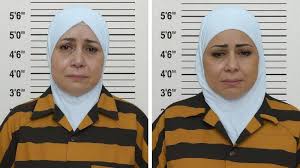
The Syrian Ministry of Interior has confirmed the arrest of two former ministers of social affairs—Kinda al-Shammat and Rima al-Qadiri—alongside several female staff members from care institutions. The arrests come as part of an ongoing investigation into the fate of children forcibly disappeared from regime prisons and later transferred to orphanages without their families’ knowledge.
Speaking to Enab Baladi on July 6, the Interior Ministry’s media office stated that the detentions were based on preliminary evidence and testimonies gathered from the families of detainees and the disappeared. The investigation is being jointly conducted by the Ministries of Interior and Social Affairs, with a specialized committee tasked with overseeing the file.
This marks the first time that officials of ministerial rank have been arrested since the fall of the Assad regime on December 8, 2024.
Kinda al-Shammat served as Minister of Social Affairs from February 2013 to August 2015, followed by Rima al-Qadiri, who held the post until August 2020.
Among those detained are employees from the government-linked orphan care system, including Nada al-Ghabra from the “Melody of Life” complex in Damascus, as well as Lama al-Sawwaf, Fidaa al-Fandi, and Lama al-Baba.
The arrests were ordered by the Public Prosecutor in Damascus, following a formal request from the investigative committee, which accuses the detainees of obstructing families’ efforts to locate missing children, concealing vital information, and covering up sensitive case files.
The former officials are alleged to have forged documents to facilitate the transfer of children—estimated at between 300 and 500—whose parents were imprisoned by the Assad regime. These children were reportedly moved to orphanages in Damascus, and in some cases, placed in the homes of military officers or in private apartments.
Speaking to the state-run news agency SANA, committee spokesperson Samer Qorbi revealed that investigations had uncovered significant mismanagement within certain care institutions. He added that available documentation points to the illegal transfer of children from detention centers to government-affiliated orphanages—without legal procedures or family notification.
“These violations constitute criminal offenses,” Qorbi stated, noting that the committee is working to expand the investigation and expose the full network involved.
The committee is currently compiling a database of the children who were transferred from detention centers, verifying their identities and current whereabouts, and attempting to uncover the fate of those still forcibly disappeared.
Fieldwork is already underway, including collecting testimonies from families—especially in areas heavily affected by forced disappearances over the past decade.
The committee includes representatives from the Ministries of Interior, Justice, and Religious Endowments (Awqaf), as well as civil society organizations and families of the missing. This multi-sectoral structure aims to enable greater information-sharing and coordinated judicial and logistical responses.
Back in January, the Ministry of Social Affairs in the transitional government issued a public notice urging families of missing children to come forward with testimonies and information. That appeal followed the discovery of internal documents from former security branches indicating the unauthorized transfer of detained children to orphanages without parental consent.
This development is seen as a groundbreaking step in addressing the long-ignored file of Syria’s forcibly disappeared, amid growing calls from human rights groups for accountability and transparency.
This article was translated and edited by The Syrian Observer. The Syrian Observer has not verified the content of this story. Responsibility for the information and views set out in this article lies entirely with the author.