
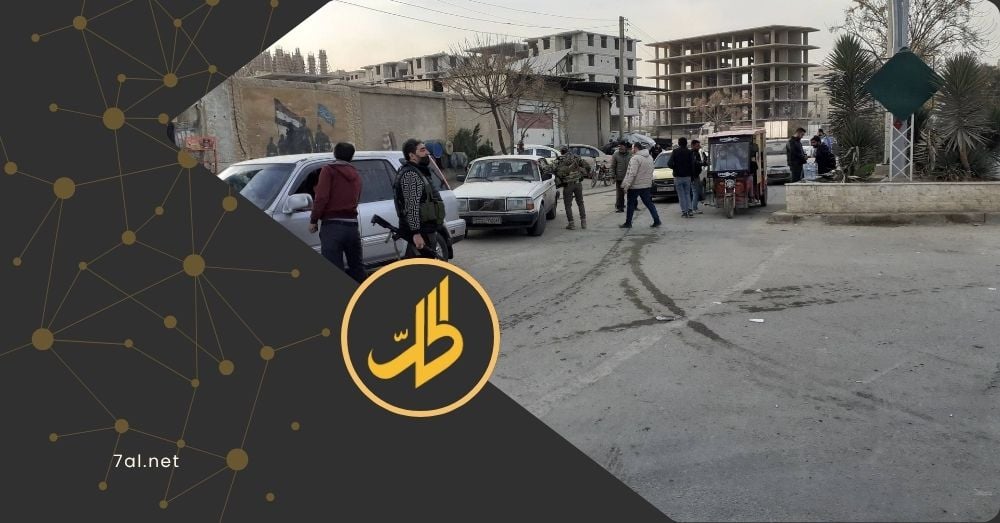
Amid the persistent waves of sectarian unrest rippling across various Syrian regions following the dramatic collapse of Bashar al-Assad’s regime late last year, a fresh eruption of communal tension now threatens the fragile stability of the Damascus countryside. The latest flare-up, sparked by inflammatory rhetoric from a mosque imam in the town of Hujayrah targeting the Shiite population of nearby Sayyidah Zaynab, has culminated in nightly demonstrations calling for their expulsion.
According to local sources and the Syrian Observatory for Human Rights, this escalation has raised grave fears of intercommunal violence, further endangering Syria’s already frayed social fabric.
Sectarian Flashpoint in Sayyidah Zaynab
The towns of Hujayrah and Sayyidah Zaynab have witnessed a series of demonstrations marked by sectarian slogans and open hostility towards the local Shiite community. The protests were reportedly triggered by the restoration and reopening of Husayniyyah al-Zahra in Sayyidah Zaynab—a religious gathering place for Shiite worshippers.
Protesters carried placards and chanted slogans including: “Where the Shiites tread, we gouge out eyes,” “Shiites out—we want none of you,” and “Free Syria, free—expel the Shiites beyond!”
Activists have circulated video footage showing scenes of unrest in the Damascus suburbs, implicating the imam of a prominent mosque in Hujayrah in leading these nightly marches.
The Syrian Observatory reported that the cleric played a key role in fuelling tensions, urging worshippers to “stand against the Shiite expansion”—a message that risks reigniting long-dormant sectarian fissures in southern Damascus.
The Reopening of Husayniyyah al-Zahra
The recent anger has centred on Sheikh Adham al-Khatib and erupted one week after the reopening of the husayniyyah, according to the Observatory. Local residents—many originally from the Golan and other parts of Syria—reportedly viewed the resumption of Shiite activities at the site as a provocation and blamed Sheikh al-Khatib for inflaming sectarian divisions.
Sheikh al-Khatib serves as the deputy to Sayyid Muhammad Husayn Fadlallah, the moderate Shiite marja’ known for promoting Islamic unity and rejecting vilification of other sects.
Many within the Shiite community perceive the outcry not merely as a personal attack but as part of a broader effort to undermine their communal presence in the area.
On 12 August, Sheikh al-Khatib delivered a sermon at the Sayyidah Zaynab shrine denouncing what he described as “violations and encroachments” against the Shiite population, allegedly carried out by armed groups with ties to the current power structure.
According to the Syrian Observatory, he condemned a litany of abuses: forced evictions, confiscation of property under spurious claims, looting without legal or religious justification, and acts of intimidation under threat of arms—coupled with routine sectarian slurs and humiliation.
He also cited instances of homes and vehicles being targeted, the spread of fear through intimidation, and cases of extortion demanding money or enforced displacement.
Sheikh al-Khatib’s Appeal for Calm
In response to the escalating crisis, Sheikh Adham al-Khatib—Vice President of the Islamic Scholarly Council for Followers of Ahl al-Bayt in Syria—issued a statement via social media calling for calm and the preservation of civil peace, while warning against “malicious schemes aimed at sowing sectarian discord” in Sayyidah Zaynab and its surrounding areas.
In his message, Sheikh al-Khatib stated: “For nearly a month, covert actors have been disseminating falsehoods and magnifying trivialities in an effort to inflame division and unravel the social fabric of Syria.” He characterised these efforts as “a gift to the enemies of the nation, who seek to obstruct national reconciliation and hinder the reconstruction process.”
He addressed the controversy surrounding the reopening of Husayniyyah al-Zahra, dismissing it as a “deliberate provocation framed in sectarian terms.” He clarified: “The husayniyyah was closed for renovation. No religious services have resumed. The only event held was a brief prayer marking the martyrdom anniversary of Sayyidah Fatimah al-Zahra.”
He added that the inflammatory rhetoric surrounding the incident “contradicts the directives of the Syrian state and the policies of the Ministries of Endowments and Interior.” He emphasised that state institutions, in cooperation with religious leaders and community elders, are working to “safeguard public order and prevent the outbreak of unrest.”
In closing, Sheikh al-Khatib appealed to all Syrians—regardless of sect or background—to reject calls for incitement and to uphold unity. “We are all children of one Syria, united by its land and its laws. Our responsibility is to protect our unity and confront the merchants of division with wisdom and resolve.”
This article was translated and edited by The Syrian Observer. The Syrian Observer has not verified the content of this story. Responsibility for the information and views set out in this article lies entirely with the author.