
Following the fall of the Assad regime, and as part of what is now being described as a redistribution of investments in tourist areas, Syria’s Ministry of Tourism plans to transfer ownership of several tourism-related properties belonging to the Slonfeh Municipality to its central administration. A “study office” affiliated with central authorities in Damascus has been set up within the municipality to catalogue these leased properties and assess the feasibility of transferring them to the Ministry.
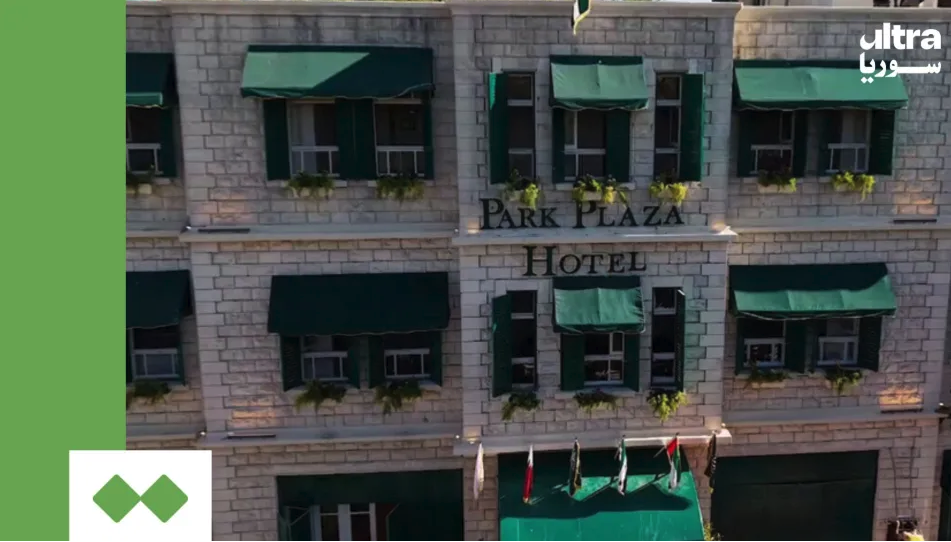
According to local sources cited by Ultra Syria, these assets include several investments such as the Al-Rabiya Restaurant, the Al-Helween Rest Stop, and the Park Plaza Slonfeh Hotel—the latter of which was symbolically inaugurated for media publicity before being closed again the very next day.
Slonfeh Mayor Ammar Baddour denied in comments to Ultra Syria that the municipality’s properties had been transferred to the Ministry of Tourism or the Directorate of Investment. However, he confirmed that the municipality is studying potential new investment opportunities aimed at increasing local revenue.
New Projects and the Eviction of Old Ones
At the same time, new investments have been awarded, such as the Slonfeh Park project, which was granted to a figure affiliated with a security agency from the city of al-Haffeh. Meanwhile, kiosk operators along the Ain al-Bayda village corniche—part of Slonfeh’s jurisdiction and known for its pie stalls—are facing forced evictions and the loss of their livelihoods.
Huda, a pie-seller who preferred to use a pseudonym when speaking to Ultra Syria, said: “The Slonfeh Municipality told us we must vacate and dismantle our kiosks by the end of the tourist season, claiming that the Ain al-Bayda corniche will undergo reorganization and that its management will be transferred from the municipality to the Lattakia Tourism Directorate.”
She explained that these kiosks had long provided livelihoods for hundreds of families relying on seasonal and holiday sales, but now they face closure and economic ruin. “We pay annual investment fees to the municipality and operate during the summer and occasionally in winter,” she said, adding that “what’s happening is manipulation of kiosk investment contracts and other tourism facilities in favor of new investors.”
Several kiosk operators told Ultra Syria that they have been working in the same locations for many years under valid municipal contracts. Some noted that the post-regime transition opened the door to exploitation and extortion, given the commercial activity these kiosks attract during the summer season.
Mayor Baddour confirmed the municipality’s position, saying: “The previous investment contracts have expired, and the municipality has the right to re-invest the properties since the Ain al-Bayda corniche is considered public property.”
Openings for Show
Meanwhile, the Park Plaza Slonfeh Hotel was ceremonially inaugurated for just one day by Tourism Minister Mazen al-Salehani, only to be closed again afterward. During the brief opening, the minister claimed that the hotel’s reopening followed renovations “to support the tourism sector and strengthen infrastructure, thereby boosting domestic tourism.”
Commenting on the minister’s remarks, Mayor Baddour said: “An agreement was reached between the municipality and the Tourism Directorate to operate the hotel for the municipality’s benefit under the Local Administration Law, with the Tourism Directorate receiving a share of the profits.”
Ultimately, property ownership and investment management in the town have come under new conditions and standards markedly different from those before the regime’s fall. Many projects are now being controlled by new investors and influential figures through contracts managed by the so-called “Study Office,” under the broader initiative titled ‘Redistribution of Investments in Tourist Areas.’
This article was translated and edited by The Syrian Observer. The Syrian Observer has not verified the content of this story. Responsibility for the information and views set out in this article lies entirely with the author.