
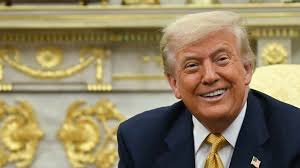
In the intricate theatre of Middle Eastern diplomacy—where alliances are fluid and enmities calcify over generations—a tantalizing prospect now hovers in the Damascus air: the possibility of U.S. President Donald J. Trump walking the ancient streets of the Syrian capital before the year yields to 2026. If murmurs from White House insiders and Syrian-American intermediaries prove accurate, the visit would not merely be a symbolic overture but a seismic ratification of Syria’s post-Assad transformation—a bold endorsement of a nation striving to claw its way from the ruins of civil war toward reconstruction and reintegration.
As with all such auguries, the path is fraught—with legislative entanglements, partisan resistance, and the ever-lurking shadow of regional spoilers.
The genesis of this rumored diplomatic overture dates back to 10 November, when Syrian President Ahmed al-Sharaa—once a U.S.-designated terrorist with a $10 million bounty on his head—stepped across the White House threshold as Syria’s newly recognized head of state. That historic encounter, the first White House audience granted to a Syrian leader since the country’s independence in 1946, unfolded as a careful choreography of pragmatism and political gamble. Trump, in his characteristic style, praised al-Sharaa as a “very strong leader” capable of steering Syria into a new era of prosperity, even as critics pointed to his jihadist past with unease.
In a flurry of diplomatic concessions, the U.S. administration extended the suspension of the Caesar Syria Civilian Protection Act—Washington’s 2019 sanctions framework that had effectively throttled Syria’s economy—for an additional 180 days. Notably, this exemption maintains restrictions on dealings with Russia and Iran while facilitating a flood of U.S. and international commerce into Syria. In exchange, Damascus pledged cooperation with the U.S.-led global coalition against the Islamic State—an alliance of necessity that simultaneously rehabilitates al-Sharaa’s credentials and reinforces Trump’s “America First” ethos: stability as the cornerstone of counter-extremism.
This encounter did not materialize in isolation. It follows a May summit in Riyadh, where Trump first dangled the prospect of sanctions relief in return for Syria’s strategic pivot westwards, and sets the stage for a forthcoming trilateral summit between the U.S., Turkey, and Russia—an effort to resolve lingering security and territorial concerns. Since toppling Bashar al-Assad’s decades-long dynasty in a lightning campaign last December, al-Sharaa has crisscrossed capitals from Moscow to Ankara to Washington, presenting himself as a reformed strongman on a global audition tour.
Yet for Trump, insiders suggest, the ultimate signal of engagement lies not in hosting but in visiting. According to reports, a Trump visit to Damascus—possibly timed with the Christmas season—would mark their fourth meeting and serve as a defining gesture of bilateral normalization.
Tarek Naamo, a U.S. advisor on Syrian economic and diplomatic affairs, reinforced the speculation in an interview with Ultra Syria. “The President is retooling his team for a planned Damascus foray before year’s end, likely around the holidays,” Naamo confirmed, describing it as Trump’s inaugural visit to Syria. He noted that the President would be accompanied by senior congressional figures, including members of the Central Intelligence Committee—the first high-level U.S. delegation to touch down in Damascus in decades. The agenda: intelligence briefings, anti-ISIS strategy, and regional stabilization, with Turkish and Russian representatives reportedly coordinating on matters ranging from Kurdish political integration to Israeli border security.
Dr Samer al-Safadi, a leading figure in the Syrian-American Alliance for Peace and Prosperity (SAAPP), added further momentum to the speculation. “Our sources confirm President Trump has instructed his team to finalise preparations,” he revealed, suggesting a late December or early January window. While logistical and security measures are underway, al-Safadi acknowledged potential political headwinds, citing concerns from both Democratic sceptics and Republican hardliners wary of the visit’s optics. “But the President’s determination is the key variable,” he stressed, forecasting substantial dividends: a full repeal of the Caesar Act, a cascade of foreign investment, and a political stabilisation that could blunt the sectarian unrest recently seen in Homs and on the coast.
SAAPP, a nonpartisan coalition of Syrian expatriates and diaspora professionals, has quietly emerged as the linchpin of this diplomatic thaw. From persistent lobbying on Capitol Hill to backchannel dialogue with Treasury officials, the group has shifted from advocating for sanctions relief during the war to backing al-Sharaa’s efforts at national consolidation. “Within the next fortnight, we anticipate legislative progress on the Caesar front,” al-Safadi predicted, pointing to the upcoming National Defense Authorization Act (NDAA) vote. Khalid al-Saidi, another alliance official, described the 180-day sanctions pause as “a diplomatic inflection point” enabling humanitarian operations and economic recovery. “If Caesar’s repeal is codified in the NDAA, it eliminates the need for periodic renewals and opens the door for comprehensive reconstruction,” he said.
The implications are vast. A Trump visit to Damascus would effectively legitimize al-Sharaa’s government in the eyes of the international community, signaling a pivot from pariah status to emerging partner. It could catalyze deeper regional engagement, possibly extending the Abraham Accords’ momentum into Syria and deterring both Israeli incursions and Iranian entrenchment. On the economic front, it could usher in a modern Marshall Plan: U.S. firms eyeing opportunities in Aleppo’s shattered markets, and Gulf investors poised to fund infrastructure along the Euphrates.
Yet caution abounds. Analysts at the Brookings Institution warn that beneath al-Sharaa’s reformist sheen lie structural frailties and sectarian tensions. A hasty embrace could embolden remnants of jihadist factions or trigger Kurdish autonomy bids, threatening Syria’s fragile unity. Online, reactions remain polarized: Syrian nationalists celebrate what they view as an impending “strategic breakthrough”, while critics dismiss the overture as short-sighted realpolitik.
As winter descends on Damascus and anticipation crackles in diplomatic circles, the question remains: will Trump’s footsteps echo through the souks of the Old City, or will congressional resistance halt this symbolic stride? In a region where power often pivots on gestures, the mere prospect of this visit—part ambition, part gamble—could redefine Syria’s trajectory.
For now, it lingers as the ultimate wager: that from the ashes of tyranny, a partnership might emerge—not merely of convenience, but of consequence.
COMMENT FROM THE OBSERVER
Former US ambassador Robert Ford argues that Trump will not visit Damascus because such a trip would only make sense if it delivered a historic, reputation-defining achievement, particularly a breakthrough peace agreement between Syria and Israel. In his Al-Majalla article, Ford maintains that without a symbolic achievement to showcase, the risks of a Damascus visit exceed any political benefit. Security concerns remain significant, as Washington still considers Damascus too dangerous to reopen its embassy, and Trump is wary of domestic criticism from Republicans and influential media figures who question his embrace of President Sharaa. Moreover, negotiations over issues like Quneitra, the Golan Heights, and interim security arrangements are far from resolved, leaving Trump with nothing substantial to announce. Until a major diplomatic payoff is guaranteed, Ford believes Trump will wait rather than expend the time, prestige, and political capital required for a presidential visit to Syria.
This article was translated and edited by The Syrian Observer. The Syrian Observer has not verified the content of this story. Responsibility for the information and views set out in this article lies entirely with the author.