
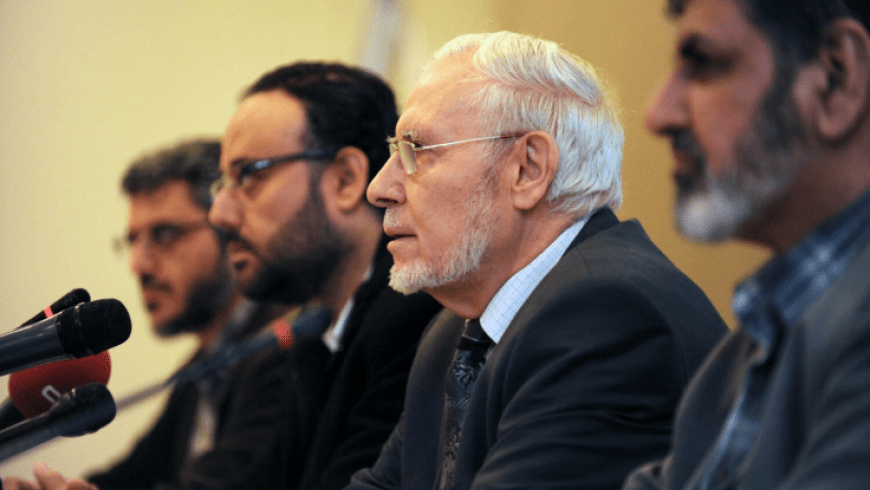
The Muslim Brotherhood in Syria announced on Saturday the release of a new political document titled “Coexistence in Syria,” in which it outlined its vision for the future of the Syrian state.
The document emphasizes principles of democracy, political pluralism, and peaceful transfer of power, alongside protecting freedom of belief—despite unofficial calls from Damascus to dissolve the group.
This marks the Brotherhood’s first such document since the fall of Bashar al-Assad’s regime on December 8, 2024, and it bears significant similarities to the 2012 Covenant document, which called for building a civil, pluralistic, and democratic state.
Published on the group’s website, the document includes clear constitutional principles, such as empowering women, prohibiting military interference in politics, ensuring protection for religious and cultural components, combating hate speech and incitement to violence, and guaranteeing freedom to establish parties and civil society organizations within a state of law and separation of powers.
The Brotherhood opened the document with Quranic verses affirming the unity of human origins and stressing respect for religious and cultural diversity, viewing this diversity not as a source of conflict but as a call to build a societal partnership based on human values.
The text notes that previous Syrian constitutions provided spaces for religious and cultural components in areas of worship and personal status, stating that maintaining these balances has been a factor in stability and must continue to be protected in the future.
The group outlined four axes for the state’s role in promoting coexistence: securing a legal framework to protect components, supporting civil peace and societal dialogue, collaborating with civil society to preserve cultural diversity, and enhancing education and culture to entrench shared values.
It called on civil society organizations to engage in building a shared Syrian identity, encouraging national dialogue, and confronting aggressive culture and sedition through media, cultural, and artistic initiatives.
The document defines Syria as a democratic state based on political pluralism and peaceful power transfer, with the rule of law and separation of powers, affirming the abolition of exceptional courts, confining arms to the state, and regulating individual possession legally.
It stressed that the army’s role should be limited to defending internationally recognized borders, prohibiting any political interference, and subjecting it fully to parliamentary oversight and judicial accountability.
Muslim Brotherhood Issues New Document Amid Calls for Dissolution
In August, Ahmad Muaffaq Zaydan, the Syrian president’s media advisor, reviewed the background of the Muslim Brotherhood in Syria and its previous experiences with dissolving the organization in other countries.
Zaydan pointed out that the group, despite its commitment to its history and organization, faces a generational gap and inability to adapt to contemporary political realities, which limits its effective participation in building the new Syrian state.
He reviewed the Brotherhood’s experiences in the Arab world after dissolving old organizations, asserting that clinging to outdated policies restricts the group’s opportunities and hinders its ability to address current internal, regional, and international challenges. He suggested that voluntary dissolution would serve the country’s interest and open the way for its youth to contribute actively to shaping the state’s future.
This article was translated and edited by The Syrian Observer. The Syrian Observer has not verified the content of this story. Responsibility for the information and views set out in this article lies entirely with the author.