
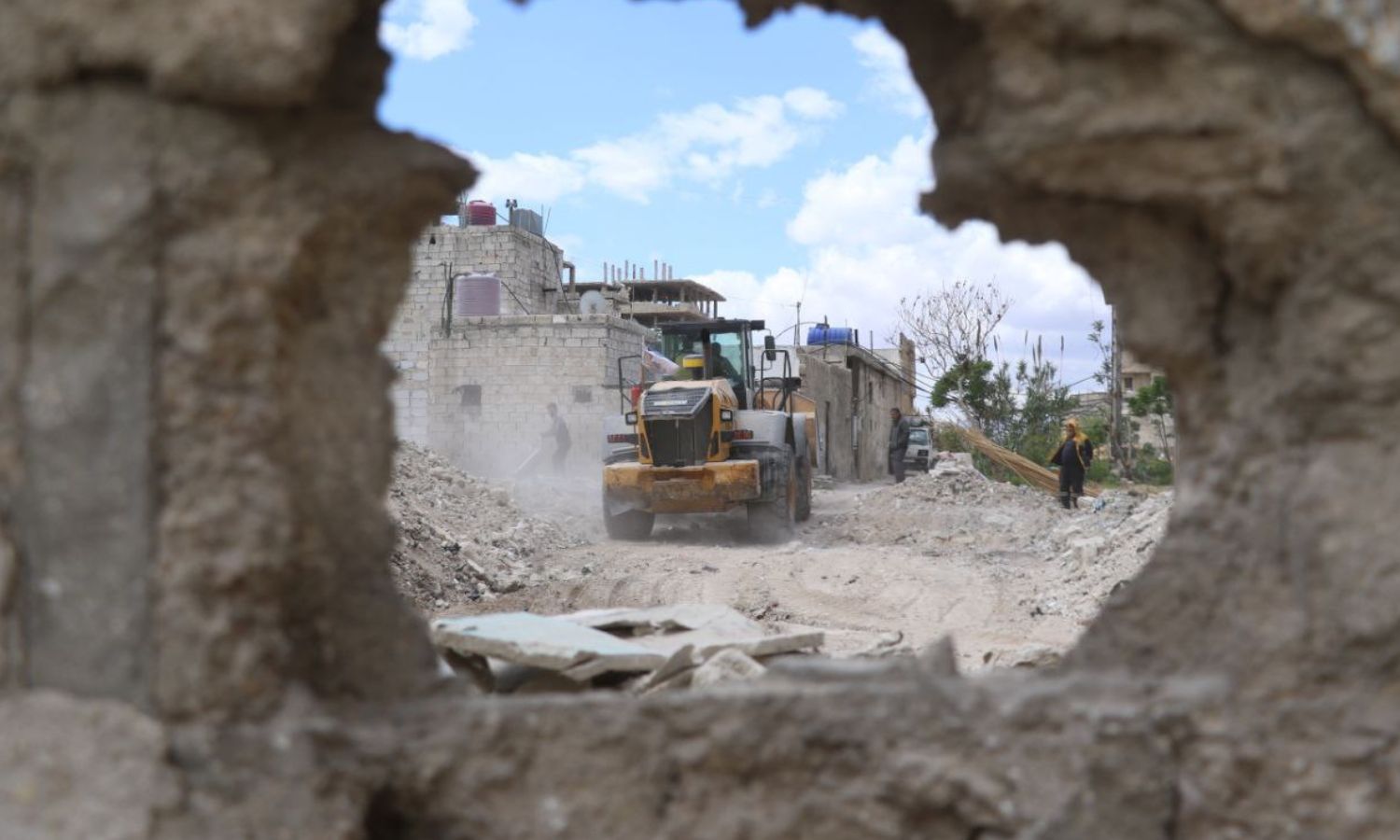
Syria’s Minister of Public Works and Housing, Mustafa Abdel Razzak, has revealed that over a million homes have been destroyed during the country’s protracted conflict, leaving an estimated three to four million people — nearly a quarter of the population — living in informal settlements.
In comments to local media, Abdel Razzak described the housing situation as “catastrophic,” citing both the extent of the destruction and the administrative challenges inherited by his ministry following the fall of the former regime. “We found a reality marked by the loss of qualified staff, while those who remained were either corrupt or unmotivated after decades of stagnation,” he said.
Logistical and Financial Challenges
The minister noted that the ministry is grappling with outdated infrastructure and equipment dating back to the 1960s and 1970s. However, the most pressing challenge remains financial. With state banks under severe strain and housing instalments significantly below actual home values, the government is pursuing a multi-pronged approach — including state support, private investment and international assistance — to push forward reconstruction efforts.
He also acknowledged that several long-standing housing projects, some launched as far back as 2004, remain unfinished. Projects initially scheduled for completion within three to five years are still ongoing more than two decades later.
Failures of the ‘Youth Housing’ Programme
Abdel Razzak drew particular attention to the collapse of the so-called “youth housing” initiative, under which some applicants waited as long as 25 years to be allocated homes. “Some of those who applied as young men only received their houses as old men,” he remarked, attributing the delays to corruption, runaway inflation, currency devaluation and widespread defaults on payments.
In an effort to address the crisis, the government has announced the waiving of penalties and fines for individuals who fell behind on instalment payments dating back to 2011. A new law is currently in preparation to reinstate applicants excluded over the past 15 years, including those who emigrated or experienced financial hardship. Any additional payments made in 2024 will be credited towards their housing instalments.
Informal Settlements and Internal Displacement
The minister stressed that curbing the spread of informal settlements remains a top priority due to their direct impact on both daily life and national security. However, he maintained that the ministry’s foremost responsibility lies with displaced Syrians still living in tents or areas that have been completely devastated.
Abdel Razzak outlined plans for phased interventions in informal neighbourhoods, based on available resources and the urgency of needs, while conceding that the scale of the crisis far exceeds the state’s current capacity to respond.
This article was translated and edited by The Syrian Observer. The Syrian Observer has not verified the content of this story. Responsibility for the information and views set out in this article lies entirely with the author.