
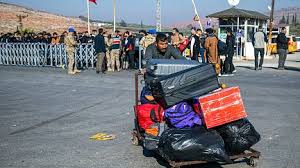
Nine months after Bashar al-Assad’s fall ended half a century of Baathist rule, Syrians abroad are returning home in uneven waves. Turkey has seen a sharp acceleration, with nearly half a million repatriations since December 2024, while returns from Germany remain limited, reflecting stronger integration in Europe and persistent doubts about Syria’s recovery.
According to UNHCR, some 850,000 refugees have returned from neighbouring states, alongside 1.4 million internally displaced Syrians resettling at home. Yet the scale of displacement remains daunting: more than 6.8 million fled abroad during the conflict, and experts caution that sustainable return hinges on security, economic revival, and international aid.
Turkey: Fast-Tracked Returns
Turkey, once host to over 3.5 million Syrians, has recorded 474,000 voluntary returns since Assad’s ouster, Interior Minister Ali Yerlikaya announced on September 7. The figure rose by 25,000 in a single week, reflecting streamlined border procedures and relative calm in northern Syria.
Since 2016, over 1.2 million Syrians have left Turkey, reducing its refugee population to about 2.5 million. Officials hail the process as “safe and voluntary,” though rights groups warn of past coercion and lingering obstacles inside Syria, from property disputes to patchy public services.
Germany: Integration Over Repatriation
Germany, home to nearly one million Syrians, tells a different story. Only 1,867 people have returned with government support this year, despite incentives for travel and reintegration. Many refugees have built lives in Europe: over 83,000 gained German citizenship in 2024, and asylum applications continue, with 17,650 filed so far in 2025.
Surveys highlight the divide: while Damascus has regained relative calm, insecurity and infrastructure gaps elsewhere deter families. Meanwhile, shrinking feelings of welcome in Germany may encourage settlement rather than repatriation, reinforcing Syria’s growing diaspora.
The Road Ahead
The contrast between Turkey’s accelerated repatriations and Germany’s cautious approach underscores Syria’s patchwork recovery. UNHCR set a 2025 target of 1.5 million refugee returns and 2 million IDP resettlements, but with only $71 million in funding secured, resources fall far short.
Observers warn that hasty returns without adequate reconstruction could deepen vulnerabilities. For now, Syria’s post-Assad transition remains fragile — and the fate of millions abroad will shape not just its recovery, but the stability of the region.
This article was translated and edited by The Syrian Observer. The Syrian Observer has not verified the content of this story. Responsibility for the information and views set out in this article lies entirely with the author.
