
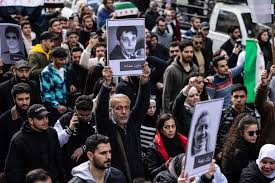
Just months after Washington announced a sweeping end to sanctions on Syria, concerns are mounting that violations against minority communities could reopen the door to punitive measures, potentially harsher than before.
The U.S. Treasury’s Office of Foreign Assets Control (OFAC) formally removed Syria from the federal sanctions register earlier this summer, a move hailed in Damascus as a breakthrough for economic recovery. Yet analysts warn that Washington’s new emphasis on minority rights is emerging as a decisive factor in shaping its evolving policy toward Syria.
Human Rights at the Center of U.S. Policy
Syrian economist Dr. Karam Shaar told local media that political sentiment in Washington is shifting, with the White House cautiously adjusting its stance while Congress pushes more forcefully for a rights-based framework. He argued that any renewed violations targeting minorities would not only trigger the reinstatement of sanctions, but could lead to measures “stricter than before.”
“The economic relief following sanctions removal is now clearly conditional on Damascus demonstrating respect for human rights, especially the protection of vulnerable and marginalized groups,” Shaar said.
Proposed amendments to the Caesar Act have already signaled this shift, stressing the need to halt practices targeting minorities. Shaar noted that restrictions on access to the Druze-majority province of Suwayda have reinforced the perception in Washington that the treatment of minorities is a central test of Syria’s commitment to reform.
Minorities at the Forefront
Since Transitional President Ahmad al-Sharaa took office in December 2024, minorities have found themselves at the center of political and social tensions. In northern Syria, Arab–Kurdish disputes over self-administration and resources have resurfaced, while in the south, widespread Druze protests in Suwayda highlighted demands for representation, rights, and an end to political marginalization.
These developments have strengthened the conviction among U.S. lawmakers that minority rights are no longer an internal Syrian matter, but a strategic pressure point with regional implications.
A Shift Toward Decentralization
On the political front, U.S. officials have hinted at a vision leaning toward decentralization as a possible framework for a settlement in Syria—short of full federalism. The approach aims to allow local communities to preserve their cultural and linguistic identity, free from Islamist threats, while ensuring stability.
“This is a careful balancing act,” Shaar said, “between Washington’s security and political concerns on one hand, and its growing prioritization of social and human rights stability on the other.”
Calculated Moves by the SDF
Shaar also argued that the Syrian Democratic Forces (SDF) are deliberately advancing at a slow pace, not out of weakness but as a calculated strategy. Washington, he suggested, is giving the SDF space to consolidate its role as a de facto power on the ground while awaiting clarity on Syria’s broader political settlement.
Sanctions Tied to Rights Compliance
Ultimately, Shaar concluded, the future of U.S. sanctions policy toward Syria is now tied less to broad political disputes and more to the state’s treatment of its diverse communities. Any new violations, he warned, could prompt Washington to swiftly reimpose or even escalate sanctions.
“The trajectory of sanctions is no longer just about economics or geopolitics,” he said. “It hinges on Damascus proving a genuine commitment to protecting its minorities—an obligation that will define the relationship with Washington in the years ahead.”
This article was translated and edited by The Syrian Observer. The Syrian Observer has not verified the content of this story. Responsibility for the information and views set out in this article lies entirely with the author.